NTU Impact Series: Prof Kristijan Ramadan on decoding cancer at the cellular level
Through the support of the Toh Kian Chui Distinguished Professorship, Prof Kristijan Ramadan is advancing fundamental cancer research that strengthens Singapore’s capabilities in biomedical science and future healthcare innovation.
Text: Jesmine Ong
Learn more about Prof Ramadan’s work from this video.
Every cell in the human body carries a set of instructions – our DNA – that determines how it grows, functions, and repairs itself. When these instructions are damaged and cannot be properly repaired, diseases can develop.
Prof Kristijan Ramadan, Toh Kian Chui Distinguished Professor in Cancer and Stem Cell Biology at the Lee Kong Chian School of Medicine, studies what happens when these instructions are damaged, and why that damage can lead to diseases such as cancer.
“My research focuses on how genetic information is copied and protected in cells, and what happens when this process goes wrong,” he explains.
Every day, our cells repair countless instances of DNA damage caused by normal biological activity or environmental stress. But when these detection and repair systems – collectively known as “DNA damage response” – fail, errors can accumulate over time. Much of Prof Ramadan’s work focuses on understanding the fundamental biological processes that drive disease.
“We are trying to understand the basic cellular processes first, because without that understanding, it is difficult to make meaningful progress for cancer research.”
By studying how DNA replication and damage response work at a molecular level, Prof Ramadan’s research helps scientists understand why cancers behave differently and why patients may respond differently to treatment.
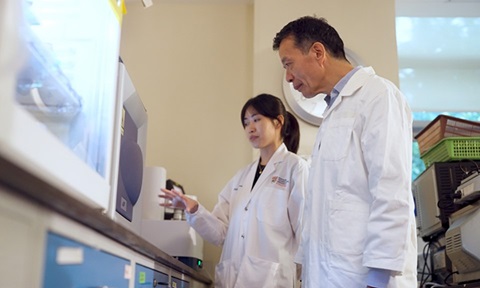
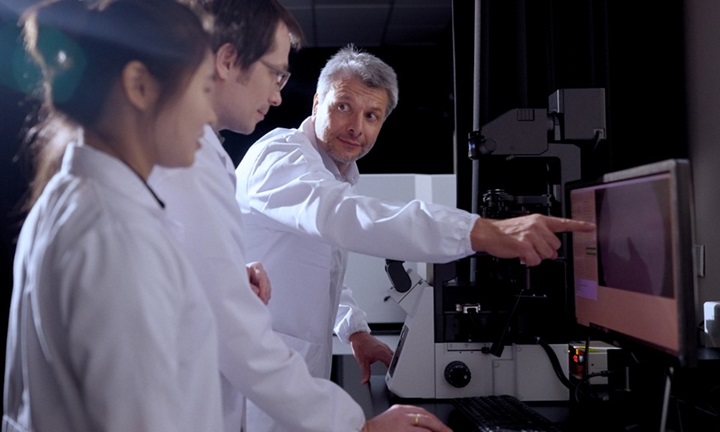 Prof Ramadan with his research team at the Experimental Medicine Building at NTU.
Strengthening Singapore’s cancer research capabilities
The Toh Kian Chui Distinguished Professorship has been instrumental in enabling this work. It provided the support that brought Prof Ramadan from the University of Oxford to Singapore and helped launch the Cancer Discovery and Regenerative Medicine Programme at LKCMedicine.
The programme brings together researchers to study how diseases develop at the cellular level and to identify new pathways for early diagnosis, improved survival prognoses and future therapies for patients.
Beyond advancing research, the professorship also supports the development of future scientific talent.
“It allows us to attract and train talented students and early-career researchers, and to mentor them in a way that builds capacity for the future,” he says.
Through sustained support for discovery research and mentorship, the Professorship strengthens Singapore’s growing capabilities in cancer science and biomedical innovation, helping lay the groundwork for future breakthroughs in healthcare.
Learn more about NTU’s Professorships here.