
Found in Translation: How CRPO Interns Turn Complexity Into Clarity
Oct 28, 2026 · @CRPO
An internship at the CyberSG R&D Programme Office (CRPO) usually starts the same way: a student who knows one language, whether data, marketing or communications, gets dropped into a room where everyone is speaking another. The job, it turns out, is to become the translator.
That's not a coincidence. CRPO's Translation Internship Programme exists to move research out of the lab and into the market, and that move almost always runs through someone who can make the complicated plain. This year, two interns did exactly that at opposite ends of the problem. One translated deep science into a sales pitch, while the other translated an abstract risk into something a business owner could feel.
It's a gap that shows up everywhere in deep tech, and nowhere more than in cybersecurity. The field runs on specialists such as cryptographers, threat hunters and data scientists, whose work is, almost by design, hard for anyone outside it to parse. A startup can build the most resilient defence on the market and still struggle to get a business owner to understand why it's worth paying for. Research can clear every technical bar and still sit unused if no one translates it into a reason to adopt it.
From lab language to sales pitch
At post-quantum cryptography startup PQStation, Jihad Alvaro's internship began with a problem every deep tech company eventually faces: the science is sound, but almost no one outside the lab can explain why it matters. Before he could help sell it, he had to understand it himself, wrestling with the technical fundamentals behind PQStation's products until he could hold his own in a conversation about them.
He put that understanding to work on PQStation's branding and website restructuring, and on an internal content calendar that forced him to keep translating, week after week, for a nontechnical audience. The repetition did something a single briefing never could: it turned a borrowed vocabulary into a working one.
 Jihad Alvaro, Translation Intern at PQ Station
“Right now, I think I can communicate complex technologies to nontechnical people better, thanks to the internship program,” he said.
His advice to future interns is really a description of his own method: stay curious about the technology, and talk to your supervisor often. Understanding, for him, was never a solo exercise. It was built one conversation at a time.
Post-quantum cryptography is an especially hard sell to translate. The threat it defends against, a future quantum computer breaking today's encryption, hasn't happened yet, which makes the urgency easy to doubt and the value easy to underrate. Jihad's task wasn't just to learn the science; it was to find language that made a distant, abstract risk feel relevant to someone making a purchasing decision today. That's a harder translation than it sounds, and it's the kind of problem most students never get asked to solve before they graduate.
By the end of the internship, the skill had outgrown the brief. Jihad wasn't just writing content calendars and restructuring a website. He was building a repeatable way of talking about PQStation's technology that the company could keep using after he left. For a small deep tech team, that's a disproportionate return on one intern's time, and it's exactly the kind of outcome CRPO points to when it talks about what the programme is for.
From abstract risk to felt risk
Sourish Singh Roy arrived at cybersecurity startup StrongKeep with marketing experience across several industries, but no specialist background in security, and no small amount of nerves about that gap. What he found was a more stubborn translation problem than a vocabulary one: business owners already knew cybersecurity mattered. Knowing hadn't made them act.
The risk was abstract to them, so he made it concrete. Working with his mentor and colleagues, he built interactive scam simulations that let business owners walk through how an attack actually unfolds on them. Three of six went live during his placement. Testing the simulations with practitioners who'd seen real incidents taught him to question his own assumptions and look for evidence before trusting a conclusion, a habit that reshaped how he approached the rest of the work.
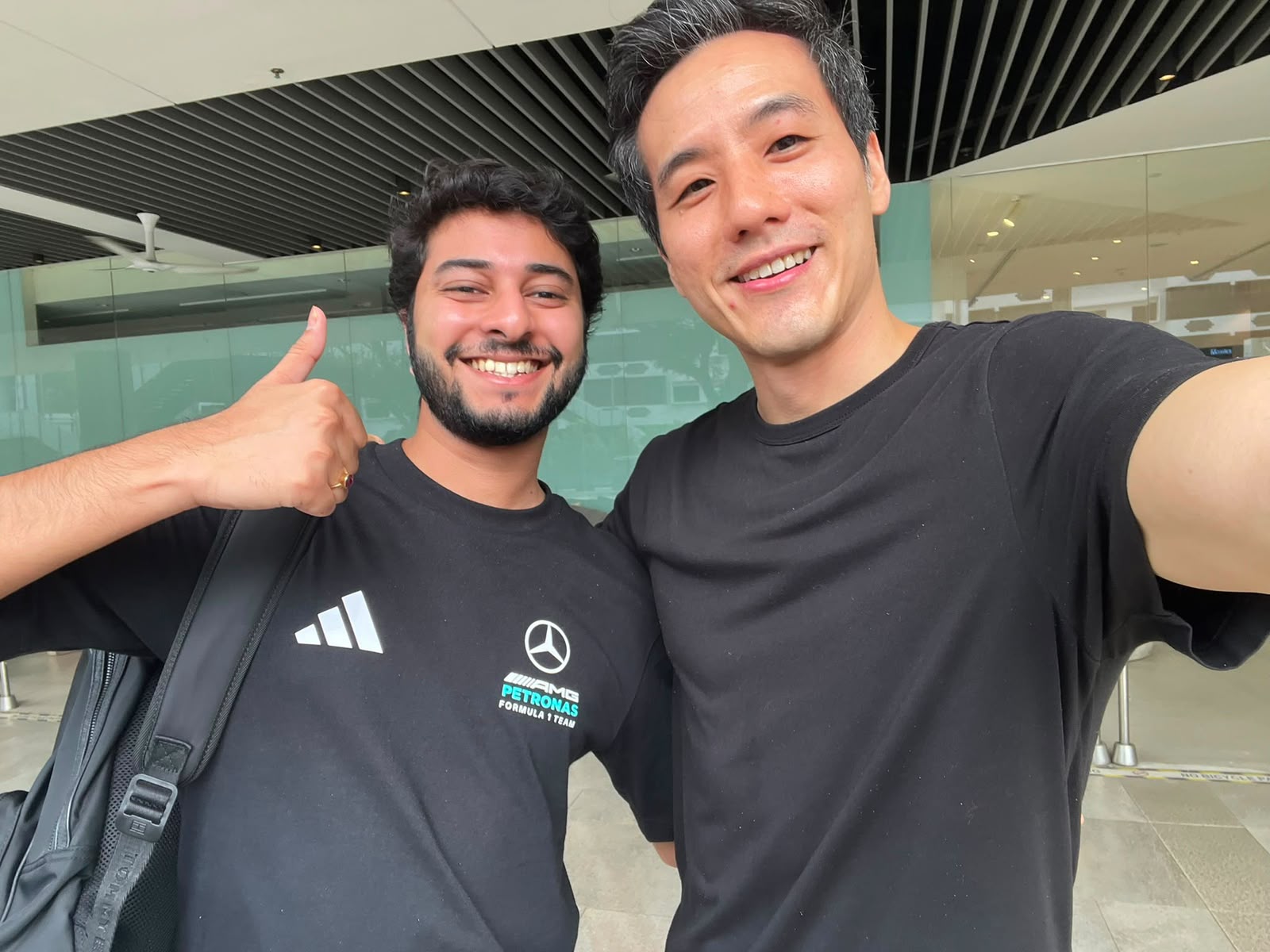
Sourish Singh Roy during his placement at StrongKeep
He also documented his research and workflows in a knowledge system for the interns who'd come after him. StrongKeep kept a resource it can keep using; Sourish left with the confidence that comes from taking on something unfamiliar and making it work.
What made the simulations work wasn't the technology behind them. It was the decision to make risk something a business owner could experience rather than just be told about. A warning is easy to nod along to and then forget. Watching, even in simulation, how quickly a scam unfolds and how ordinary the warning signs looked in hindsight tends to stick. That's the difference between information and understanding, and it's the difference Sourish was hired to close.
It also meant his marketing background turned out to matter more than his lack of a security background. Knowing how to hold someone's attention, structure a narrative, and test whether a message actually lands are skills that transfer cleanly from one industry to another. They just needed a cybersecurity problem to be pointed at. StrongKeep got a communicator who could make its message stick; Sourish got proof that his skills weren't as tied to one industry as he'd assumed walking in.
A structure built for mutual learning
Neither of these outcomes was accidental. CRPO's Translation Internship Programme is deliberately built around mentorship rather than placement, pairing each student with a supervisor inside the host team, not just a desk and a task list. That structure shows up in both stories: Jihad's advice to future interns, to speak often with your supervisor, and Sourish's habit of testing his ideas against practitioners before trusting them, both describe a relationship, not a job description.
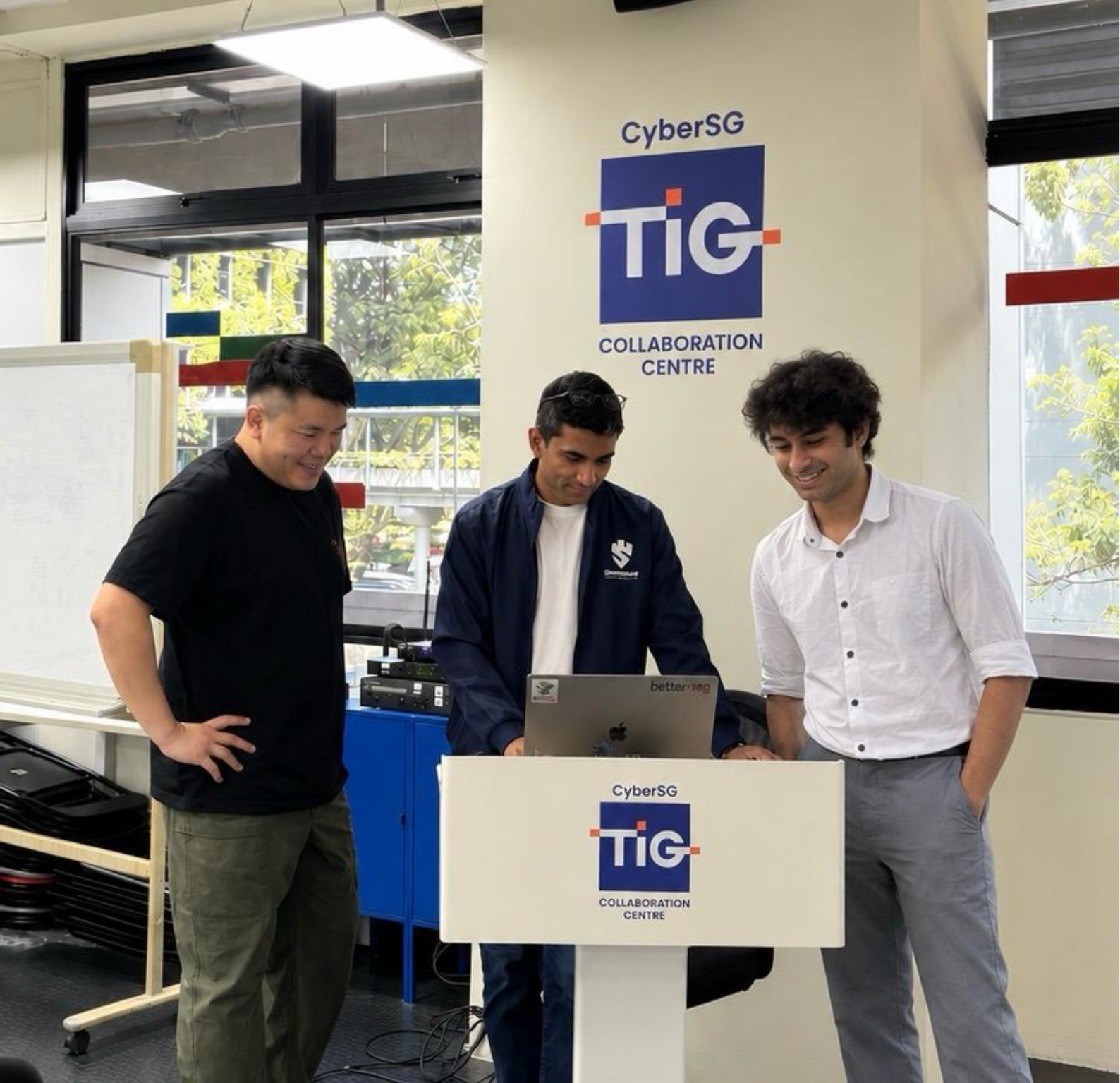
Interns working alongside their host-team supervisors at the CyberSG TIG Collaboration Centre
For the host teams, that structure changes what an internship is for. A research project team or a cybersecurity startup is usually short on the one resource a deep tech business needs as much as a technical breakthrough: someone whose sole job is explaining it well. An intern who can do that doesn't just produce content or run a campaign. They leave behind a way of communicating that the team didn't have before, and in Sourish's case, a knowledge system built specifically so the next intern wouldn't have to start from zero.
Why the translation matters
Jihad and Sourish worked on opposite sides of the same gap. One brought outsiders into the technology, while the other brought the technology's stakes home to outsiders. Both show how far business and communication skills can carry cybersecurity innovation, and why host teams gain more from an internship than extra hands: a fresh perspective, and someone dedicated to making the work land with the people it's meant for.
That's the premise behind CRPO's Translation Internship Programme: pairing young talent with research teams and startups so students discover where their own skills fit into Singapore's cybersecurity ecosystem, and so education, research and industry build the relationships that keep that ecosystem moving.
It's also a quiet answer to a question Singapore's cybersecurity sector asks often: where does the next generation of talent come from, if the field keeps demanding specialists the education system can't produce fast enough? Jihad and Sourish suggest a different answer. Not every gap in a deep tech team needs a cryptographer or a threat analyst to fill it. Some of the most valuable people in the room are the ones who can stand between the specialists and everyone else, and explain, clearly, what's actually at stake.
Learn more about the CRPO Translation Internship Programme.