Indian diamond processor invests in South African plant
South African diamond revenues shrank by 21% last year
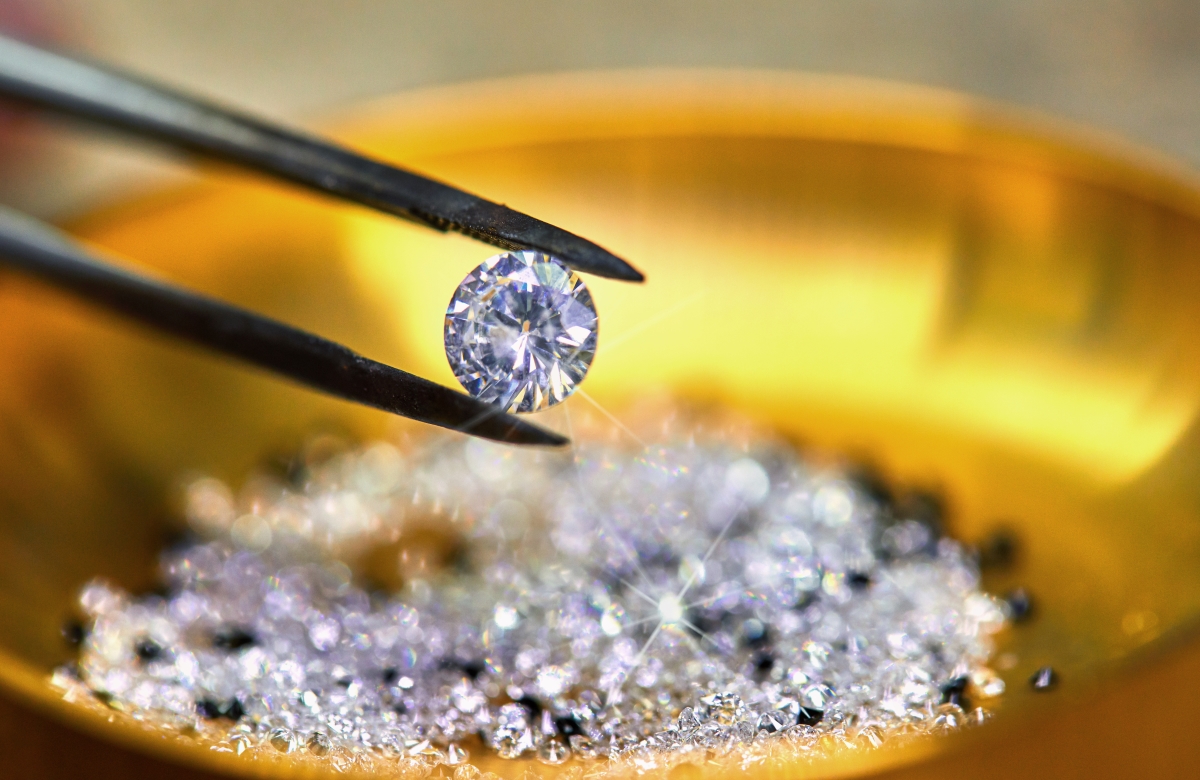
India’s Finestar Diamonds and Jewellery, a diamond processor and trader, has opened a US$17m beneficiation factory in Johannesburg, strengthening its African footprint as natural diamond producers look to defend market share against cheaper lab-grown alternatives.
Finestar’s new South African plant adds to its operations in India, Botswana and Namibia. The group is a De Beers Sightholder – one of a select group of companies authorised to buy rough stones directly from De Beers – and a Rio Tinto Select Diamantaire, giving it similar access to the miner’s supply. The facility is located at the Jewellery Manufacturing Precinct in Johannesburg’s OR Tambo Special Economic Zone, which offers certain tax exemptions. It will employ about 90 people, with Indian polishers brought in to train local staff.
Like all natural diamond producers, South Africa’s industry is under pressure from the rise of lab-grown stones. Prices of synthetics have dropped sharply, making them far more accessible to consumers. Lab-grown diamonds now account for about half of the US engagement-ring market by volume, while natural diamond prices have fallen roughly 26% over the past two years.
The value of South Africa’s natural diamond sales decreased by 21% in 2024 compared with the previous year, despite production dipping only 0.9%. In June, Angola, Botswana, Namibia, South Africa and the Democratic Republic of Congo pledged to devote 1% of their annual diamond revenues to marketing campaigns aimed at reinforcing the status of natural stones as luxury products.
The Trump administration’s 30% tariff on South African goods has further eroded the competitiveness of the country’s diamonds in the US market.
South Africa’s diamond industry began with the 1867 discovery of the 21.25-carat Eureka Diamond near Hopetown. Larger finds in 1871 triggered a massive rush near the town of Kimberley, shifting the business from small-scale diggers to a handful of powerful capitalists. Cecil Rhodes eventually consolidated most claims, forming De Beers Consolidated Mines in 1888 and establishing a near-total monopoly over the global diamond trade.
By the early 20th century, mining had spread to the west coast and offshore, where alluvial diamonds – stones carried by rivers and lodged in sand and gravel – were discovered, extending production beyond inland deposits.
Today the country remains a significant producer but has been overtaken by rivals. In 2024 it ranked sixth globally, with annual output of about 5.3m carats, behind Russia, Botswana, Angola, Canada and the Democratic Republic of Congo.
References
‘As diamond prices drop, colored gems capture consumer attention’, Empower, 13 February 2025
'The 2024 diamond crisis: An industry at its breaking point', Rapaport, 13 February 2025
‘Southern Africa’s Jewelry Manufacturing precinct fully open for business’, CNBC Africa, 12 June 2024
‘South Africa looks to join international diamond marketing push’, Reuters, 08 August 2025
‘Finestar launches SA diamond manufacturing facility’, CNBC Africa, 05 September 2025
‘Minister Gwede Mantashe: Official opening of Finestar Jewellery and Diamonds factory’, Government of South Africa, 05 September 2025
‘Diamond beneficiation gets multi-million rand investment in South Africa’, Bizcommunity, 09 September 2025
‘Lab-grown diamonds robbing southern Africa of riches’, AFP, 14 September 2025
‘Finestar Diamonds invests R300 million in new South African manufacturing facility’, DiamondWorld, 16 September 2025
‘Eureka Diamond’, Wikipedia, Accessed 27 September 2025
‘Brief history of diamond mining in South Africa’, Minerals Council South Africa, Accessed 27 September 2025
‘De Beers S.A.’, Britannica Money, Accessed 27 September 2025
‘List of countries by diamond production’, Wikipedia, Accessed 27 September 2025