Major Sub-Saharan African economies will continue recovery despite Iran war
Medium-term recovery will remain on course
By Rafiq Raji

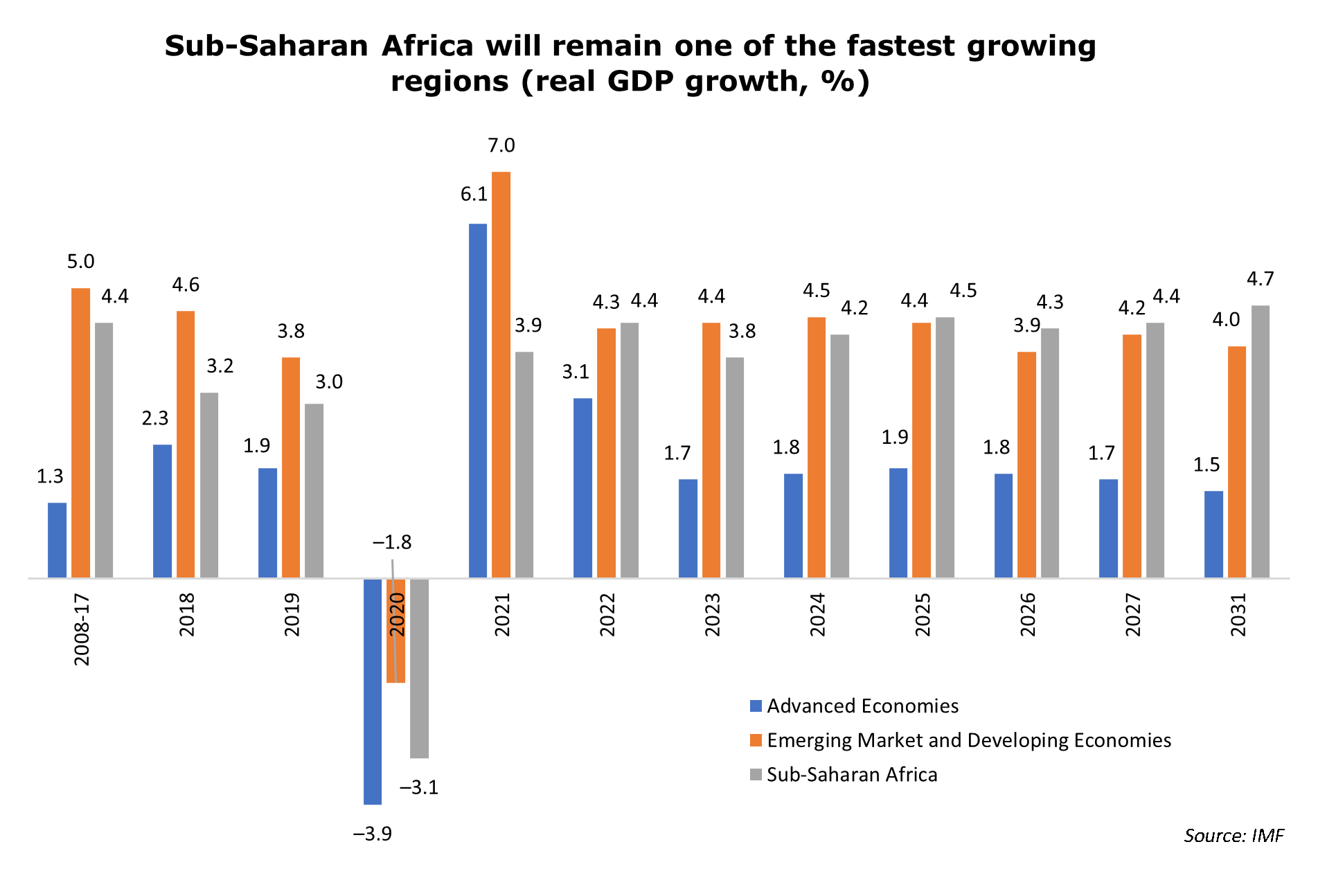
Major African economies are recovering from policy-induced troubles, ranging from a debt binge, money printing, high inflation, to political instability and structurally constraining institutionalism. South Africa is slowly letting go of some of its socialist entrenchments, reining in debt, and reforming state-owned enterprises. Nigeria is cleaning up its fiscal balances, finally adding previously opaquely printed money liabilities on to its books, slowing the inflation that it caused, stabilising its currency, and enacting tax reform laws. Kenya, which suffered destabilising mass protests over higher taxation, is dealing with debt sustainability challenges. Ghana and Zambia, which defaulted on their external debt, are concluding their respective International Monetary Fund (IMF) programmes amid tedious debt restructurings. A prolonged Middle Eastern war, after the US and Israel attacked Iran in late February 2026, will weigh on price stability and international trade, although a simultaneous commodities boom will support resource-rich African economies, and the conflict is not expected to broadly affect the medium-term economic growth prospects of the region.
 South Africa – Lower
inflation target and tighter fiscal rules add to reforms progress
South Africa – Lower
inflation target and tighter fiscal rules add to reforms progress
Price stability and
reforms-induced economic growth amid a commodities boom are expected for South
Africa over the medium term, although debt sustainability will be a recurring
constraint, even as the authorities are making palpable fiscal consolidation
efforts.[1],[2]
Structural impediments, which require difficult and politically costly
institutional reforms, will continue to weigh on progress, with limited
prospects of significant improvements over the short to medium term. Real GDP
growth of 2-3% over the medium term reflect these constraints. The South
African central bank continues to stay above the fray, lately adopting a lower
inflation rate target band of 2-4% despite initial resistance by the fiscal
authorities, which preferred the erstwhile 3-6% target range, as it was
relatively expansionary.[3],[4]
The South African Reserve Bank argues greater price stability, which the new 3%
inflation target enables, ultimately benefits the fiscal authorities and
broader economy since it will lower inflation expectations, support a relatively
stable rand, and continue to make South Africa’s public debt attractive.[5] To enable sharper monetary policy transmission, the SARB wants commercial banks
to use the policy rate to price loans, replacing the prime lending rate, with
implementation set for 2027.[6]
A commodities boom will enable the authorities to avoid raising taxes in 2026.
Historically high public debt levels (above 70% of GDP) have peaked, and the
authorities have signalled a commitment to debt sustainability. In this
respect, the authorities are working on a rules-based fiscal policy framework
for legislation before end-2026.[7]
State-owned enterprises, which have long been a drag on public finances and the
broader economy, are being restructured, with a rising trend of liberalisation
beginning to ease longstanding sectoral inefficiencies.[8]
Independent power producers, which now constitute a fifth of electricity
generation, have been a major factor behind reduced loadshedding for instance.[9]
US and Israeli armed hostilities with Iran since late February 2026 will boost
minerals exports, although the global inflationary effects of the war will
weigh on the South African economy in tandem.
Kenya – Debt sustainability in focus
High debt servicing costs
remain a persistent fiscal constraint, especially as Kenyan authorities have
procrastinated over whether to seek IMF financing, which will probably be
conditional on restructuring the government’s external debt. Youth-led protests
in mid-2024 against proposed financial legislation for tax increases on food
and essential items is forcing the authorities to seek alternative ways to find
additional revenue for pressing expenditure, especially debt servicing.[10],[11]
The Kenyan government, which started talks with the IMF on a potential
programme in February 2026, has been exploring creative ways to avoid
defaulting on its external debt, as it strenuously tries to avoid a debt
restructuring under the aegis of the G20 Common Framework.[12],[13] Kenya issued two Eurobonds in 2025 for refinancing purposes (with additional
ones likely for upcoming maturities), and has secured concessions to pay back
its Chinese debt (originally in dollars) in yuan.[14],[15],[16] Kenya ceded significant concessions in a subsequent duty-free trade deal with
China in January 2026.[17]
The effort has reduced perceptions of default risk, with Moody’s upgrading
Kenya’s credit rating in January 2026.[18]
While trying to rein in debt servicing costs, Kenyan authorities continue to
borrow externally, lately an almost US$1bn short-term loan for roads that it
plans to refinance with longer-term borrowing as well as US$2.25bn in Eurobonds
in February 2026 to buy back previous issues due to mature in 2028 and 2032.[19],[20]
Zambia – Conclusion of debt restructuring, 2026 general elections, copper expansion
As Zambia nears the completion
of its external debt restructuring and conclusion of its US$1.7bn IMF extended
credit facility programme, political activities ahead of the general elections
in August 2026 will be in focus, with a new IMF programme expected in its
aftermath.[21],[22],[23]
Hakainde Hichilema, the incumbent president, is expected to secure re-election
with relative ease, on the back of lawfare against the main opposition
Patriotic Front (PF) party and a controversial constitutional reform, which all
but guarantee his victory at the polls.[24],[25] Mr Hichilema will justifiably point to an improving economy as one of the
reasons he deserves a second chance, as inflation slows, growth picks up, amid
rising foreign investor interest in Zambia’s attractive risk-adjusted returns
(market depth is a constraint). The authorities increased foreign portfolio
investment limits to 23% in January 2026, from 5% previously, with non-resident
market participants accounting for almost half of bond purchases in the
immediate aftermath.[26]
Copper output grew 8% in 2025 to 890,346 tonnes, with the authorities aiming for
production to rise to at least 1m tonnes in 2026, although their medium-term ambition
of 3m tonnes appears overly optimistic.[27]
For sure, there will be significant growth in copper production, as ongoing
incremental foreign investment in output expansion will progressively add to
output. The risk that the state might ask for higher stakes in copper mines in
the aftermath remains significant, after the authorities shelved plans to do so
earlier in late 2025.[28]
Ghana – Conclusion of debt restructuring and expansionary policies
Ghana will exit its US$3bn IMF
extended credit facility programme before mid-2026, when it is also expected to
fully conclude its external debt restructuring, which is in its final stages.
There are concerns about potential policy deterioration in the aftermath of the
IMF programme.[29]
Liquidity challenges have forced the authorities to make changes to how cocoa
purchases are financed.[30]
Hitherto, the Ghana Cocoa Board (Cocobod) acquired an annual syndicated loan,
typically about US$1bn, to buy and pool cocoa from farmers at fixed prices. Lower
cocoa prices, a poor harvest in the 2023-24 season (which underwhelmed by
almost half of what was originally projected), amid exchange rate volatility
and Ghana’s own debt sustainability challenges made this model unsustainable. Instead,
the authorities plan to issue domestic bonds to fund cocoa purchases amid
worries about potentially crowding out the private sector and cannibalism of existing
treasury financing requirements, as the domestic markets are not yet deep
enough to accommodate both Cocobod’s financing needs and those of the fiscal
authorities at one and the same time.[31]
There is a potential upside: at least half of all cocoa beans produced will be
processed locally from the 2026-27 season.[32]
By contrast, gold has been enjoying a bull run, with the authorities already
looking to acquire more for the fiscus from the gains.[33]
In this respect, the authorities have instituted a sliding 5-12% mining royalty
regime to replace the previous fixed flat rate system.[34]
The authorities are also pushing for gold produced to be refined locally, with
some of the gold purchased by the Ghana Gold Board (GoldBod) from the artisanal
and small-scale mining sector already being refined by the Gold Coast Refinery
since early 2026.[35],[36]
Nigeria – Economic expansion after macroeconomic stabilisation, tax reforms
With the economy stabilising, the authorities will be aiming for growth over the medium term, although their US$1trn GDP goal will take longer to achieve. Political activities ahead of the 2027 general elections in January have started in earnest. The deployment of US troops in February 2026 (after US airstrikes in late December 2025) to help the authorities in its fight against Islamist terrorism (which hitherto overwhelmed the government’s efforts) will be a key factor in the presidential poll, with Bola Tinubu, the incumbent, set to face a strong opposition, amid a more than significant risk of military coup attempts by mostly northern Muslim military and civilian actors who desire a shift of power to the north from the south.[37],[38],[39] Mr Tinubu, a southern Muslim, whose ruling All Progressives Congress (APC) party has control of the federal parliament, signed into law an amended electoral legislation in February 2026 that may allow him wield the powers of incumbency to his advantage. A capital markets boom is expected in 2026, as the 650,000 barrels per day Dangote crude oil refinery plans to list on the Nigerian Stock Exchange (NSE), with the government also planning to list state-owned oil company NNPC Limited, as well as sell key government assets.[40] While international oil companies have been selling off onshore assets to domestic operators, they have been increasing investment in deep offshore fields, in part due to targeted fiscal incentives by the government.[41] The economy will sustainably grow by at least 4% on average over the medium term.[42]
References
[1] International Monetary Fund (2026, February 11). IMF executive board concludes 2025 Article IV consultation with South Africa. https://www.imf.org/en/news/articles/2026/02/10/pr-26039-south-africa-imf-executive-board-concludes-2025-article-iv-consultation
[2] Prinsloo, L. (2026, February 10). Goldman expects wave of South Africa deals fueled by commodities. Bloomberg. https://www.bloomberg.com/news/articles/2026-02-10/goldman-expects-wave-of-south-africa-deals-fueled-by-commodities
[3] South Africa National Treasury and South African Reserve Bank (2025, November 12). Announcement of the new inflation target for South Africa. https://www.treasury.gov.za/comm_media/press/2025/2025111201%20Announcement%20of%20the%20new%20inflation%20target%20for%20South%20Africa.pdf
[4] Reuters (2025, July 8). South African minister says work on lower inflation target should not be rushed. https://www.reuters.com/world/africa/south-african-minister-says-work-lower-inflation-target-should-not-be-rushed-2025-07-08/
[5] Thukwana, N. (2025, December 15). South Africa inflation expectations eased 3% target, SARB says. Bloomberg. https://www.bloomberg.com/news/articles/2025-12-15/s-africa-inflation-expectations-eased-with-3-target-sarb-says
[6] Naidoo, P. (2026, February 16). No more ‘prime’ – Reserve Bank wants key rate to be used to price loans. Moneyweb. https://www.moneyweb.co.za/news/economy/no-more-prime-reserve-bank-wants-key-rate-to-be-used-to-price-loans/
[7] Gumbi, K., Parakozov, S., and Roelf, W. (2026, February 25). South Africa plans for a legal ‘fiscal anchor’ to strengthen public finances. Reuters. https://www.reuters.com/world/africa/south-africas-government-propose-fiscal-anchor-later-this-year-2026-02-25/
[8] Pilling, D., Cotterill, J., and Mark, M. (2026, February 20). The ANC’s sudden embrace of South African business. Financial Times. https://www.ft.com/content/c08a1125-bd51-4fab-967b-04a9054f9751
[9] Kruger, A. (2026, March 6). SA electricity generation is barely above Covid levels. Moneyweb. https://www.moneyweb.co.za/news/south-africa/sa-electricity-generation-is-barely-above-covid-levels/
[10] Miriri, D. (2025, May 7). Kenya’s 2025/26 budget proposals avoid new taxes after last year’s riots. Reuters. https://www.reuters.com/world/africa/kenyas-202526-budget-proposals-avoid-new-taxes-after-last-years-riots-2025-05-07/
[11] Herbling, D. (2026, May 9). Kenya plans taxes on phones, banking fees to raise $1 billion. Bloomberg. https://www.bloomberg.com/news/articles/2026-05-09/kenya-plans-taxes-on-phones-banking-fees-to-raise-1-billion
[12] Reuters (2026, March 5). IMF’s Kenya mission ends, talks to continue at Spring Meetings. https://www.reuters.com/world/africa/imfs-kenya-mission-ends-talks-continue-spring-meetings-2026-03-05/
[13] Muiruri, K. (2026, January 28). Kenya to swap Eurobond for food in Sh129bn deal. Business Daily. https://www.businessdailyafrica.com/bd/economy/kenya-to-swap-eurobond-for-food-in-sh129bn-deal-5341612
[14] Miriri, D. (2025, October 3). Kenya raises $1.5 bln as part of debt buy-back plan. Reuters. https://www.reuters.com/world/africa/kenya-raises-15-bln-part-debt-buy-back-plan-2025-10-03/
[15] Miriri, D. (2026, February 11). Kenya looking at further Eurobond deals to manage debt maturities. Reuters. https://www.reuters.com/world/africa/kenya-considering-more-eurobond-issuance-pay-off-maturing-debt-minister-says-2026-02-11/
[16] Miriri, D. (2025, October 8). Kenya converts $3.5 billion loans from China into yuan to cut interest. Reuters. https://www.reuters.com/world/africa/kenya-converts-railway-loan-china-into-yuan-save-interest-2025-10-07/
[17] Miriri, D. (2026, January 15). Kenya strikes preliminary duty-free trade deal with China. Reuters. https://www.reuters.com/world/asia-pacific/kenya-strikes-preliminary-trade-deal-with-china-ministry-says-2026-01-15/
[18] Ombok, E., and Coulton, M. (2026, January 28). Moody’s upgrades Kenyan credit rating on reduced default risk. Bloomberg. https://www.bloomberg.com/news/articles/2026-01-28/moody-s-upgrades-kenya-s-rating-to-b3-changes-outlook-to-stable
[19] Herbling, D. (2026, January 26). Kenya plans $969 million of short-term borrowing for roads. Bloomberg. https://www.bloomberg.com/news/articles/2026-01-26/kenya-plans-969-million-of-short-term-borrowing-for-roads
[20] Ombok, E. (2026, February 20). Kenya raises $2.25 billion, seeks to retire 2028, 2032 notes. Bloomberg. https://www.bloomberg.com/news/articles/2026-02-20/kenya-raises-2-25-billion-seeks-to-retire-2028-2032-notes
[21] Mfula, C. (2026, January 29). Zambia is hopeful of agreement on debt restructuring terms with Afreximbank. Reuters. https://www.reuters.com/world/africa/zambia-says-it-is-hopeful-it-can-agree-debt-restructuring-terms-with-afreximbank-2026-01-29/
[22] Reuters (2026, January 27). IMF board approves final review of Zambia’s lending program, unlocking $190 million. https://www.reuters.com/world/africa/imf-board-approves-final-review-zambias-lending-program-unlocking-190-million-2026-01-27/
[23] Hill, M. (2026, February 10). Zambia to seal new IMF deal after August vote, minister says. Bloomberg. https://www.bloomberg.com/news/articles/2026-02-10/zambia-to-seal-imf-deal-after-august-vote-finance-minister-says
[24] Lusaka Times (2026, February 5). PF will contest upcoming elections under a new name, Lubinda says. https://www.lusakatimes.com/2026/02/05/pf-will-contest-upcoming-elections-under-a-new-name-lubinda-says/
[25] Mitimingi, T. (2025, December 18). Zambian leader signs constitutional amendment bill into law. Bloomberg. https://www.bloomberg.com/news/articles/2025-12-18/zambian-president-signs-constitutional-amendment-bill-into-law
[26] Ndlovu, R. and Hlakudi, M. (2026, February 12). Foreigners pile into Zambian bonds after auction rules eased. Bloomberg. https://www.bloomberg.com/news/articles/2026-02-12/zambia-kwacha-s-rally-gets-lift-from-foreigners-piling-into-local-bonds
[27] Mitimingi, T. (2026, January 27). Zambia restates copper ambition after posting record output. Bloomberg. https://www.bloomberg.com/news/articles/2026-01-27/zambia-restates-copper-ambition-after-posting-record-output
[28] Hill, M. (2025, November 26). Zambian presidency shuns plan to give state free stake in mines. Bloomberg. https://www.bloomberg.com/news/articles/2025-11-26/zambian-presidency-shuns-plan-to-give-state-free-stake-in-mines
[29] Business and Financial Times (2026, February 4). Editorial: MPC will continue to monitor developments. https://thebftonline.com/2026/02/04/editorial-mpc-will-continue-to-closely-monitor-developments/
[30] Business and Financial Times (2026, February 12). Gov’t reworks cocoa model after US$1bn setback. https://thebftonline.com/2026/02/12/govt-reworks-cocoa-model-after-us1bn-setback/
[31] Bruce, E. and Akorlie, C. (2026, February 12). Ghana cuts farmgate cocoa price, introduces new financing model. Reuters. https://www.reuters.com/world/africa/ghana-cuts-farmgate-cocoa-price-introduces-new-financing-model-2026-02-12/
[32] Amlanu, J.W. (2026, February 13). Debt conversion, price cuts and processing mandate mark cocoa sector overhaul. Business and Financial Times. https://thebftonline.com/2026/02/13/debt-conversion-price-cuts-and-processing-mandate-mark-cocoa-sector-overhaul/
[33] Adombila, M.A. and Bruce, E. (2026, January 15). Exclusive: Ghana to scrap mining stability pacts, double royalties. Reuters. https://www.reuters.com/world/africa/ghana-scrap-mining-stability-pacts-double-royalties-2026-01-15/
[34] Adombila, M.A. (2026, February 3). Ghana offers levy cut as sweetener for higher gold royalty regime, lobby says. Reuters. https://www.reuters.com/world/africa/ghana-offers-levy-cut-sweetener-higher-gold-royalty-regime-lobby-says-2026-02-03/
[35] Business and Financial Times (2026, February 6). Editorial: Refining gold from small-scale mining operations is a positive development. https://thebftonline.com/2026/02/06/editorial-refining-gold-from-small-scale-mining-operations-is-a-positive-development/
[36] Ghana Gold Board (2026, January 23). Rand refinery celebrates partnership with Gold Coast refinery and GoldBod. https://goldbod.gov.gh/rand-refinery-celebrates-partnership-with-gold-coast-refinery-and-goldbod/
[37] Phillips, M.M. (2026, February 10). US to send 200 troops to help Nigeria fight Islamist insurgents. Wall Street Journal. https://www.wsj.com/world/africa/u-s-to-send-200-troops-to-help-nigeria-fight-islamist-insurgents-7f59ee03
[38] Judah, J. (2026, February 8). Outgunned and overrun: Nigeria struggles to contain surge in militant violence. Financial Times. https://www.ft.com/content/7ab6ff74-b03c-4512-8f0d-19f3c2923b13
[39]Olurounbi, R. (2026, January 29). Nigeria coup bid involved officers denied promotion, probe finds. Bloomberg. https://www.bloomberg.com/news/articles/2026-01-29/nigeria-coup-bid-involved-officers-denied-promotion-probe-finds
[40] Magdy, M. and Osae-Brown, A. (2026, February 10). Nigeria targets state asset sales to private investors this year. Bloomberg. https://www.bloomberg.com/news/articles/2026-02-10/nigeria-targets-state-asset-sales-to-private-investors-this-year
[41] Reuters (2026, January 23). Nigeria, Shell tout progress on potential $20 billion Bonga South West oilfield. https://www.reuters.com/business/energy/nigeria-approves-new-incentives-shells-offshore-bonga-south-west-project-2026-01-23/
[42] Alli, W. (2026, January 14). World Bank sees Nigeria’s economy growing at fastest pace in over a decade. BusinessDay. https://businessday.ng/news/article/nigerias-economy-seen-growing-at-fastest-pace-in-over-a-decade-world-bank-says/#google_vignette