Kenyan startup collapse exposes carbon market risks
The failure Koko Networks highlights complexities in a sector drawing Singaporean capital
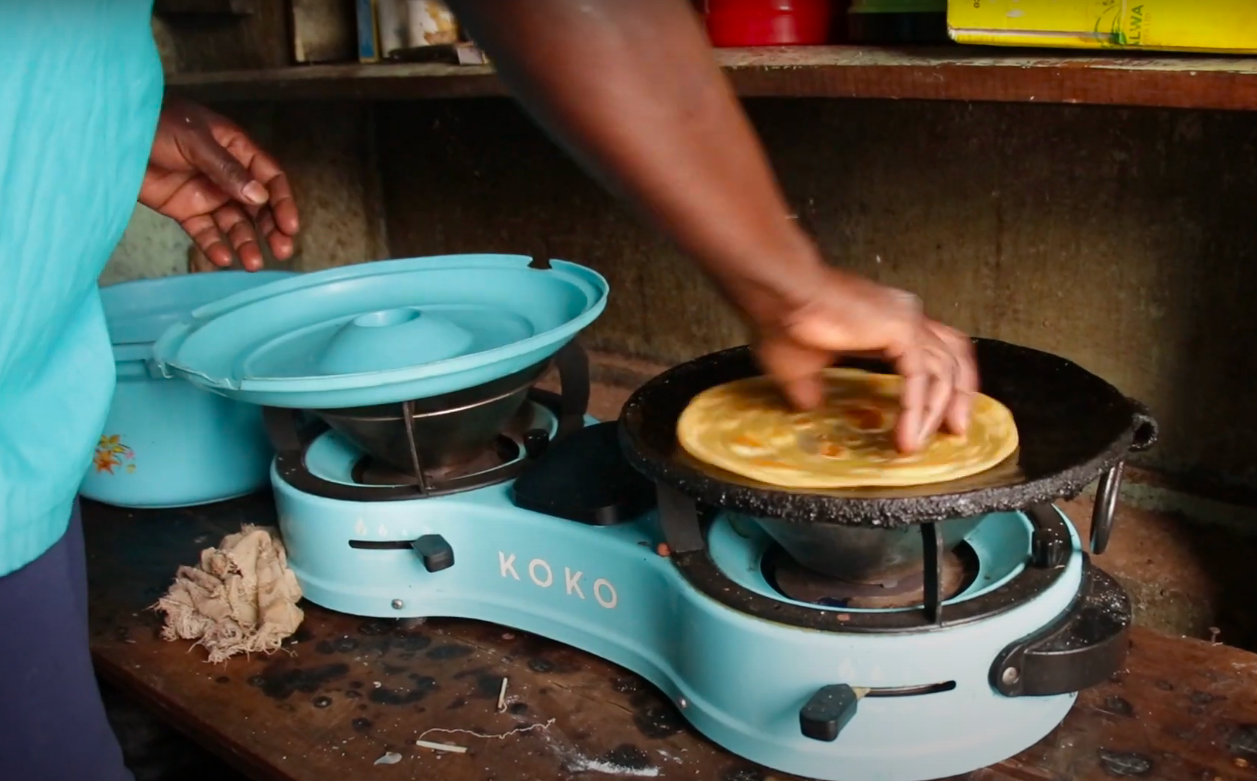 Photo credit; Trendwatching
Koko Networks, a prominent Kenyan clean-cooking company, has collapsed and laid off its 700-strong workforce after failing to secure state approval to sell carbon credits. The closure reignites scrutiny over carbon credit-financed business models and the integrity of the broader cookstove market. It also highlights some of the risks facing Singapore-linked entities expanding into African carbon ventures.
Founded in 2013 by Australian entrepreneur Greg Murray to curb deforestation, Koko sold bioethanol cookstoves and the accompanying cooking fuel to replace the heavily polluting charcoal and firewood traditionally used in Kenyan homes. The company operated a pay-as-you-go model, allowing low-income families to purchase fuel via mobile money at automated vending machines. Backed by more than US$100m in debt and equity from investors including the Microsoft Climate Innovation Fund, the business ultimately scaled to serve 1.3m Kenyan households.
Koko’s commercial survival relied heavily on carbon finance. The company sold its cookstoves and bioethanol refills at a steep discount, intending to recoup the costs by converting the resulting emissions savings into carbon credits for international compliance markets. Unlike the voluntary market, compliance schemes are driven by legally binding emissions obligations. Because formal rules dictate demand and only certain credits are eligible, these markets command lucrative premiums. One example is CORSIA, the international aviation scheme under which airlines can use eligible carbon credits to meet part of their emissions reduction requirements.
To sell credits into these compliance markets, Koko required a letter of authorisation from the Kenyan government. However, the document was never issued. The Kenyan government has not publicly explained the decision in detail, though reporting has pointed to concerns over the scale of the requested authorisation and the corresponding adjustments Kenya would have had to make. Under Article 6 of the Paris Agreement, countries must avoid double counting emissions reductions. If a carbon reduction in Kenya is sold abroad, the country must therefore make a corresponding adjustment, removing those emissions reductions from its own national carbon accounting.
Koko operated at a significant scale, generating approximately 6m carbon credits annually. One Kenyan official noted that authorising exports of that magnitude could have consumed a substantial portion of the emissions reductions Kenya was willing to transfer abroad, potentially crowding out projects in sectors like agriculture and manufacturing.
Another possible factor is the growing scrutiny of clean-cooking carbon credits. Recent academic research has questioned whether the emissions reductions achieved in practice match those claimed by project developers. While the Swiss-based certification body Gold Standard approved Koko’s methodologies, critics noted that Koko based its claims on overly optimistic estimates, rather than releasing actual bioethanol sales figures. Independent rating agency BeZero gave Koko an overall “B”, warning that its carbon credits were unlikely to deliver the amount of emissions reductions it promised. It also slapped the startup with a "D", the lowest possible grade, for its accounting integrity.
Without the crucial letter of authorisation, Koko's cash-intensive subsidy model simply ran out of time. The company collapsed into administration in February, and PwC is now putting what remains of the business up for sale.
Koko’s demise comes as Singapore is trying to set up a carbon financing footprint in Africa. The South-East Asian city state has signed bilateral climate trading agreements with Ghana and Rwanda. In the private sector, Singapore-based fund manager Impact Capital Asset Management and India’s EKI Energy Services have rolled out a joint fund to invest in the manufacturing and distribution of energy-efficient cookstoves in Kenya. Meanwhile, Temasek-owned decarbonisation investment firm GenZero has signed an agreement with the Rwanda Green Fund to develop projects aligned with the Paris Agreement. This adds to GenZero's existing African initiatives, which include a land restoration project in Ghana with Singapore-based AJA Climate Solutions, and a 100,000-hectare replanting project involving succulent species in South Africa aiming to remove an estimated 30m tonnes of carbon dioxide. Singapore's carbon credit trading platform ACX has also joined forces with the Nairobi Securities Exchange to launch a carbon offset exchange.
References
'Kenya's Koko shuts down over carbon credits dispute with government', TechCabal, 31 January 2026
'The rise and fall of KOKO Networks: A cautionary tale for Kenya's and Africa's climate startups', Medium, 31 January 2026
'PwC takes over Koko Networks after clean-cooking startup enters administration', TechCabal, 4 February 2026
'Shutdown of Kenya's Koko biofuel firm wipes out clean cooking options', AP News, 6 February 2026
'Koko collapse: World Bank-backed Kenyan startup failed', Tuko, 9 February 2026
'KOKO failure brings cookstove carbon credit model into question', African Business, 10 February 2026
'How a clean cooking pioneer combusted', Financial Times, 10 March 2026