Kenya restarts flagship railway project with new funding model
Nairobi adapts to a retreat in Chinese state lending
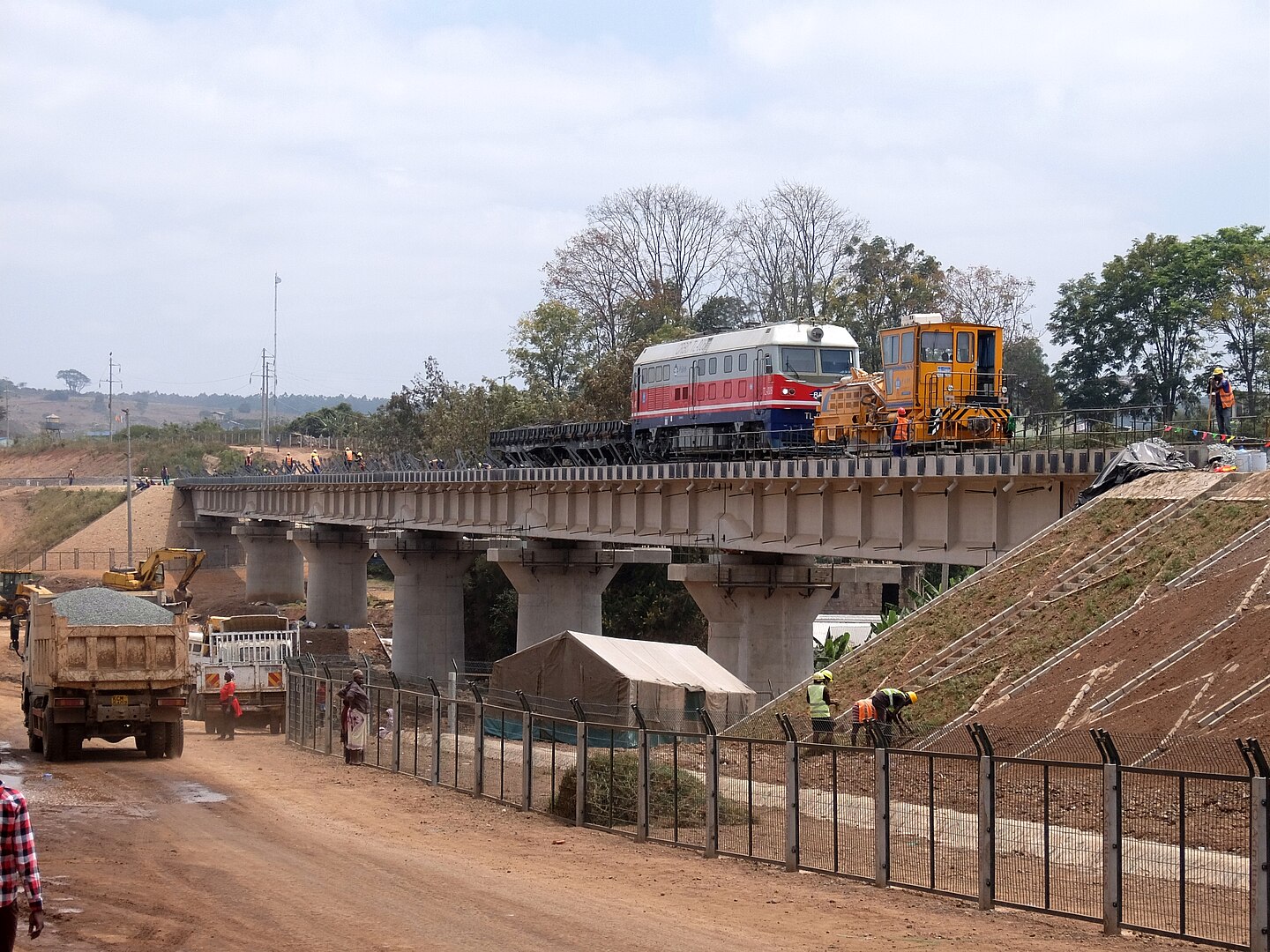 Standard Gauge Railway. Photo credit: (Macabe5387/CC BY-SA 4.0)
Kenya has resumed construction of a multibillion-dollar railway linking the port city of Mombasa to Uganda, several years after the project stalled when Chinese lending dried up. To get the project moving again, Nairobi is pivoting away from sovereign debt, opting instead to borrow against the network's future earnings – a major shift in how the country funds infrastructure. China Road and Bridge Corporation will stay on as the main contractor.
Construction on the initial US$3.3bn, 472 km-stretch from Mombasa to Nairobi began in 2014 and opened three years later. China’s Export-Import Bank financed the bulk of this first phase. A year later, the next phase started, running about 120 km west of the capital before coming to an abrupt stop after China slashed funding for large African infrastructure projects.
The extension to the Ugandan border will cost an additional US$5bn. To fund it without adding to the national debt, Kenya is relying on the money the railway itself will generate. The government is kick-starting construction by using a fee charged on cargo transported along the already-completed sections of the track, which brings in about US$270m a year. To raise the rest of the money, Kenya is turning to a mechanism known as revenue securitisation. This means lenders will be repaid directly from the network's own revenues. Analysts say this new financing structure shows Beijing is testing new funding models that require more risk-sharing between Chinese companies and African governments.
The shift in financing comes as Kenya grapples with high debt. Public borrowing stands at nearly 68% of gross domestic product, and debt servicing now consumes more than a third of all government revenue, limiting critical development spending. At the same time, tax collection has steadily dropped from 16.2% of GDP in the 2017 financial year to just over 14% by 2025.
The government’s lack of fiscal room was laid bare during widespread, youth-led protests in 2024, which forced Nairobi to abandon proposed tax increases meant to plug its budget holes.
This domestic cash crunch coincides with China's own retreat. Beijing has been scaling back its African infrastructure loans since 2019, pivoting away from an era of heavy spending as worries deepened about the ability of host countries to manage their debt loads.
Nairobi is already paying out around US$1bn annually just to service its debt to China, its top bilateral lender. To ease the pressure, the two countries renegotiated the debt for the railway's earlier phases last year. By converting the original dollar loans into yuan, extending the repayment period to 15 years, and securing a 3% interest rate with a four-year grace period, Kenya cut its annual servicing costs by US$215m.
The next phase of the railway will run 264km from Naivasha to Kisumu, before continuing another 107km to Malaba on the Ugandan border. About 70% of cargo arriving at the port of Mombasa is destined for landlocked Uganda. With current transport links, freight can take more than 100 hours to reach the capital Kampala. The completed railway is expected to dramatically cut those transit times.
References
'Mombasa-Nairobi Standard Gauge Railway project', Railway Technology, 11 May 2020
'Some Kenyans say Chinese-built railway leaves them in the dust', Reuters, 26 June 2020
'There is another way: Reducing debt while creating jobs in Kenya', World Bank Blogs, 1 December 2025
'Kenya railway loans swap fuels China's plan to globalize yuan', Bloomberg, 28 January 2026
'Govt to launch SGR extension from Naivasha to Kisumu by March 2026', Capital FM, 24 February 2026
'Kenya revives railway to nowhere, this time without China loans', Bloomberg, 27 February 2026
'Kenya revives railway extension after 6-year stall by China funding cuts', Reuters, 19 March 2026
'Kenya launches long-delayed rail extension to link network to Uganda', Ecofin Agency, 20 March 2026
'Megaproject expected to unlock vast potential', China Daily, 21 March 2026