Connecting Burkina Faso to the Ghanaian Coast
Africa has a massive infrastructure deficit.
by Johan Burger
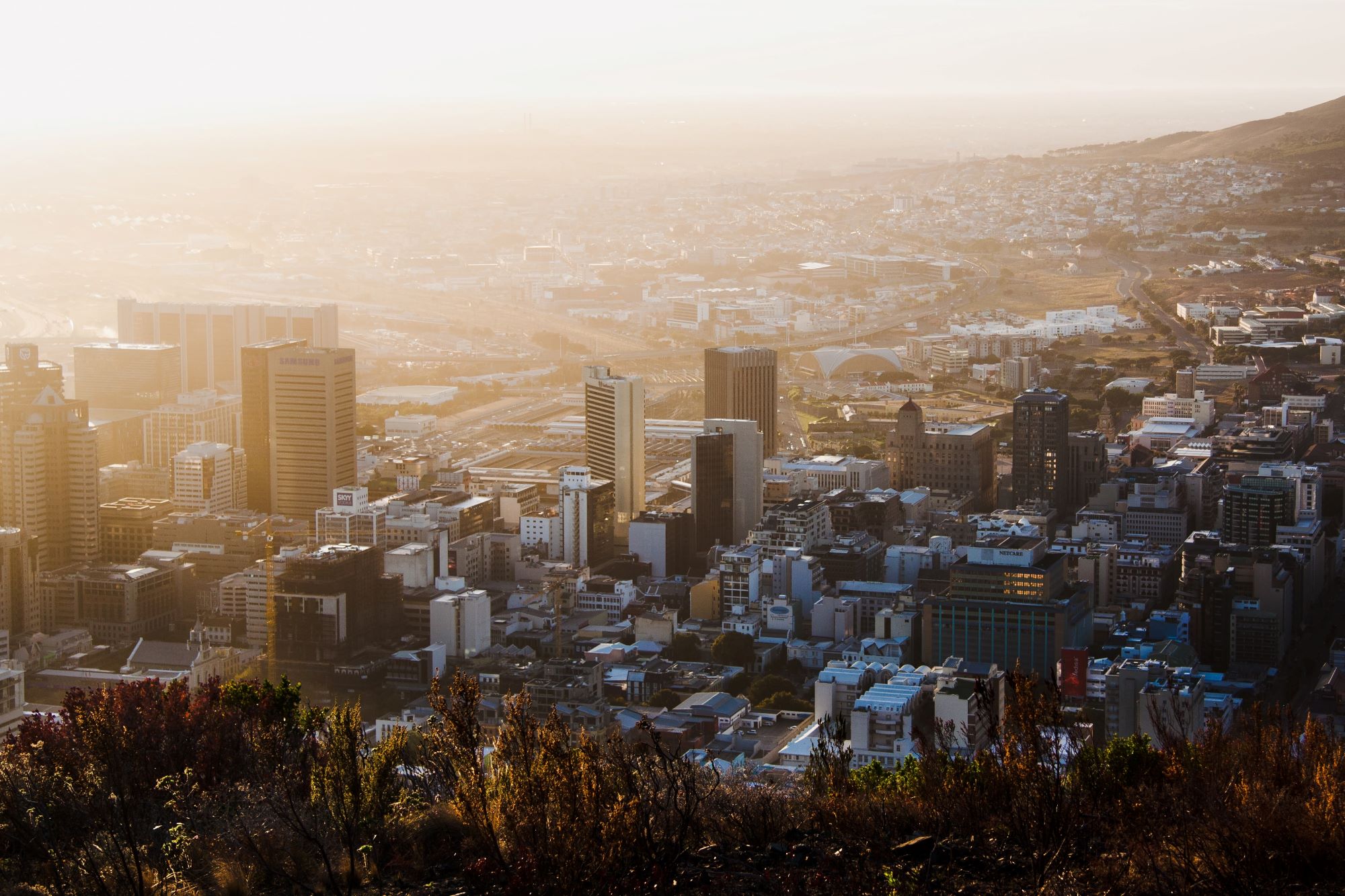
It needs to spend an additional 2.2% of the GDP to meet the gap. Africa has an estimated infrastructure deficit of between US$68bn - US$108bn.[1] The most obvious areas of shortfalls are transport infrastructure (roads, railways, ports, and airports), water and energy. Other areas included housing, office complexes and business infrastructure. The lack of adequate infrastructure is costing Africa a lot and placing restrictions on its growth potential. This report addresses some of the recent developments in this regard.
CONNECTING BURKINA FASO TO THE GHANAIAN COAST
According to Ghana’s Minister of Railway Development, John Peter Amewu, the implementation of the Burkina Faso–Ghana rail interconnection project will commence in 2022. Amewu and the Prime Minister of Burkina Faso, Christophe Joseph Marie Dabire, resolved a number of outstanding issues holding up the project implementation. These included tax and customs issues, the expropriation and compensation of landowners along the route, the selection of a suitable contractor, and the financial arrangements for the project. The railway line is nearly 1,100 kms long, 29% (320 kms) of which will be in Burkina Faso with the rest (782 kms) in Ghana. A total of 45 stations will be in Ghana and 10 in Burkina Faso.[2]
Three successful bidders have been shortlisted for the project - China No 10 Engineering Company, African Global Group, and Frontline Advisors. Railway connectivity between the port of Tema in Ghana and Ouagadougou, the capital of Burkina Faso will accelerate the socio-economic growth and development of the two countries. The project is expected to take five years to complete.[3] [4]
- Burkina Faso is one of Africa’s 16 landlocked states. The development of the railway line will improve its access to the port. A World Bank study found that landlocked countries are among the poorest in the world. Customs delays and high transport costs often make landlocked economies uncompetitive. Additional hurdles like border delays, truck cartels, multiple clearance processes, and bribes - all of which push up transport costs, make the economy uncompetitive.
- The rail project will ease the movement of goods in and out of Burkina Faso and enhance its trade competitiveness. It may boost intra-African trade, which received a shot in the arm after the Africa Continental Free Trade Area (AfCFTA) came into effect in January 2021.
- The railway could make Burkina Faso attractive for agribusiness investors and commodity traders.
ADDRESSING NIGERIA’S INFRASTRUCTURE CHALLENGES
Nigeria has launched a number of megaprojects to address its infrastructure deficit. Projects include the 156 km Lagos-Ibadan Standard Gauge Railway Line with an extension to Lagos Port; the 614 km Ajaokuta-Kaduna-Kano Gas Pipeline; the Lekki deep seaport outside Lagos; a 35 km Expressway to link the Lekki deep seaport to the Lagos-Ibadan Expressway, and the construction of four new international airport terminals in Lagos, Abuja, Port Harcourt, and Kano. Construction has also started on a US$2bn railway line connecting northern Nigeria to Niger, while US$3bn has been earmarked for the rehabilitation of a 1,400 km line linking Port Harcourt with Maiduguri in the northeast. Asian investors have put significant stakes in these projects. For instance, the US$2.1bn Lagos Free Zone is owned and managed by Singapore’s Tolaram Group. It is located 60 km east of Lagos and built on an 830ha site. It is Nigeria's first privately owned SEZ and is fully integrated with the Lekki deep-sea port. Designed and constructed by Singapore's Surbana Jurong and China Harbour Engineering Company the Lagos Free Zone could be a “game-changer” for Nigeria. The “plug-and-play” business zone offers “best in class” infrastructure for firms looking to invest in the country, claims Tolaram. When phase one is completed next year, it will have the capacity to host more than 100 firms. The facility will generate its own power and have residential complexes, medical facilities, transport depots, and warehousing facilities.
President Buhari announced a number of initiatives to deal with infrastructure challenges in the country. The Infrastructure Corporation of Nigeria (InfraCo), announced in February 2021, aims to raise US$36.7bn for projects. InfraCo’s seed capital of N1trn (US$2.6bn) will come from the Central Bank of Nigeria, the Nigerian Sovereign Investment Agency (NSIA) and the Africa Finance Corporation (AFC).
The Presidential Infrastructure Development Fund (PIDF) is another initiative to invest in road and power projects and is managed by the NSIA. It was launched in 2020 to drive the completion of several large projects that have been plagued by delays. These include the Mambilla hydropower project, the 11.9 km second Niger Bridge, and the 130 km Lagos to Ibadan Expressway. There are approximately 600 road construction and repair projects underway across Nigeria.
Infrastructure deficit has been a major constraint on the growth and development of Nigeria. The country ranked 116 on the World Economic Forum’s (WEF) 2019 Global Competitiveness Index of 141 countries[5] Moody’s estimates that Nigeria’s financing shortfall for infrastructure will increase to US$3trn over the next three decades.
- Infrastructure acts as a catalyst for development providing access to basic needs such as health care, education, transport, and jobs. Lack of adequate infrastructure hinders economic growth and hurts development. When communities lack roads they are unable to travel for work and access health care facilities. Food security also becomes a challenge due to the absence of proper roads and railway lines.
- Infrastructure development also plays a significant role in attracting foreign direct investment. The availability of functional infrastructural facilities such as transport, communication networks and electricity has also been found to contribute to the success of Sustainable Development Goals (SDG).
- With a GDP of US$443bn, Nigeria is the largest economy in Africa and the most populous. An ISS Africa report in 2015 explored the changing power capabilities of the continent’s ‘big five’ (Algeria, Egypt, Ethiopia, Nigeria, and South Africa) It forecast that over the next 25 years Ethiopia and Nigeria to grow while Algeria, Egypt and South Africa will stagnate or decline. The report argued that if Nigeria could take the necessary steps to fix poor governance it could become Africa’s lone superpower. But poor infrastructure has proved to be a major constraint. So much so that former Nigerian President Olusegun Obasanjo says lack of infrastructure could be a contributing factor to the rise of the terror group, Boko Haram, in northeast Nigeria.
- Infrastructure development could provide a major boost to the economy of the country. It will make Nigeria attractive to foreign investors. A booming market of 200 million consumers, Nigeria has the potential to grow further if it can fix its infrastructure. It will be interesting to see if the newfound momentum will gather pace.
SUGAR INFRASTRUCTURE IN NIGERIA
Nigeria’s biggest private-sector conglomerate, the Dangote Group, recently committed itself to make Nigeria self-sufficient in sugar production. The firm has promised to invest more than US$700m in sugar projects in the state of Nasarawa.
Nigeria is Sub-Saharan Africa’s (SSA) second-largest sugar importer – next only to South Africa. After the completion of the sugar projects in Nasarawa and Adamawa (under the BIP), Nigeria will save more than half of the forex it currently spends on sugar imports.
At full operational capacity, the Dangote sugar factory will be able to crush 12,000 tons of cane per day. A 90MW power will generate enough power for the factory as well as supply electricity to communities living nearby. The company says it will also build up to 500 kms of roads to ease transport in the region.
The integrated sugar complex destined for Nasarawa state comprises of a 60,000ha sugar plantation and two sugar factories with the capacity to produce 430,000tpa of refined white sugar. This represents approximately 30% of Nigeria’s consumption.[6]
- Developing infrastructure such as sugar mills will not only help Nigeria cut imports but also create jobs, protect local currency, and drive economic growth.
- The sugar mill development by Dangote Sugar provides a benchmark for other firms - both local and foreign.
- Indorama Eleme Fertilizer & Chemicals Limited (IFL) is the largest producer of granular urea in Sub-Saharan Africa and is owned by the Singapore-based Indorama Group. Its single-train urea plant is located in the Nigerian city of Port Harcourt is among the world’s largest. Urea is a nitrogen-based fertilizer that is produced from natural gas and is widely used in agriculture. Indorama has also constructed a gas pipeline to transport natural gas to the facility and an export terminal at Onne Port to export urea to international markets.
- Singapore’s Tolaram started importing Indomie noodles into Nigeria in 1988. By 2015, Tolaram already had 17 manufacturing plants in Nigeria generating a revenue of almost US$1.2bn annually. It now also produces noodles in Egypt and runs a manufacturing facility in Eswatini. The Lagos Free Zone is its single biggest investment in a project so far.
Additional Readings
Anon. 2021. Ghana-Burkina Faso rail line moves one step closer. Southern Africa’s Freight News. 3 May 2021. Available at https://www.freightnews.co.za/article/ghana-burkina-faso-rail-line-moves-one-step-closer. Accessed 16 May 2021.
Anon. 2021. Dangote Sugar’s US$700mn investments to promote infrastructure development. African Farming and Food Processing. 28 April 2021. Available at https://www.africanfarming.net/crops/processing-storage/dangote-sugar-s-us-700mn-investments-to-promote-infrastructure-development. Accessed 16 May 2021.
Anon. 2021. 1,100km Burkina Faso – Ghana rail interconnection project confirmed for 2022. Construction Review Online. 29 March 2021. Available at https://constructionreviewonline.com/news/ghana/1100km-burkina-faso-ghana-rail-interconnection-project-confirmed-for-2022/. Accessed 16 May 2021.
Games, D. 2021. Nigeria invests billions in new infrastructure drive. African Business. 5 April 2021. Available at https://african.business/2021/04/technology-information/nigeria-invests-billions-in-new-infrastructure-drive/?mc_cid=5db743659c&mc_eid=512a079920. Accessed 16 May 2021.
Sabutey, E. 2021. Ghana-Burkina Railway Interconnectivity project to begin 2022; 3 bidders shortlisted. My Joy Online. 23 April 2021. Available at https://www.myjoyonline.com/ghana-burkina-railway-interconnectivity-project-to-begin-2022-3-bidders-shortlisted/. Accessed 16 May 2021.
References
[1] Akinwumi Adesina, President of AfDB