China-backed railway unlocks Algeria iron ore reserve
A brand-new desert railway that connects a remote mining site in the Sahara to the Algerian port city of Oran is fully operational

A new Chinese-built railway crossing the Sahara Desert in Algeria has officially commenced operations. Linking North Africa’s largest iron ore deposit to regional processing hubs and the Mediterranean coast, the project has been described as the most technically demanding railway engineering feat ever undertaken in the region.
The newly inaugurated 950km Western Mining Railway Line connects the Gara Djebilet iron ore mine in southwestern Algeria, near the Moroccan border, to the industrial city of Béchar. A 575km section of the route was built by China Railway Construction Corporation in partnership with local state-owned firms.
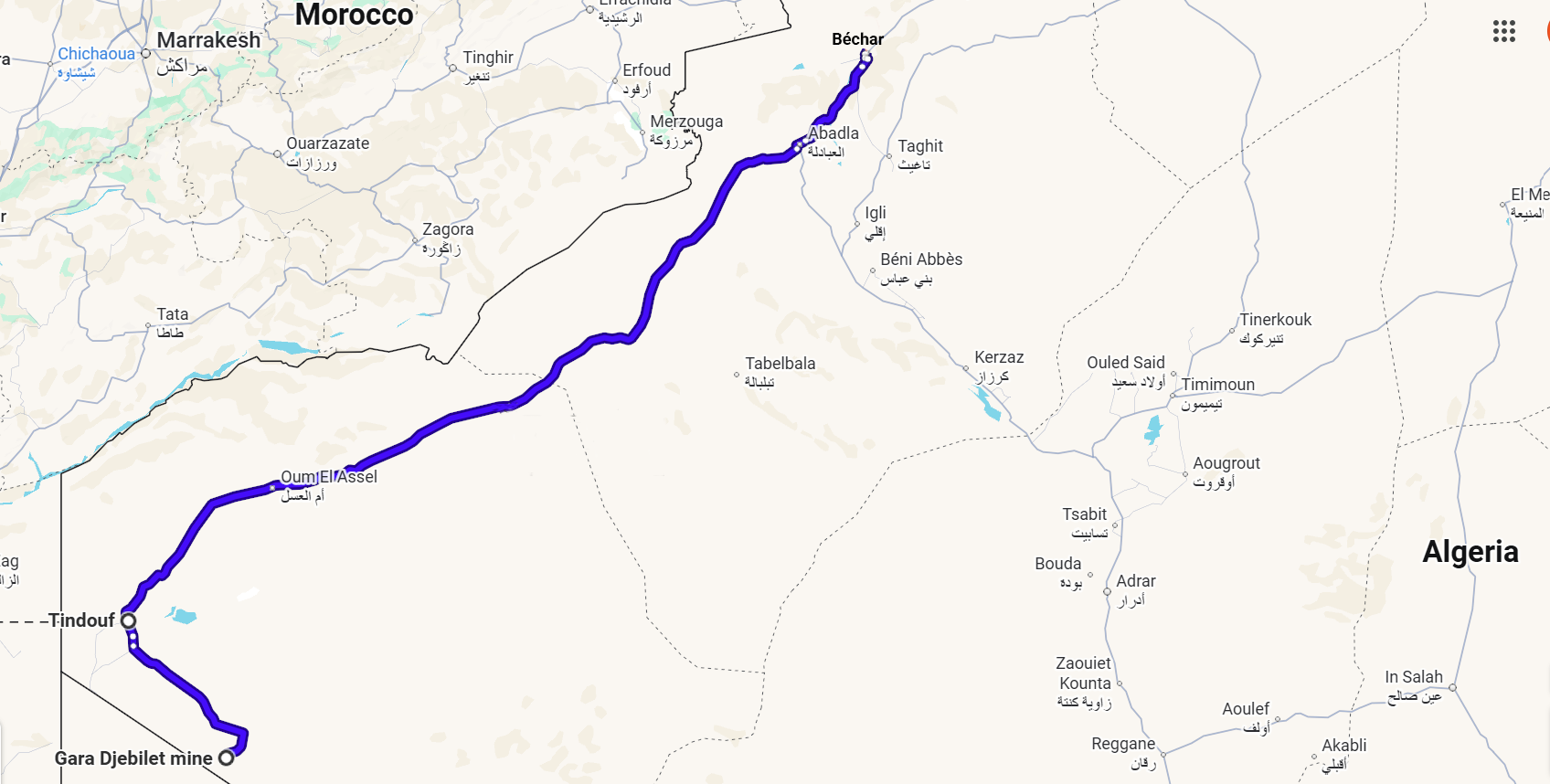
To minimise transportation costs, the ore will undergo primary processing at the mine, where Algeria has contracted Sinosteel to construct the site’s initial pre-treatment facility. From there, it will travel to Béchar, before moving onto existing rail networks leading to the Mediterranean coast. The port city of Oran is home to a major steel complex operated by Turkey’s Tosyali Holding, which is expected to process a share of the mine’s output.
Although first identified in 1952, the Gara Djebilet site sat largely unexploited for decades, hindered by its extreme isolation and prohibitive processing costs. Today, it ranks as North Africa's largest iron ore reserve, boasting an estimated 3.5bn tonnes overall, with roughly 1.7bn tonnes extractable using current methods. Mining operations are led by Algeria’s state group Sonarem, through its iron and steel subsidiary Feraal. The mine is expected to produce 4m tonnes annually during its initial phase, with output projected to triple to 12m tonnes by 2030. Ultimately, capacity could expand to 50m tonnes annually.
Over 8,000 Chinese and Algerian workers completed the project's construction in 24 months amid challenging Sahara Desert conditions. To ensure structural stability amid shifting sands and temperatures reaching 50°C, engineers frequently scheduled concrete pouring during the night.
The new rail link is expected to help China further reduce its dependence on iron ore from markets such as Australia and Brazil, enhancing its supply chain security. For Algeria, the project represents a move to diversify export revenues away from its oil and gas industries – which account for over three-quarters of export earnings – while significantly reducing its reliance on imported iron ore and saving an estimated US$1.2bn annually.
References
'Three new Algerian agreements to develop the mining projects', NAN Media, 11 May 2024
'Algeria prepares to launch production at the Gara Djebilet mine in 2026', SteelRadar, 13 December 2025
'How Algeria could help China plug iron ore gaps and gain pricing power', Yahoo Finance, 28 December 2025
'Africa's Chinese-built, 1st heavy-haul desert railway opens to traffic in Algeria', Xinhua, 2 February 2026
'China to help Algeria reopen its Gara Djebilet mine, North Africa's largest iron ore deposit', Business Insider Africa, 2 February 2026
'Chinese-built desert railway opens in Algeria, marking milestone in African infrastructure', China Daily, 2 February 2026
'Tosyali prepares new plant for the end of 2028', Algeria Invest, 3 February 2026