China as export destination for Africa
China continues to expand its footprint in Africa, despite the challenges from the COVID-19 pandemic.
by Johan Burger
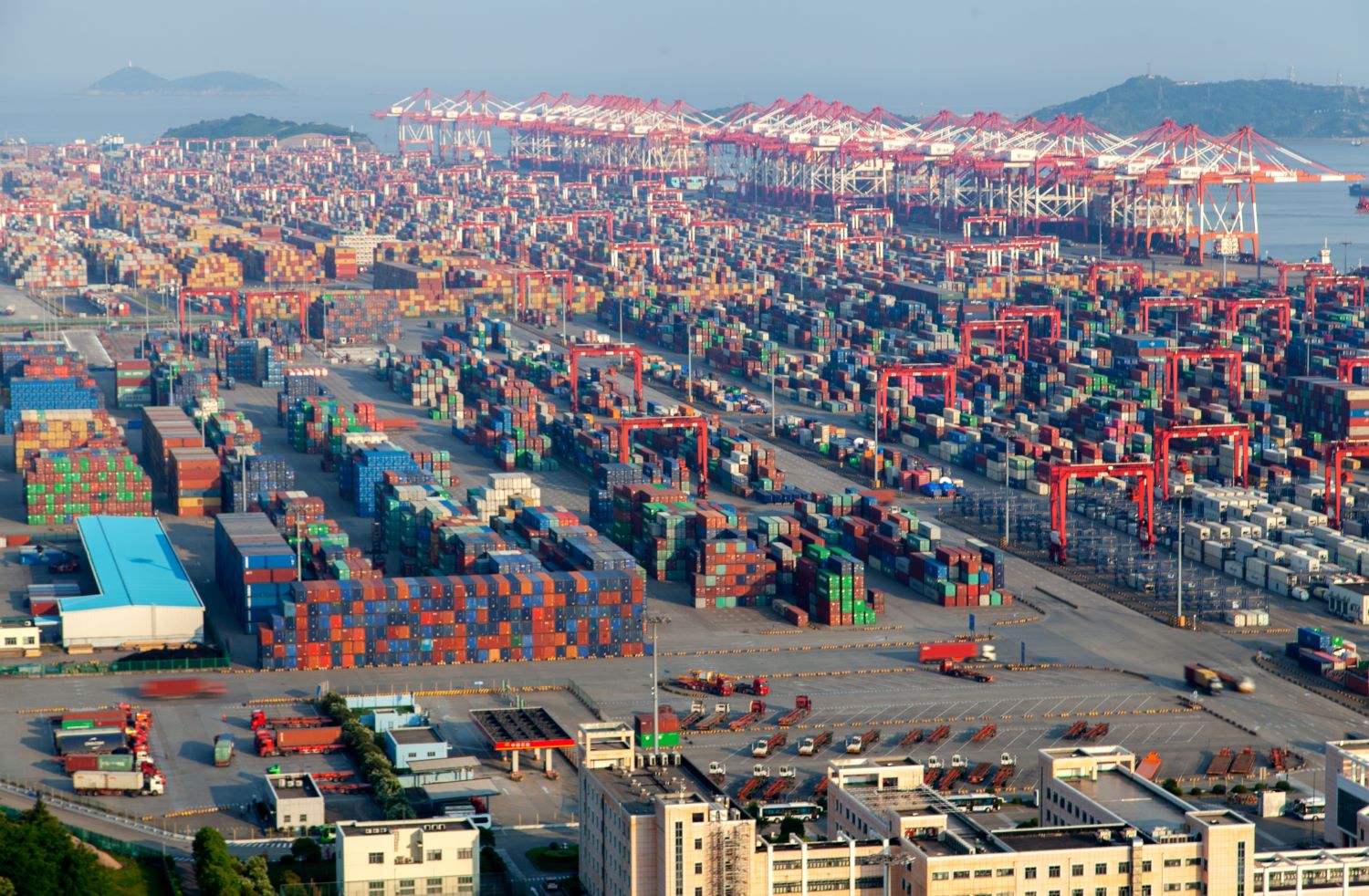
Its Belt and Road Initiative (BRI) receives attention, even in some unusual countries on the African continent. China itself has become an exciting trading destination due to geopolitical turmoil in Asia and the Pacific Rim. This report addresses recent developments on China’s role in Africa.
CHINA AS EXPORT DESTINATION FOR AFRICA
Marcus Ford of Wines of South Africa (WOSA) explained how South Africa’s wine industry avoided the ravages of the Covid-19 pandemic. Despite bans on the sale of alcoholic products imposed by the South African government, a 50% increase in South African wine exports to China saved the day. This followed a 212% tariff levied on Australian wines by China due to escalating geopolitical tensions that reduced Australian wine exports to China by 95% in December 2020 compared to December 2019.
The ban on alcohol sales by South Africa’s government resulted in a domestic wine surplus of around 400 million bottles. This would typically devastate both the industry and the country. The wine industry contributed 1.1% of GDP (US$3.69 billion) in 2019, providing 269,096 jobs and US$1.28 billion in household incomes. Wine tourism contributed US$1.81 million and 36,406 employment opportunities.
Wine Australia estimates the market in China for imported wine at 52 million customers, nearly double the number seven years ago. There is room for further growth. In 2019, South Africa captured only 0.9% of the Chinese wine market share, compared to the top three: Australia (35.4%), France & Monaco (28.7%), and Chile (14.2%).
South African wine exports to the lucrative Chinese market face several challenges. These include a decline in the overall demand for wine in China due to Covid-19, difficult transport logistics, complex foreign regulations, procedures and legal requirements, and broad cultural and language differences. The selection of the right business partners is thus a strategic imperative for wine producers.
South Africa can learn from other wine exporters on dealing with the Chinese market. China had established Free Trade Agreements (FTAs) with Australia, Chile, and New Zealand, which resulted in the elimination of duties from 2012 - 2019. As 49% of wine consumers from China purchase wine through e-commerce, exporters must promote South African wines online and offline. Greater visibility on Chinese supermarket shelves will also raise consumer awareness of South African wines.
Growing South African wine exports will increase direct jobs at home, especially youth employment. Indirect job opportunities, such as in logistics and transport services, will also increase. Wages will potentially rise. As South African brands become more visible and reputable, increasing wine tourism could provide new employment opportunities in the services sector.[1]
THE DRC BECOMES A MEMBER OF CHINA’S BRI
The Democratic Republic of Congo (DRC) became the 45th country in Africa to join China’s Silk Road Initiative (also known as the BRI) when it recently signed an MoU with China during the visit of the Chinese foreign minister, Wang Yi, to the DRC in January 2021. According to Wang Yi, the deal with the DRC will strengthen bilateral economic cooperation between the two countries, bringing “a stronger dynamic to their mutually beneficial exchange, and open new prospects for their relations."
The government of the DRC under the administration of President Felix Tshisekedi is trying to improve its collaboration with its international partners to revive the DRC economy. As part of these attempts, the DRC has succeeded in getting China to cancel US$28 million of its debt, in addition to gaining US$2 million to support DRC’s candidacy to the African Union presidency.
The new Silk Road agreement could lead to additional Chinese investments in the DRC, whose large mineral reserves should play an essential role in the Silk Road project.
Liberal Chinese financing has characterised the implementation of the BRI to African countries. Between 2000 and 2015, China granted US$94.4 billion in loans to countries in Africa[2] as part of its BRI program.
CHINA IN UGANDA’S MINING SECTOR
Uganda’s Ionic Rare Earths (IonicRE) signed a non-binding MoU with China’s Aluminium Corporation of China (Chinalco) to advance the development of the Makuutu rare earths project in Uganda. The MoU covers funding for the project and an option for an offtake agreement. Chinalco’s subsidiary, China Rare Metals and Rare Earth (Jiangsu) will act on its behalf to work with IonicRE in accelerating the development and production of the project.
IonicRE Managing Director (MD) Tim Harrison said he expects Makuutu to evolve into a huge, long-life producer of critical and heavy rare earths. The partnership with Chinalco would fast-track development for Makuutu and assist in value creation for IonicRE.
The Makuutu project is said to have an operational life of more than 30 years.[3]
SUPPORTING RWANDA DURING COVID-19
China plans to cancel a US$6 million loan to Rwanda and provide the country with a grant of US$60 million. The agreement signed by China and Rwanda on 19 February will enable Rwanda to channel funds intended to service debt into other activities. The grant will also fund a priority project yet to be agreed upon.
According to the Rwandan government, China has been supporting Rwanda in significant sectors of its development, mainly in its transport, agriculture, health, education and energy sectors.
According to Rao Hongwei, China’s Ambassador to Rwanda, China perceived the extension of the financial support to Rwanda to contribute to Rwanda's transformation and recovery from the adverse effects of the Covid-19 pandemic.
CHINA IN EGYPT
President Xi Jinping has reaffirmed China’s willingness to work closely with Egypt. In February 2021, Xi suggested closer cooperation in infrastructure, construction, production capacity, and science and technology. The Chinese leader defined the “China-Egypt relationship as a model of China-Arab and China-Africa solidarity and win-win cooperation.” Over the past decade China and Egypt have forged ever deeper economic ties. Beijing has sought to leverage its relationship to produce BRI, while Cairo has looked to China in its efforts to revitalize its economy. At the core of this relationship have been Chinese financed mega-projects such as the Suez Economic and Trade Cooperation Zone (SETC) set up in 2008. Chinese firms have been using Egypt as production base to top the African and European markets. China has recently selected Egypt as a hub to manufacture COVID-19 vaccine for Africa.
CHINA EXPANDING ITS FOOTPRINT IN TUNISIA
Tunisia and China have signed an economic and technical cooperation agreement in April 2021. According to China’s Ambassador to Tunisia, Zhang Jianguo, some projects carried out by Tunisia with the assistance of the Chinese government have become symbols of the cooperation between the two countries. These include projects such as the Ben Arous sports centre and the Tunisian diplomatic academy.
In addition to projects mentioned above, other projects in Tunisia aided by China include the sports and cultural centres of Menzah 6 in the north of Tunis, the new university hospital in the south-eastern province of Sfax, and the construction of the Medjerda River canal in the northwest of Tunisia.[4]
POINTS OF INTEREST
- African Digest reported on China’s role as an export destination for Africa, specifically for coal, some time ago. AfD noted that while this opportunity stretches further than coal: agricultural producers in Africa can utilise this situation to their benefit, with wine being an attractive sub-sector. South Africa’s wine sector has long looked longingly towards China as a desirable export destination. However, given the attractive trade agreements between Australia and China and South Africa’s seeming inability to arrange something similar, South Africa’s wine producers have found it challenging to tap into the vast Chinese market. There are obvious exceptions, such as Hein Koegelenberg’s L’Huguenot brand, which successfully developed a suitable footprint in China over the past decade. As more sophisticated Chinese wine consumers are very brand- and quality conscious, South Africa should take care not to push just anything to the Chinese market. In the early 1990s when South Africa first started exporting wine overseas, consumers were unwilling to pay a higher price even though they found the quality acceptable.
- The DRC is the latest African member of China’s BRI club. This move reveals China’s shift in focus beyond the countries sited along the original Spice Route. In China's opinion, any country that wants to become part of the BRI adds value to its aspirations seems an acceptable candidate. The DRC has tremendous mineral potential, has huge electricity generation potential and has a large population (approximately 87 million). This qualifies the DRC as a source of resources, a potential market for Chinese goods, and a country with vast infrastructure development potential that Chinese construction companies can tap. It is also the scene of significant security challenges and politically volatile, with a relatively stagnant economy. Such issues have rarely deterred China from becoming involved in a country. Africa has willingly embraced China’s support.
- For decades, Uganda, Rwanda and Egypt partnered with China to develop their economies. By entrenching itself in Africa, China is ensuring its access to sources of mineral and other resources. China also seeks markets for consumer products, electricity production, infrastructure development, and other products and services. China is not unique, as most countries pursue access to materials and markets as a matter of principle; this is what business is really about. China is very good at it, having learned to apply all its considerable resources to position itself as a partner of choice and is more successful at it than most. For obvious reasons, some countries are less than thrilled with China’s growing footprint on the continent.
- As its footprint in North Africa expands, China has an increasingly strong presence beyond Egypt; in Algeria, Morocco and Tunisia. In pursuing this strategy, China runs the risk of becoming embroiled in the internal squabbles of its partners. One example is the difficulties brought about by heightening tensions between Algeria and Morocco. Despite these issues, many African countries see China as an important development and investment partner.
Additional Readings
Anon. 2021. IonicRE signs MoU to develop Makuutu rare earths project in Uganda. Mining Technology. 7 April 2021. Available at https://www.mining-technology.com/news/ionicre-mou-makuutu-rare-earths-project/. Accessed 13 April 2021.
Ford, M. 2021. China’s growing thirst helps South Africa’s wines cope with Covid downturn. The Africa Report. 7 April 2021. Available at https://www.theafricareport.com/78182/chinas-growing-thirst-helps-south-africas-wines-cope-with-covid-downturn/?utm_source=newsletter_tar_daily&utm_campaign=newsletter_tar_daily_08_04_2021&utm_medium=email&utm_content=top_stories_article_1. Accessed 13 April 2021.
Kuteesa, H. 2021. China cancels $6 million debt to Rwanda, offers extra grants. The New Times. 19 February 2021. Available at https://www.newtimes.co.rw/news/china-cancels-6-million-debt-rwanda-offers-extra-grants. Accessed 13 April 2021.
Nourou, M.A. 2021. DR Congo t become the 45th African country to join the Silk Road Initiative. Ecofin Agency. 11 January 2021. Available at https://www.ecofinagency.com/public-management/1101-42232-dr-congo-to-become-the-45th-african-country-to-join-the-silk-road-initiative. Accessed 13 April 2021.
Xinhua. 2021. Tunisia, China sign economic, technical cooperation agreement. Forum on China-Africa Cooperation. 8 April 2021. Available at http://www.focac.org/eng/zfgx_4/jmhz/t1867392.htm. Accessed 13 April 2021.
Xinhua. 2021. Xi calls for broader cooperation, closer partnership with Egypt. China.org.cn. 23 February 2021. Available at http://www.china.org.cn/world/2021-02/23/content_77239233.htm. Accessed 13 April 2021.
References