
JOIM Conference Singapore
About
The JOIM Singapore Conference showcases academic excellence with practical solution and direction for the profession. The conference is co-organised by the Journal of Investment Management (JOIM), Nanyang Technological University (NTU) and the University of California, Berkeley. It brings together academic researchers, industry practitioners, and regulators in a structured dialogue format: academic speakers present research papers followed by industry discussants, and industry and agency participants lead dedicated panel sessions. The conference mandate encompasses both rigorous academic research and practitioner-oriented research, reflecting JOIM’s long-standing commitment to bridging theory and practice. Artificial intelligence in finance is a central theme of the 2026 programme.
Programme
23 November 2026
Format: In-person @ Wee Cho Yaw Plaza, NBS Auditorium Level 1
Time: 8:00am – 5:30pm SGT
Note: This is an in-person only event. Sessions will not be recorded.
| Time | Programme |
|---|---|
| 8.00am - 9.00am | Registration and Light Breakfast |
| 9.00am - 10.15am | Research Presentation - All-to-All Liquidity in Corporate Bonds
Open Trading (OT) on the largest electronic corporate-bond request-for-quote (RFQ) platform allows investor-to-investor trading. Despite only 2% of trades occurring directly between investors, OT succeeds in attracting new liquidity providers (7%) and creating new client-dealer links (3%). These result in OT improving prices by 3bps on average, 1bp from OT winning, and 2bps from dealers improving bids, which reduces trading costs by 15-30%. However, OT worsens prices in RFQs with few dealers, which have the largest winner’s curse. A model and counterfactual experiments suggest how market redesign could mitigate adverse selection and improve liquidity in corporate bond markets. Speaker: Details of the discussant will be shared soon. |
| 10.15am - 10.30am | Tea Break |
| 10.30am - 11.45am | Asset Allocation Panel Discussion
Moderator: Panellists: |
| 11.45am - 12.30pm | Buffet Lunch |
| 12.45pm - 1.30pm | Keynote Presentation - Risk Management for Sustainable Funds
Speaker: |
| 1.30pm - 1.45pm | Tea Break |
| 1.45pm - 3.00pm | Research Presentation - Shadow Liquidity: How Bond ETFs and Portfolio Trading Are Reshaping Fixed Income Markets
Speaker: Details of the discussant will be shared soon. |
| 3.00pm - 3.15pm | Tea Break |
| 3.15pm - 4.30pm | Research Presentation - AI Tokenomics: Pricing and Application Discovery in Foundation-Model Markets
Foundation models are metered and sold in tokens — a unit that is to AI what the kilowatt-hour is to electricity. I provide a framework in which users demand tasks while providers post a low-dimensional menu of token prices, showing why a model that is cheaper per token is often more expensive per task, and how providers should set markups across input, output, cache, and reasoning tokens. The dynamics matter most for investors: because the same tokens used in production are also burned prototyping new applications, falling token prices expand the set of AI applications that exist — and when the opportunity frontier is thick enough, total token demand and revenue rise faster than prices fall, a modern Jevons regime with direct implications for compute and data-centre demand. Under competition, workload portability determines where rivalry compresses margins and where pricing power survives: portable workloads are commoditised (increasingly by AI routers), while ecosystem-bound workloads sustain both markups and heavily subsidised launch pricing. The paper closes with practical guidance for enterprise AI procurement, provider pricing, and the evaluation of AI business models. Speaker: Discussant: |
| 4.30pm - 5.30pm | Reception & Networking |
| 5.30pm | End |
24 November 2026
Format: In-person @ Conrad Singapore Orchard, Paterson Room Level 3
Time: 8:00am – 12:00pm SGT
Note: This is an in-person only event. Sessions will not be recorded.
| Time | Programme |
|---|---|
| 8.00am - 9.00am | Registration and Light Breakfast |
| 9.00am - 10.30am | AI Panel Discussion
Moderator: Panellists: |
| 10.30am - 10.45am | Tea Break |
| 10.45am - 12.00pm | Research Presentation - CARL: Chat Assisted Reinforcement Learning
Successfully solving an applied Reinforcement Learning (RL) problem requires three distinct forms of effort: understanding the problem domain, designing the Markov decision process (MDP), and implementing a code repository that handles reward shaping, hyperparameter selection, environment validation, training, and evaluation. Recent agentic systems with sophisticated tool-use harnesses have shown that long-horizon implementation tasks can be completed with increasing autonomy in other domains. We find, however, that RL exposes a sharper bottleneck: autonomous code generation addresses only the implementation stage, while failures often originate earlier, when human intent has not yet been translated into a precise problem definition. Chat Assisted Reinforcement Learning (CARL) is designed for this specification gap. CARL guides a domain expert through an interactive seven-step workflow that formalises the problem before autonomous implementation begins, using bespoke skill files to structure the discussion for each step and compact summaries to carry decisions forward. After the formal problem description is agreed upon, CARL’s tool-use loop generates, executes, debugs, and iterates on a runnable RL training pipeline. We describe the CARL architecture, its skill-driven workflow, its boundary between interactive specification and autonomous coding, and the current limitations and future research directions for human-agent co-design of RL systems. Using realistic examples such as dynamic portfolio optimisation, we also show the drawbacks of using fully autonomous RL code generation without first resolving the specification gap. Speaker: Discussant: |
| 12.00pm | End |
Speaker Profiles
 | Terry Hendershott Willis H. Booth Chair in Banking and Finance Terrence Hendershott holds the Willis H. Booth Chair in Banking and Finance at UC Berkeley Haas School of Business. He is one of the foremost academic experts on how modern financial markets work, including the impact of electronic trading, algorithmic strategies, and high-frequency trading on market quality, price formation, and liquidity. His research has directly informed regulatory debates and industry practices on market structure across equity and fixed-income markets in the US and Europe, and he has served as a visiting economist at the New York Stock Exchange. He directs the Master of Financial Engineering program at UC Berkeley’s Haas School of Business. He holds a Ph.D. from Stanford Graduate School of Business. |
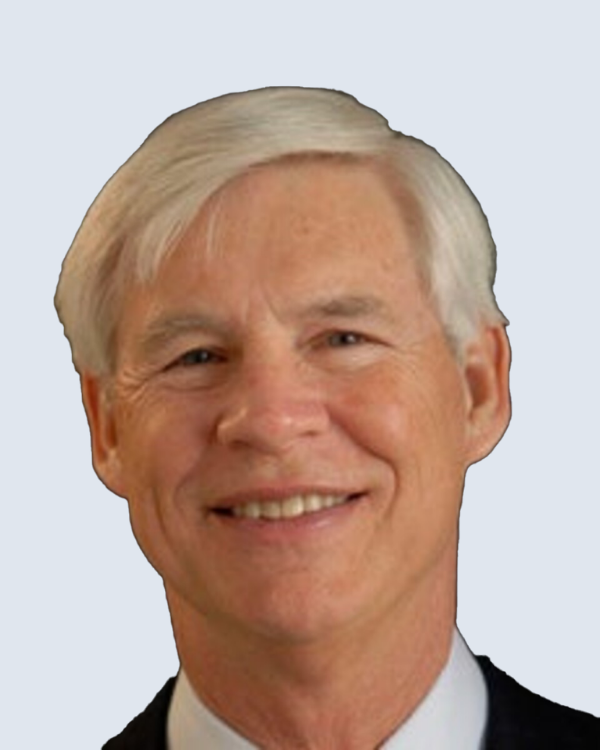 | Robert Engle Professor Emeritus of Finance Robert Engle is a Professor Emeritus of Finance at NYU Stern School of Business and the 2003 Nobel Laureate in Economics. His Nobel Prize recognised his development of ARCH (Autoregressive Conditional Heteroskedasticity) models — a technique for measuring and forecasting financial market volatility that is now a cornerstone of modern risk management, used by banks, asset managers, and regulators worldwide. ARCH-based methods underpin value-at-risk calculations, stress testing frameworks, and derivatives pricing across the global financial system. Professor Engle is Co-Director of the NYU Stern Volatility and Risk Institute, which focuses on systemic risk and financial stability, and is the co-founding President of the Society for Financial Econometrics. He holds a Ph.D. in Economics from Cornell University. |
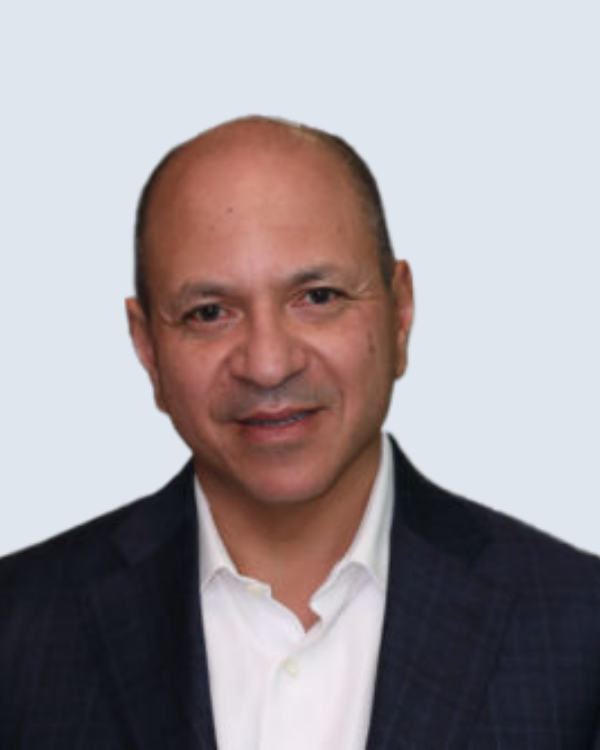 | Ananth Madhavan Executive Director, Master of Financial Engineering Program Ananth Madhavan is the Executive Director, Master of Financial Engineering Program, UC Berkeley Haas and former Managing Director at BlackRock. He combines deep academic expertise with over two decades of senior leadership in asset management. He spent 15 years as a Managing Director at BlackRock — the world’s largest asset manager — leading global research on ETFs and index investing, trading research and transition management, and the firm’s engagement with academics and regulators. He is the co-inventor of 16 US and international patents in financial engineering and portfolio construction, and author of a widely-used book on ETFs and index investing published by Oxford University Press. His practitioner research has earned the Graham and Dodd Award, the CFA Institute’s highest recognition for practitioner-oriented work. He holds a Ph.D. in Economics from Cornell University. |
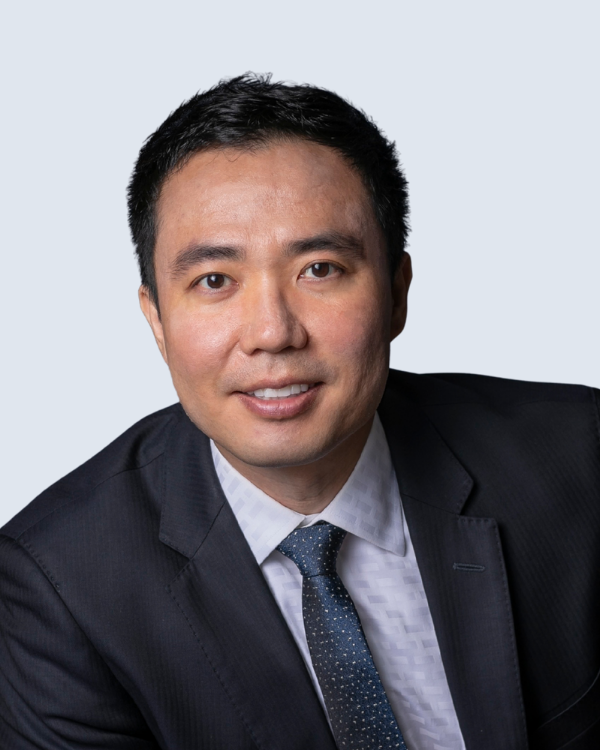 | Will Cong President’s Chair Professor of Finance, Computing and Data Science Will Cong holds the President’s Chair Professor in Finance, Computing and Data Science at Nanyang Technological University, with joint appointments at Nanyang Business School and the College of Computing and Data Science. He is one of the world’s leading researchers at the intersection of AI, financial markets, and digital assets. His work spans algorithmic trading, FinTech regulation, cryptocurrency markets, and the application of machine learning to investment and risk analysis. Formerly the Rudd Family Endowed Chair Professor at Cornell University and a faculty member at the University of Chicago Booth School of Business, Professor Cong has advised major institutions including BlackRock and Citi, and has been consulted by the U.S. Securities and Exchange Commission, the Department of the Treasury, and the Monetary Authority of Singapore. His research has been featured in Bloomberg, CNN, the Economist, and the Washington Post. He holds a Ph.D. in Finance and M.S. in Statistics from Stanford University, and dual degrees from Harvard University, where he graduated summa cum laude. |
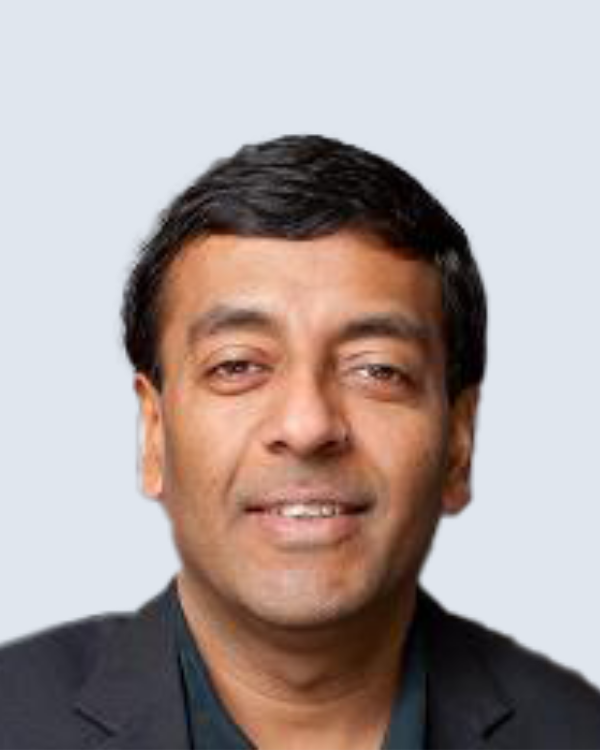 | Sanjiv Das William and Janice Terry Professor of Finance and Data Science Sanjiv Das holds the William and Janice Terry Professorship of Finance and Data Science, Santa Clara University and is an Amazon Scholar, AWS. He works at the frontier of AI, machine learning, and financial markets. He is a senior founding editor of the Journal of Investment Management (JOIM) — the journal co-sponsoring this conference — and brings a distinctive combination of finance expertise and technology depth, including an M.S. in Computer Science from UC Berkeley in addition to his Ph.D. in Finance from New York University. Before entering academia, he worked in the financial derivatives business at Citibank in the Asia-Pacific region. He has previously held faculty positions at Harvard Business School and UC Berkeley. His current research focuses on AI applications in finance, FinTech, wealth management, and credit risk. He is also an Amazon Scholar at AWS, where he contributes to open-source data science tools. |