A New Lens on the Blood Test
NTU researchers develop a rapid label-free microfluidic method to profile immune cell behaviour in diabetic patients, offering a promising low-cost solution for future clinical testing.
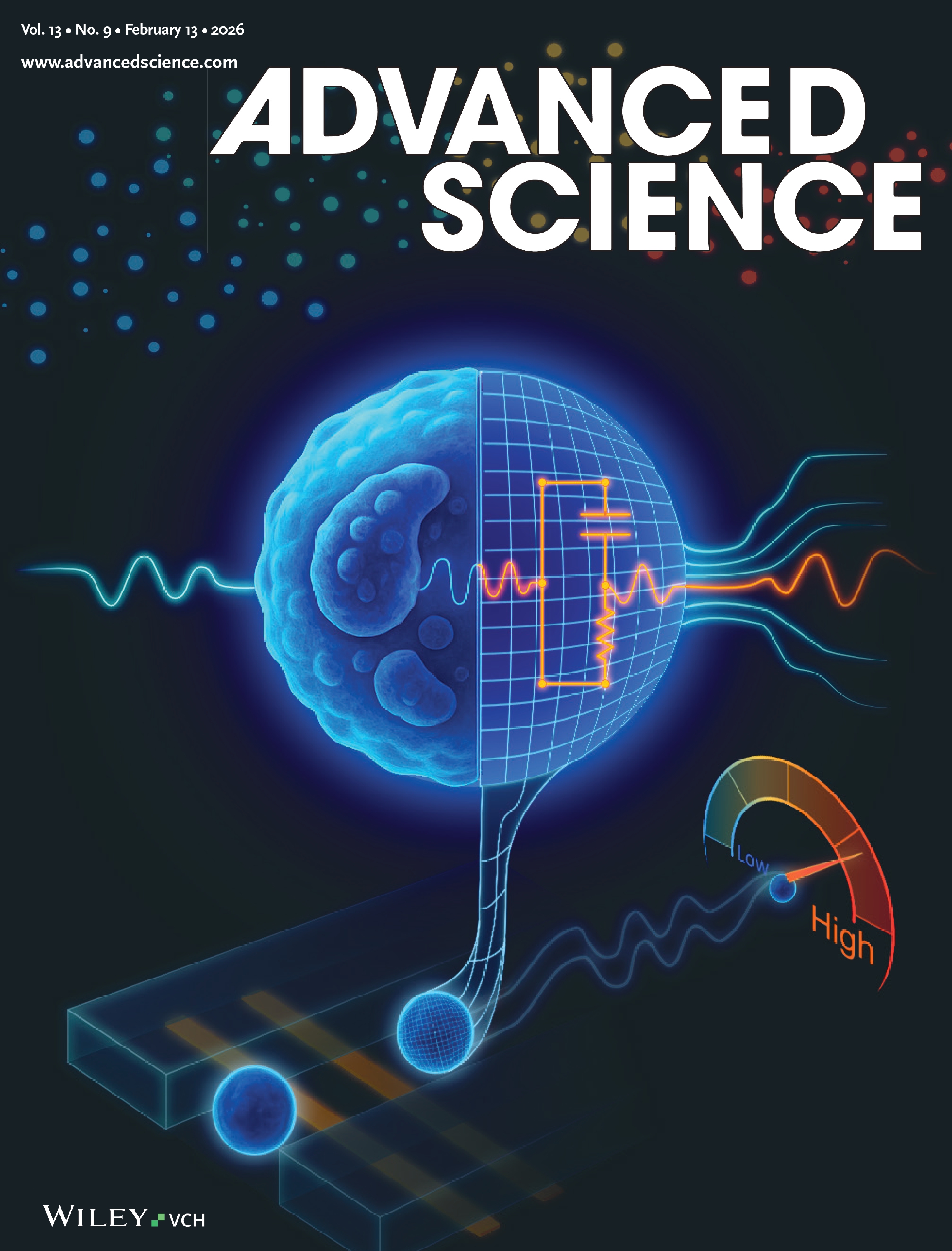 Prof Hou article featured inside back-cover of Advance Science Feb 2026
The body’s immune system is one of the most important defences against diseases, and helps to maintain overall health.
For years, researchers have known that the physical and functional behaviour of immune cells carries meaningful information about a patient's inflammatory state.
Changes in how cells move, stretch, and respond to stimulus have been linked to a range of conditions, including diabetes, sepsis and cardiovascular diseases.
The science was compelling. The tools to act on it in a clinical setting were not.
"Traditional methods to look at immune cells require antibody staining, which is expensive and time-consuming," says Associate Professor Hou Han Wei of NTU's School of Mechanical and Aerospace Engineering and Lee Kong Chian School of Medicine. "More importantly, we need to reliably isolate these rare immune cells out from blood before analysis, which further complicates the assay.”
 Prof Hou’s team in this study (From left to right: Dr. Gong Lingyan, Prof. Hou Han Wei, Dr. He Linwei, Ms. Tay Hui Min)
The result is that hospitals have defaulted to what is fast and affordable: the complete blood count using automated hematoanalyzers.
It tells clinicians how many immune cells and their composition a patient has. It says very little about what those cells are doing.
Prof Hou's team set out to change that.
Their research, selected as the inside back-cover article of Advanced Science Volume 13, Issue 8 in February 2026, presents a microfluidic platform that makes detailed immune cell profiling fast and practical enough for clinical use.
What the count does not capture
Type 2 diabetes mellitus (T2DM) affects more than 500 million people globally, and cardiovascular disease (CVD) is its leading cause of death.
The condition often develops through a slow process of immune dysfunction and chronic vascular inflammation, one that standard clinical checks are poorly equipped to detect at an early stage.
The white blood cell count, the measure hospitals rely on most readily, does not distinguish between a well-functioning immune system and a dysregulated one.
"Our earlier studies, and findings from other groups, have shown that two people with similar immune cell counts or composition can have different disease severity and outcomes. Measuring blood cell count helps to detect elevated immune activity, but it cannot assess the functional quality of the cells themselves." Prof Hou says.
In diabetes, neutrophils, a primary class of immune cells, may become dysregulated in ways that promote arterial inflammation and vascular damage, often well before they show up in conventional blood panels.
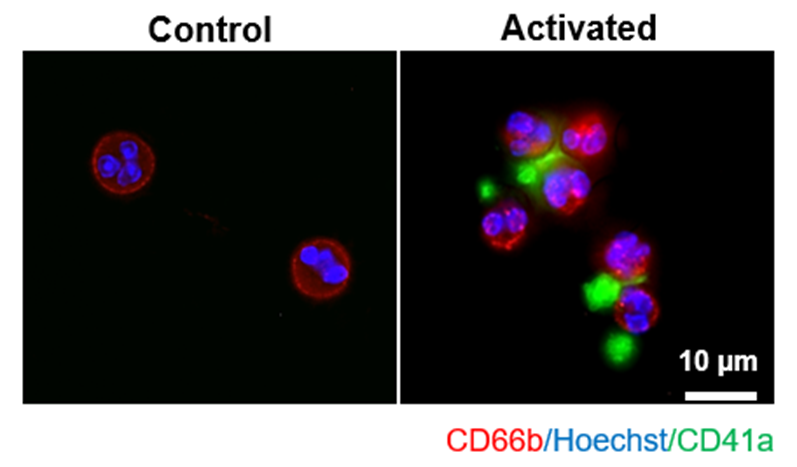
Fluorescence image of healthy neutrophils and activated neutrophils that form neutrophil-platelet aggregates (NPAs)
Building something usable
The microfluidic-based platform Prof Hou's team developed is called impedance-deformability cytometry.
It works by passing individual cells through a microfluidic device that simultaneously measures how they deform under physical stress and their electrical characteristics multiple frequencies.
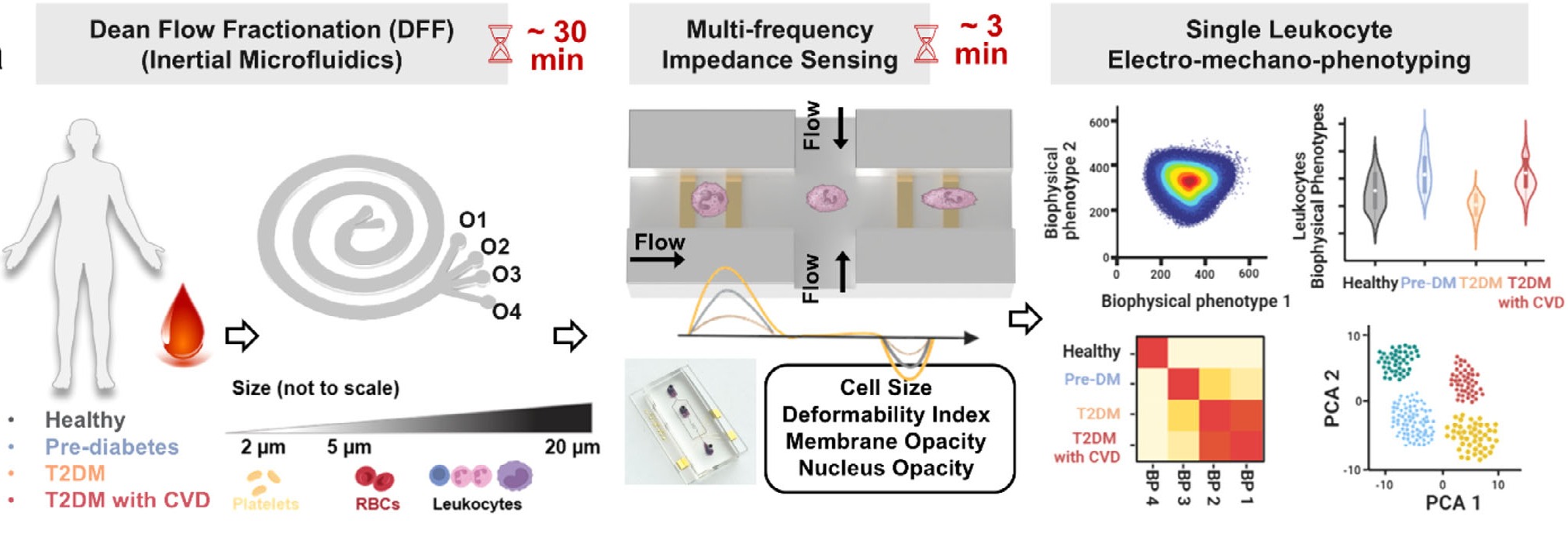
Illustration of label-free blood cell separation using Dean Flow Fractionation (DFF) and impedance-deformability cytometry to study leukocyte biophysical properties
The key design principle was that it can work without antibody labelling of blood samples.
Antibody-based methods are the existing gold standard for detailed immune cell characterisation, but they are expensive, require specialist preparation, and introduce handling steps that can alter the very cells being studied.
By eliminating labelling entirely from immune cell isolation to analysis, the team removed the main practical obstacle to clinical adoption.
The workflow requires less than 200 microlitres of blood, a volume small enough to be taken from a fingertip. The entire process, from sample to result, takes under 40 minutes.
"Immune cells are the key soldiers in our body to combat disease agents," Prof Hou says. "Understanding and tracking their behaviour and health status will better help us understand the overall immune and inflammatory landscape of a patient."
The platform analyses more than 1,000 cells per minute, a throughput consistent with clinical processing demands.
More significantly, it extracts nine distinct biophysical measurements from each individual cell, compared to the two or three parameters that earlier impedance approaches could capture, thus greatly improving detection resolution to identify abnormal immune cells from healthy ones.
Validating the approach
The interdisciplinary research was conducted in collaboration with researchers from LKCMedicine and Tan Tock Seng Hospital. Before clinical testing, the team validated the platform across controlled laboratory experiments and two separate animal models of diabetes and atherosclerosis.
"The animal studies gave us confidence it may work," Dr He Linwei (first author of this work) says. "We used two different disease models to validate our hypothesis before performing the clinical studies."
In laboratory conditions, neutrophils exposed to high glucose showed measurable changes in membrane and nucleus opacity. Those treated with inflammatory agents became more deformable.
In diabetic mouse models, the platform tracked neutrophil biophysical changes longitudinally over several weeks without requiring the animals to be sacrificed at each measurement point.
The clinical study enrolled subjects across four groups: healthy controls, pre-diabetes, diabetes without cardiovascular complications, and diabetes with a history of cardiovascular disease.
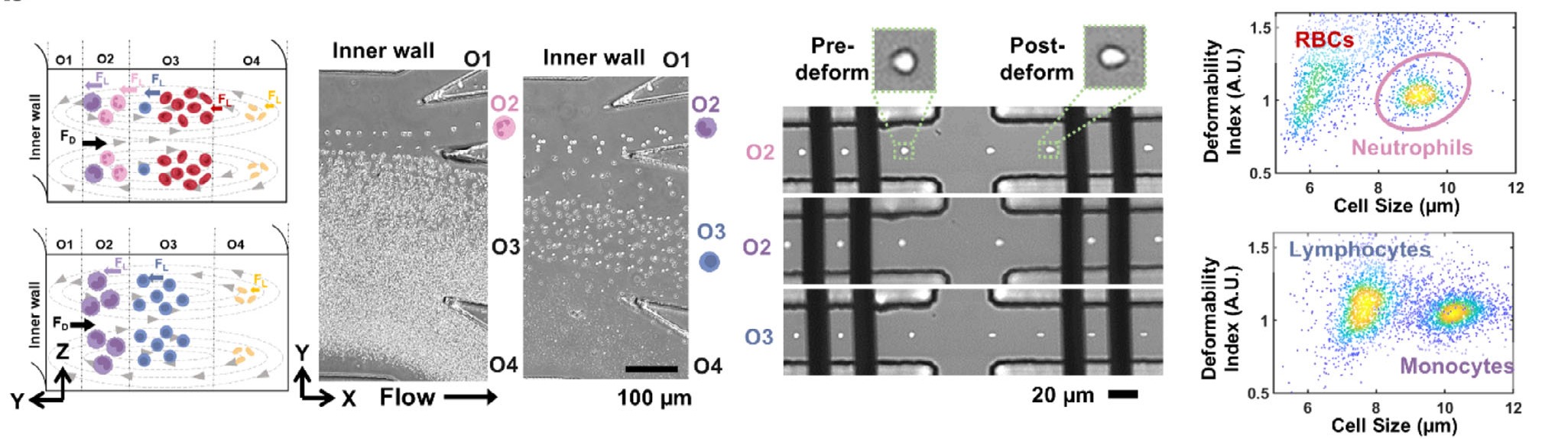 Prof Hou’s finding suggest that inflammation play a key role as observed that significant immune cells activation can be observed in T2DM patients with CVD.
Standard leukocyte counts showed no significant difference between diabetic patients with and without cardiovascular complications.
The impedance profiles told a different story.
Neutrophils from patients with cardiovascular disease showed a distinct biophysical signature, smaller in size, higher nucleus opacity, and different deformability, compared to diabetic patients without complications.
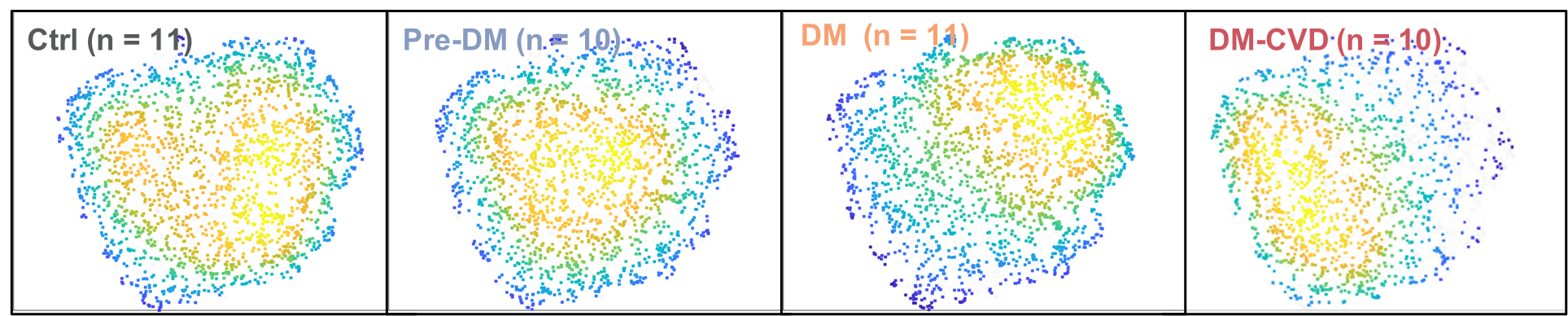
Prof Hou’s finding suggest significant biophysical changes in neutrophils from T2DM patients with CVD.
Transcriptomic sequencing independently validated the finding, revealing a pro-inflammatory gene expression profile in the same patient group.
When principal component analysis was applied across 27 impedance parameters drawn from all leukocyte subtypes, the classification achieved an area under the curve of 0.971 in distinguishing patients with measurable vascular dysfunction from those without.
The immune cell count, across both groups, remained comparable throughout.
Giving clinicians information they needed
The value of the platform is best understood not as a new clinical directive, but as a practical answer to an existing clinical frustration.
Clinicians managing diabetic patients are always interested to know which individuals are at elevated cardiovascular risk to improve patient care.
Existing tools for making that distinction in depth are either insufficiently sensitive or too operationally demanding to run routinely.
Impedance-deformability cytometry sits in the space between those two options. It is more informative than the count and more practical than the alternatives.
"This new method will complement current clinical cell count to provide a more holistic picture of patient inflammation to the doctors," Prof Hou says.
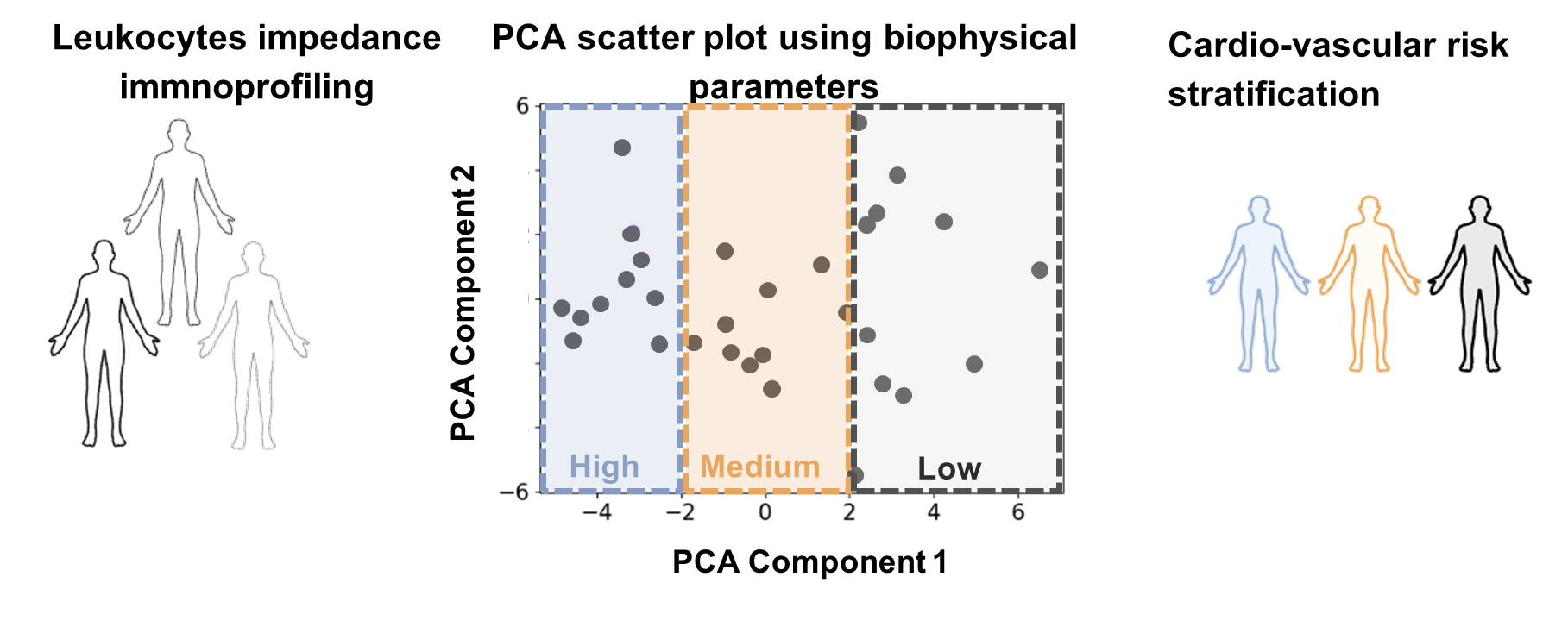 Potential pathway to complement current clinical diagnostic tool to provide further patient stratification and improve efficiency in disease management.
If patients show increasing trends of inflammation, then they should undergo further testing in hospitals for early detection of cardiovascular development, or be put on anti-inflammatory medications."
The platform is not a replacement for existing diagnostics.
It is a layer of information that existing diagnostics currently cannot provide, delivered in a format that clinical workflows can actually accommodate.
What comes next
The immediate priority is clinical validation at a larger scale.
The current proof-of-concept study demonstrated strong discriminatory performance between T2DM patients with and without CVD complications, but studies across larger, more diverse populations and multiple clinical centres will be needed to establish the robustness required for broader adoption.
The team is also exploring integration with proteomic and metabolomic data, building toward a more comprehensive picture of immune dysfunction in metabolic disease.
For Prof Hou, a biomedical engineer, the measure of success is straightforward.
The science of reading immune cell behaviour has been clinically interesting for years. The platform his team has built makes it clinically usable.
That is, in the end, the gap it was designed to close.
About the Research
The study, titled "Label-Free Leukocyte Biophysical Profiling Using Impedance-Deformability Cytometry for Rapid Cardiovascular Risk Stratification," was published in Advanced Science. The work was supported by the Singapore Ministry of Education Academic Research Fund Tier 2, the Lee Kong Chian School of Medicine Vascular Research Initiative, and the National Research Foundation Competitive Research Programme. Clinical samples were collected in collaboration with Tan Tock Seng Hospital.
About Prof Hou Han WeiAssociate Professor Hou Han Wei is a faculty member at NTU's School of Mechanical and Aerospace Engineering, with a joint appointment at the Lee Kong Chian School of Medicine. His research focuses on microfluidics and lab-on-chip technologies for clinical diagnostics, with particular emphasis on immune cell biophysics and blood-based biomarker discovery. His work bridges fundamental cell biology and applied medical technology, developing platforms that are designed from the outset for clinical translation. Learn about his research at Hou Lab. |  |
By Karen Chai, NTU MAE Communications