
The College of Engineering, a History
Nanyang Technological University (NTU) became a full-fledged university in 1991. However, its roots trace back further than this short time, to Nanyang Technological Institute (NTI), over four decades ago.
Despite its relatively young age, NTU has quickly risen to prominence. The university itself is regularly ranked among the top 30 universities globally and top five in Asia. The College of Engineering (CoE) itself is regularly listed among the top engineering schools worldwide. It placed 11th in the QS and 2nd in US News and World Report rankings for 2025 while also offering strong research impact and a thriving startup ecosystem.
The rapid ascent mirrors the equally fast growth of Singapore, a city-state just shy of 60 years old. In that time, Singapore has emerged as a multicultural hub in Southeast Asia. In turn, NTU’s rise has strengthened Singapore’s position as a global innovation leader, and provided thought leadership, as well as academic and technical resources.
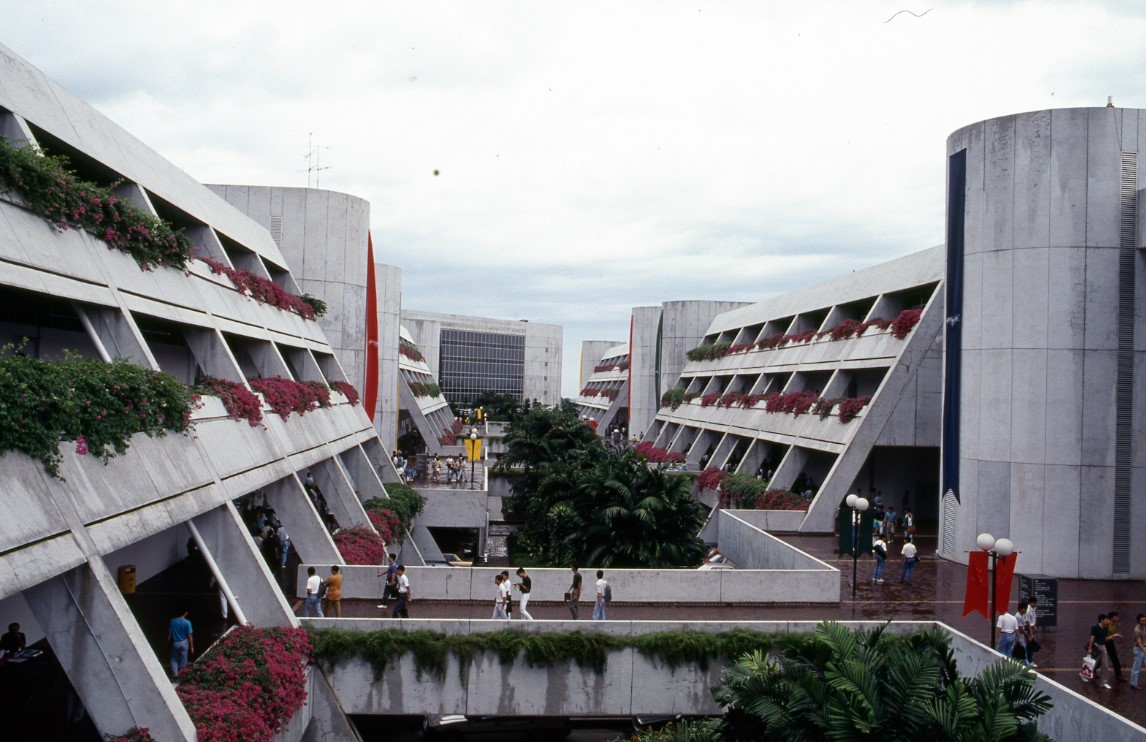 Engineering block circa 1990
 Students working in the EEE lab in 1990
Engineering foundations
Although Singapore gained independence in 1965, a decade before NTU was established, its predecessor Nanyang University (NU) had already laid the foundation for the nation's higher education since as early as 1955. NU, whose name translates to Southern Seas, was a Chinese language institution until it merged with the University of Singapore in 1980, making way for NTI’s establishment on the former NU campus.
The 1980s marked a period of transformation for Singapore as it shifted from a trade-based economy to a high-tech manufacturing one. A demand for skilled engineers and an industry-ready and hands-on technical workforce emerged.
NTI responded by establishing three engineering schools, Electrical and Electronic Engineering (EEE), Civil and Structural Engineering (CSE), and Mechanical and Production Engineering (MPE). After just four years of operation, it was named one of the best engineering institutions in the world by the Commonwealth Engineering Council.
The original three continue to form the core of NTU CoE today, though school names and programmes have evolved over time.
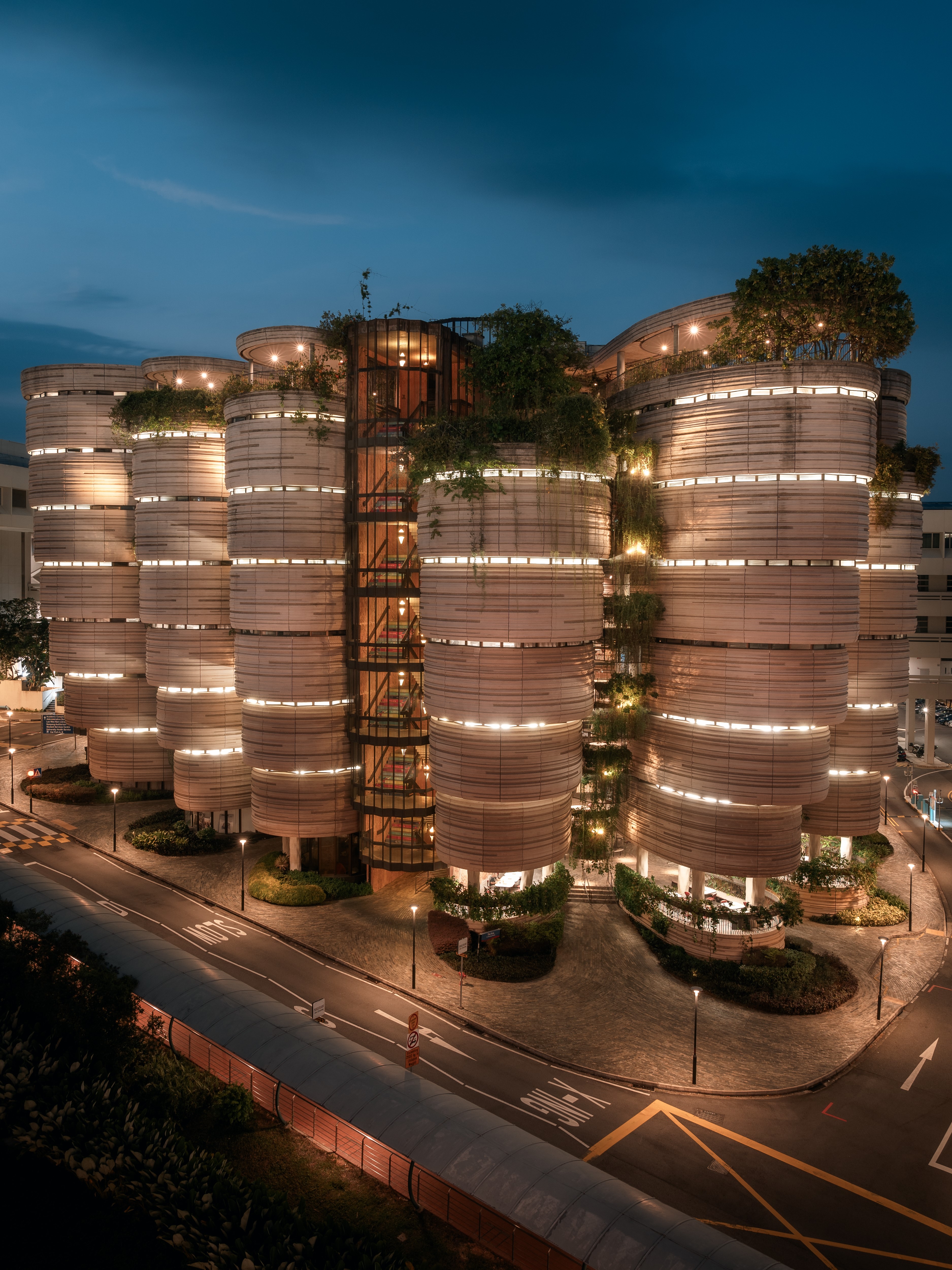 NTU's Learning Hub South, also known as The Hive, taken at night in 2024. Photo by Yan Yuteng
Finding success and shaping the future
Professor Chu Jian, Chair of the School of Civil and Environmental Engineering, joined NTU in 1991. His early work focused on land reclamation for an extension of Changi Airport, a project necessitated by Singapore's rapid growth and limited land resources.
“When I first started at NTU, I didn’t have any practical experience and the university was very big on that,” explained Chu.
After years of working on a challenge uniquely suited to Singapore, he became one of its leading experts. Over time, land reclamation, coastal protection, and soil improvement gained global importance, especially in the context of climate change.
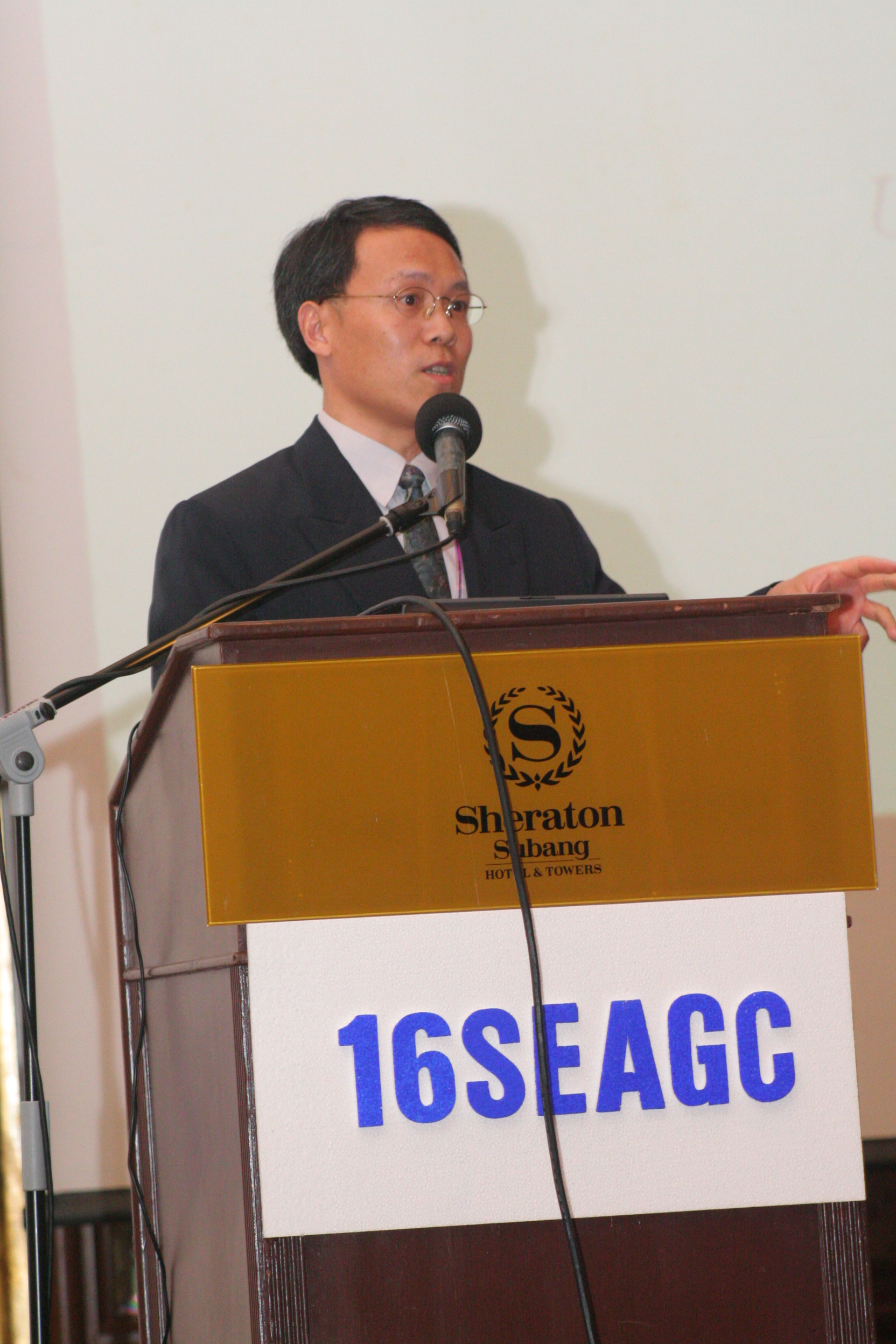 Professor Chu speaking at a conference in Subang, Malaysia in the early 2000s
The strategic decision made over 30 years ago proved invaluable for Chu but also demonstrated NTU engineering’s role as an architect of adaptation - prioritising skills and projects that matter, and aligning them with the needs of the era to create lasting global relevance.
According to current EEE Emeritus Professor and the CoE’s first dean, Er Meng Hwa, NTU engineering’s success also lies in recruitment and retention of top faculty complemented by Singapore’s financial investment in research and education.
“Getting both good talent and funding helped us excel,” he surmised. “It’s not just about having great ideas but the resources to bring them to life.”
The university established schools outside of the field of engineering as early as 1987, an approach that brought diversity in both student profile and academics.
Adapting and growing
Chu witnessed many changes over the next three decades, with NTU and the CoE leading the forefront.
The university established schools outside of the field of engineering as early as 1987, an approach that brought diversity in both student profile and academics.
“At the time, the engineering student population was mostly male, so the introduction of another school with female students had the added benefit of matchmaking,” mused Er.
The School of Applied Science (SAS) was launched in 1988 along with Singapore’s first computer technology degree programme the following year. In 2000, SAS was reorganised into what would eventually become the School of Computer Science and Engineering (SCSE) and the School of Materials Science and Engineering (MSE). Both would eventually join the CoE.
These are the next big technologies. NTU and the CoE have the privilege and responsibility to direct and foster that shift.
Although engineering remained prominent, the early 2000s saw the addition of schools that covered everything from humanities to math, art, and medicine. In 2001, NTU created the CoE, grouping the five engineering schools under one structure.
"With all the expansion, we needed a new strategy to prevent overlap and encourage interdisciplinary collaboration," Er said. “It was easier to work cohesively and engage better with industry as a unit.”
Er recounted that one of the most important milestones occurred in 2006 when NTU became autonomous and governed by a board of trustees. This transition gave NTU the flexibility to innovate and compete globally.
Embracing Modern Tools and Perspectives
Chu noted other changes over time. There was a shift to a focus on scientific contributions over practical hands-on solutions. He also noted an increased focus on well-rounded graduates. And of course, the tools had changed. Students were now engaged in technologies like 3D computer modelling and visualisations.
When I started, there was no email. We wrote memos,” Chu recalled.
Chu also sees a stronger focus on industry collaborations and interdisciplinary approaches. He remarked that there are now many more international students, particularly at the graduate level.
Er agreed, commenting that there was also more gender diversity these days. He noted the importance of women in STEM and the need to leverage the female engineering talent pool.
“The most important trait for students in CoE is a genuine interest in engineering,” Er commented. “It’s not just about high grades, it’s the passion to innovate and solve real-world problems.”
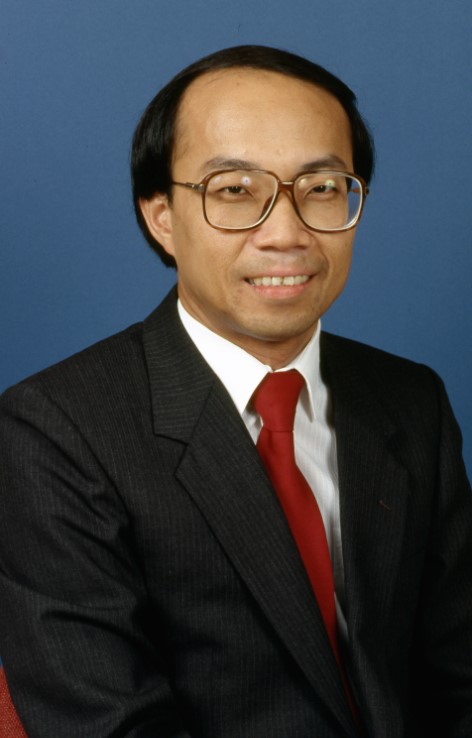 Er Meng Hwa in 1989 serving as NTI Council Member. Er would later become the college's first dean.
Meeting the moment
Today the CoE has five schools: Civil and Environmental Engineering (CEE), EEE, School of Mechanical and Aerospace Engineering (MAE), MSE, and the School of Chemistry, Chemical Engineering and Biotechnology (CCEB). In 2022, CCEB was launched jointly with the College of Science as the first interdisciplinary school formed by two NTU colleges.
In 2024, SCSE left CoE to become part of the newly formed College of Computing and Data Science (CCDS).
“Part of this was recognising the future of AI and data analytics,” stated Er. “These are the next big technologies. NTU and the CoE have the privilege and responsibility to direct and foster that shift.”
Despite these adjustments, Chu believes that engineering will always be NTU’s foundation and anchor. What he views as the next crucial step is for CoE to maintain its focus on translating science into innovation.
“The intellectual property is there, let’s turn it into real-world solutions,” he concluded.
Timeline1955- Nanyang University founded 1965- Singapore became an independent sovereign country 1981 - Nanyang Technological Institute (NTI) established 1982- First batch of engineering students admitted 1985 – First graduation ceremony held 1986 – First two graduate students admitted 1987 – NTI expanded beyond engineering 1989- Computer engineering degree programme introduced 1991 –Nanyang Technological University (NTU) formed 2000 - School of Computer Engineering and School of Materials Engineering emerged 2001- CoE formed, Professor Er Meng Hwa is first dean 2006- NTU became an autonomous institution 2022 - School of Chemistry, Chemical Engineering and Biotechnology (CCEB) formed 2024 – SCSE left CoE to form College of Computing and Data Science (CCDS) | 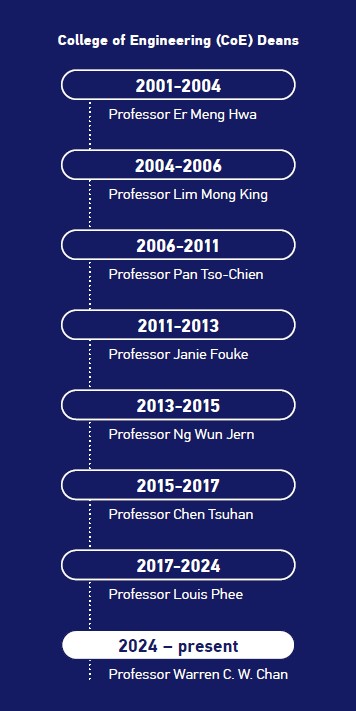 |
Story by Laura Dobberstein, NTU College of Engineering
This story first appeared in the NTU Engineering Annual Magazine, documenting the year 2024.