
More about our speakers
Speaker information will be updated
.png?sfvrsn=710c4cf_1 "Untitled design (7)") | Prof Lam Kok Yan Bio: Prof Lam Kwok-Yan is Associate Vice President (Strategy and Partnerships) and Professor at Nanyang Technological University (NTU), Singapore, and Executive Director of the Digital Trust Centre (DTC), Singapore’s AI Safety Institute. He has held leadership roles across NTU research centres and was on secondment to INTERPOL (Cyber and New Technology Innovation). He also serves on the International Telecommunication Union (ITU) Academic Advisory Body on Emerging Technologies. His research spans cybersecurity, distributed systems, IoT security, blockchain, and quantum computing. He is also a serial entrepreneur, founding multiple tech start-ups in AI and security. Prof Lam received his Ph.D. from University of Cambridge and was inducted into the Singapore Cybersecurity Hall of Fame in 2022. Talk Title: Building Digital Trust: Decentralized Identity and AI Safety in the Digital Era Talk Abstract: Digital Trust is fundamental to the adoption and growth of the digital economy. To build trust in the digital space, one key requirement is the enforcement of accountability, which must be established not only for users and business entities, but also for AI agents in the emerging trend of increasing adoption of AI-empowered autonomous processing. In this connection, Trusted Digital Identity serves as the foundation and infrastructure, enabling trusted interactions and transactions across stakeholders in the digital ecosystem. At the same time, ensuring safe and responsible behaviors of AI models has become another critical issue as AI agents increasingly perform transactions and decision-making without human intervention. In this talk, we first introduce our work on decentralized identity systems as a new paradigm for secure, privacy-preserving, and resilient trust infrastructure across organizational and national boundaries. Unlike traditional centralized identity systems, which suffer from risks such as large-scale data breaches, excessive concentration of sensitive information, and the unrealistic assumption of a single authority in a borderless, heterogeneous world, decentralized identity systems allow stronger privacy, security, and control over digital identities without the presence of a single authority. We then discuss the importance of AI Safety in establishing digital trust. AI model risks erode trust and hinder adoption by producing unreliable or biased outputs, and they increase the likelihood of privacy breaches and data manipulation. Neglecting risk management can lead to operational disruption, penalties, liability, and reputational damage. Accordingly, we have conducted multilingual agentic testing to evaluate the safety of agentic AI systems across diverse languages and cultural contexts. The testing framework simulates real-world tasks in which autonomous agents coordinate across tools and interact with users, emphasizing boundary enforcement, traceability, reversibility, and a responsive human-in-the-loop. https://personal.ntu.edu.sg/kwokyan.lam/
|
.png?sfvrsn=ac0cf220_1 "Circle photos (3)") | Prof Elisa Bertino Bio: Elisa Bertino is a Samuel D. Conte Distinguished Professor of Computer Science at Purdue University. She has worked for more than 40 years in data security and privacy. Her research interests include machine learning techniques for cybersecurity, security of cellular networks, zero-trust architectures, and agentic AI security. In the area of machine learning for cybersecurity, she led the design of transfer learning techniques for network attack detections and for detection and classification of malware. In the area of cellular network security, she led the design of the LTEInspector and 5Greasoner frameworks to test security properties of cellular networks leading to the identification of ten novel vulnerabilities in the 4G LTE (Long Term Evolution) and 5G standards, and the discovery of new privacy attacks in 4G and 5G cellular protocols. For this work, she was named to the GSMA (Global System for Mobile Communications Association) Mobile Security Research Hall of Fame. More recently she has been working on machine learning techniques for detecting malicious base stations and attacks to synchronization protocols for O-RAN. She is a Fellow member of IEEE, ACM, and AAAS. She received the 2002 IEEE Computer Society Technical Achievement Award, the 2005 IEEE Computer Society Tsutomu Kanai Award, the 2019-2020 ACM Athena Lecturer Award, and the 2021 IEEE Innovation in Societal Infrastructure Award. She is currently serving as ACM Vice President. Talk Title: AI Agentic Security: Safeguarding the Next Generation of Autonomous Systems Talk Abstract: https://www.cs.purdue.edu/people/faculty/bertino.html
|
b1f58e919b35404f811ad9fbe92919f0.png?sfvrsn=f3c0ce2e_1 "Circle photos (3)") | Prof Marten van Dijk Talk Title: "AI: Its Security and Trustworthiness" Talk Abstract: AI in the form of Large Language Models (LLM) has been shaping our digital living space. It has shown great technical progress and applications. On the other hand its security and trustworthiness is in mild terms "brittle." It can be used by attackers to improve their capability of finding and exploiting attack points, the LLM itself can be a threat, privacy of training data is in question, etc. In this presentation we look at various recent developments and show that we have learned a lot, but that the path toward making LLMs safe to use and be trustworthy is still a long one ahead of us. https://www.cwi.nl/en/people/marten-van-dijk/
|
0f91b73210b3411c8f8b03f186d89b3f.png?sfvrsn=1c22f611_1 "Circle photos (3)") | Prof Yang Xiang Talk Title: From Agentic AI to Software, Models, and the Physical World Talk Abstract: The rapid evolution of AI has shifted systems from passive models to agentic AI capable of autonomous reasoning, code generation, and interaction with real-world environments. While these advances enable powerful applications, they fundamentally challenge existing assumptions in security, software engineering, and governance. This talk synthesises recent research that reframes AI security as a cross-layer lifecycle problem, spanning learning models, LLM-enabled software, autonomous agents, and cyber-physical systems. We examine how agentic LLMs expand the attack surface, enabling dynamic extraction, evasion of vulnerability detection, and systematic ethical and compliance failures in code generation. At the model level, persistent backdoors and adversarial perception further undermine trust. As AI systems increasingly operate in IoT and safety-critical environments, this talk argues for trustworthiness by design, integrating agent-aware threat models, continuous auditing, and robust learning foundations across the AI lifecycle, and inspire the next generation of research in trustworthy and resilient AI.
|
bc6e68dc9a144bac8ec89cfadd0b7ee2.png?sfvrsn=ba7a2392_1 "Circle photos (3)") | Prof Surya Nepal Talk Title: CiNTEL4Cyber: Human–AI Dynamics in Engineering Trustworthy AI Systems Talk Abstract: Security Operations Centres (SOCs) are critical to defending organisations against evolving cyber threats, serving as central hubs for detecting, analysing, and responding to security incidents. However, the growing volume of alerts has led to alert fatigue, increasing the risk that critical threats are missed. In response, there is growing interest in leveraging AI to either automate analysts’ tasks or augment their capabilities, thereby improving productivity. At the core of this choice lies a fundamental challenge: trust in the AI system. In this presentation, we argue for moving beyond a narrow focus on automation or augmentation. Instead, we advocate for collaborative intelligence (CINTEL)—the design of practical AI systems for SOCs in which humans and AI work together, leveraging their complementary strengths and mitigating each other’s limitations. Recent advances in AI and its growing integration into SOC workflows make a compelling case for adopting CINTEL as a pathway to building trustworthy AI systems for SOCs. We present our vision and research outcomes from the CINTEL for Cybersecurity project. |
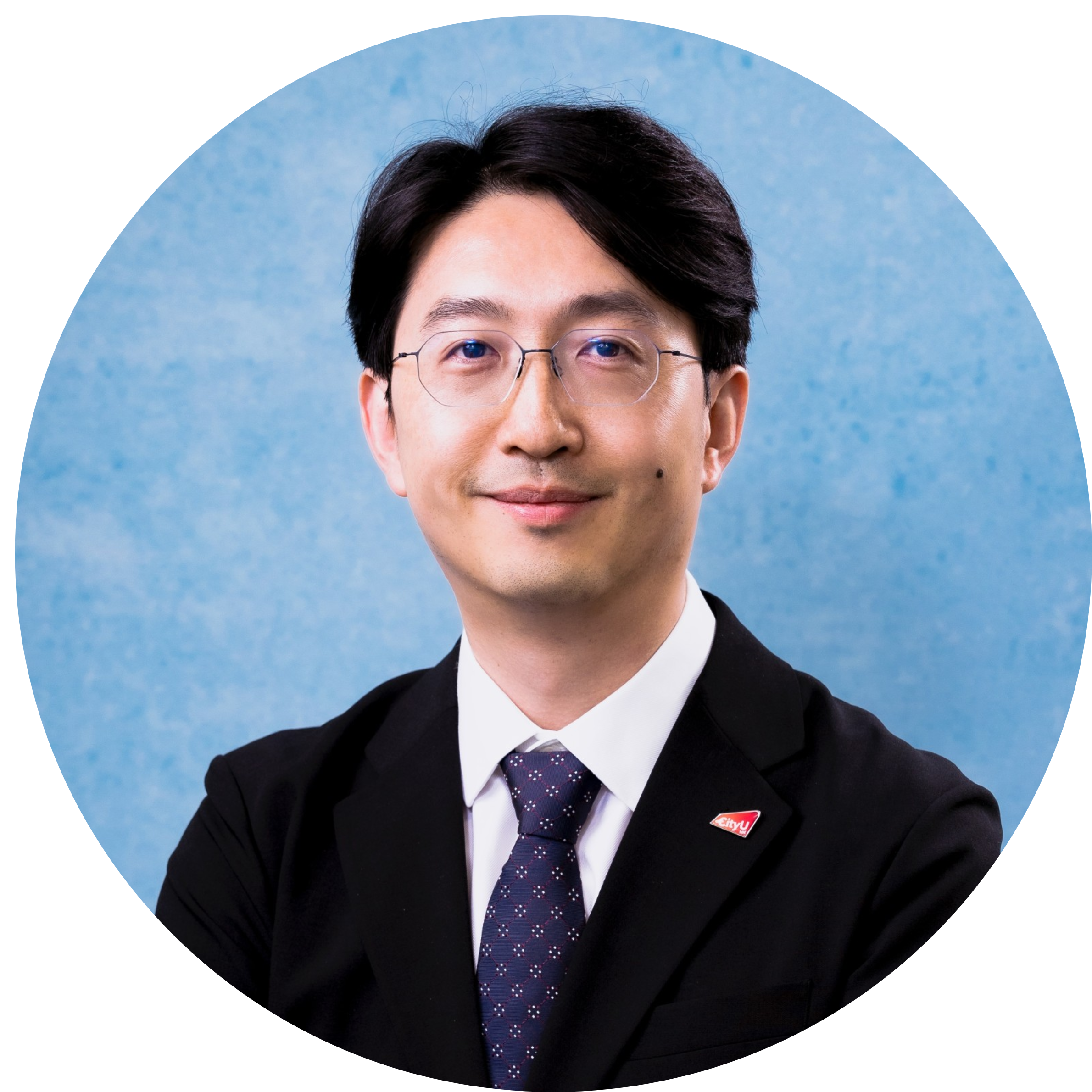 | Prof Cong Wang Bio: Cong Wang is a Chair Professor and the Head of Computer Science Department at City University of Hong Kong. His research spans data security and privacy, AI systems and security, and blockchain and decentralized application security. He is an IEEE Fellow, a Founding Member of the Hong Kong Young Academy of Sciences, and a co-recipient of the 2024 BOCHK Science and Technology Innovation Prize. He has served as the Editor-in-Chief of IEEE Transactions on Dependable and Secure Computing. Talk Title: AI x Cybersecurity: Navigating Challenges and Embracing Opportunities |
Speaker information will be updated
72e13e4822f34c4fa4558c69a946078d.png?sfvrsn=dc12728a_1 "Circle photos (7)") | A/Prof Xiaoxiao Li Bio: Dr. Xiaoxiao Li is an Associate Professor in the Department of Electrical and Computer Engineering at the University of British Columbia, a Faculty Member at the Vector Institute, and Visiting Faculty Member at Google. Dr. Li holds a Canada Research Chair (Tier II) in Responsible AI and is recognized as a Canada CIFAR AI Chair. Dr. Li's research aims to enhance the trustworthiness and efficiency of AI models, bridging the gap between cutting-edge AI research and practical real-world applications, such as healthcare. Dr. Li’s current interests include mechanistic analysis of large language and vision-language models (LLMs/VLMs), developing hypothesis-driven evaluations, and advancing methodologies toward artificial general intelligence (AGI). Title Title: Diagnosing, Routing, and Recovering from Errors in LLM Agent Optimization and Deployment Talk Abstract: |
.png?sfvrsn=d735cef0_1 "Circle photos (6)") | Dr Shaanan Cohney Bio: Shaanan Cohney is a Senior Lecturer (equivalent to a U.S. Associate Professor), DECRA Fellow, and outgoing Deputy Head of School (Academic) in the School of Computing and Information Systems at the University of Melbourne. His research explores how computer systems interact with the law, with a particular focus on security. In public service, Shaanan was the inaugural Geller Fellow placed at the Federal Trade Commission’s Office of Policy Planning and worked on federal technology policy as a Cybersecurity Fellow in the office of U.S. Senator Ron Wyden. Shaanan earned his Ph.D. and MSE in Computer & Information Science and a Master in Law from the University of Pennsylvania, and a BSc and DipMus from the University of Melbourne and its Conservatorium. |
ed9367c12c7341cc8bd0ba92c51ae601.png?sfvrsn=7be0260c_1 "Circle photos (4)") | Dr Thuan Pham Bio: Thuan Pham is a Senior Lecturer in Cyber Security at the University of Melbourne (UoM). His research focuses on scalable, high-performance, AI-enabled fuzz testing to enhance the reliability and security of software systems. Working closely with industry and government partners, his work has resulted in publications in leading venues such as CCS, IEEE TSE, EMSE, ICSE, and ISSTA, as well as one U.S. patent and one Australian provisional patent. He has developed several widely used open-source security testing tools (e.g., AFLGo, AFLSmart, AFLNet, AFLTeam, and EyeQ) which have contributed to the discovery of over 100 critical vulnerabilities in large real-world systems. His research has been featured in media outlets such as The Register and SecurityWeek. Talk Title: Trust Under Test: Detecting Hidden Data Exposure in Web APIs at Scale Talk Abstract: |
df9e276e4f4f4acb8e36426b1111cc78.png?sfvrsn=d2d16ddd_1 "Circle photos (6)") | Prof Hyoungshick Kim Bio: Hyoungshick Kim is a Full Professor in the Department of Software at Sungkyunkwan University. He received his PhD from the Computer Laboratory at the University of Cambridge (2008–2011). Prior to his current role, he worked as a Senior Engineer at Samsung Electronics (2004–2008), a Postdoctoral Fellow at the University of British Columbia (2012–2013), and a Distinguished Visiting Scientist at CSIRO Data61 (2019–2020). An active researcher in cybersecurity, Professor Kim has published around 250 papers with over 7,900 citations, including 32 papers at top-tier conferences such as IEEE S&P, ACM CCS, and USENIX Security. He frequently serves on programme committees for leading conferences, including CCS, USENIX Security, ACSAC, and ASIACCS, and is Associate Editor-in-Chief of IEEE Transactions on Services Computing. In addition, he serves as a Court Expert Commissioner and as an advisor to Samsung Electronics and LG Electronics. Talk Title: Writing Secure Programs with Large Language Models (LLMs) Talk Abstract: |
a77b472517bb4c26b1bd997dd8e884d7.png?sfvrsn=29c00bd4_1 "Circle photos (4)") | Prof Carsten Maple Bio: Professor Carsten Maple is the Director of the NCSC-EPSRC Academic Centre of Excellence in Cyber Security Research and Professor of Cyber Systems Engineering at the University of Warwick. He is also Director for Research Innovation at EDGE-AI, the National Edge Artificial Intelligence Hub, and a Professor and Fellow of the Alan Turing Institute, where he is a principal investigator on a $9 million project developing trustworthy digital infrastructure. Carsten is also a Research Affiliate at Judge Business School, University of Cambridge. He has an international research reputation, having published over 450 peer-reviewed papers. His research has attracted millions of pounds in funding and has been widely reported through the media. Talk Title: Know Your Agent: Assuring Agentic AI Talk Abstract:
|
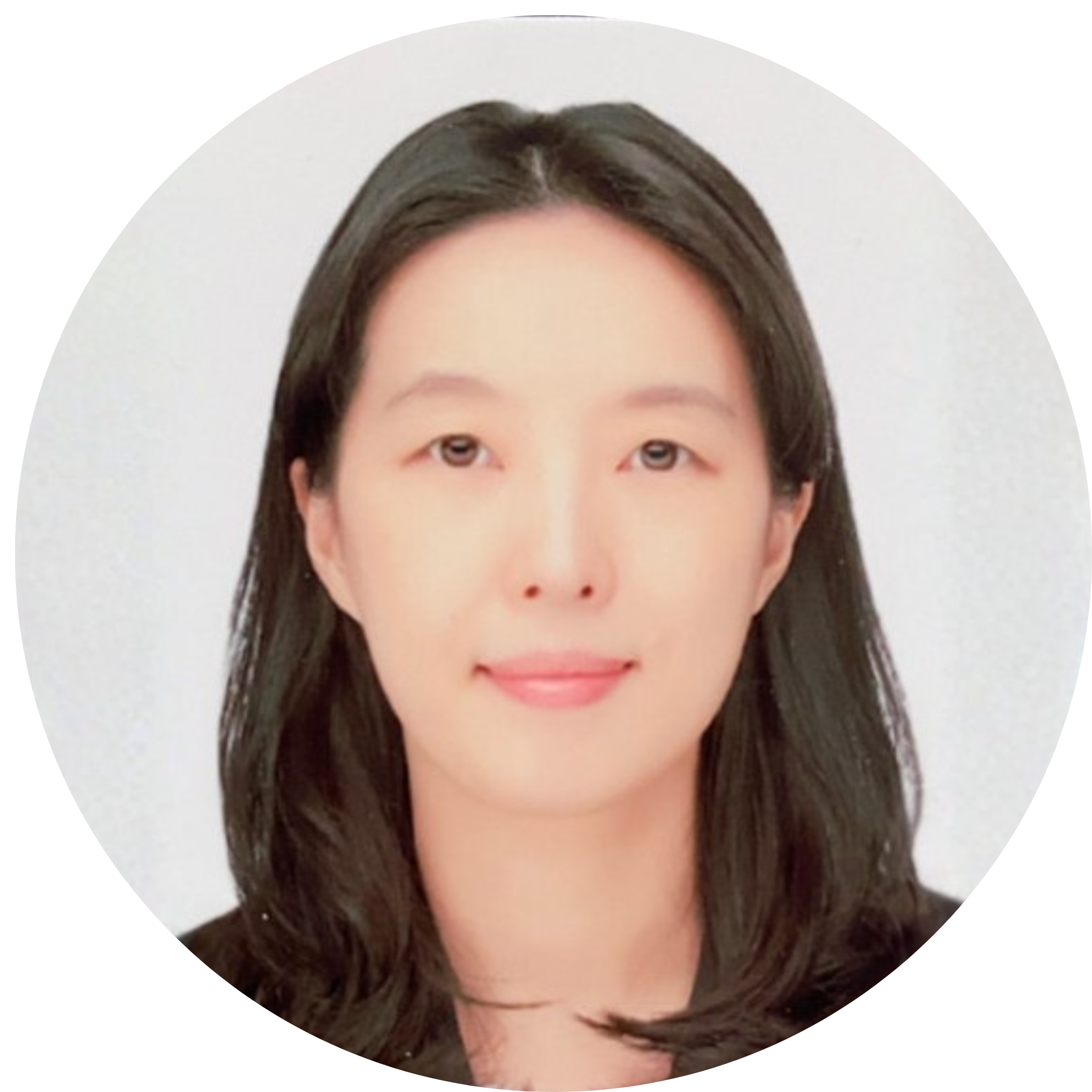 | Ms Seah Park Bio: Seah Park is a Visiting Scholar at the Nanyang Technological University (NTU) Digital Trust Centre and serves as a Director at the Ministry of Foreign Affairs of the Republic of Korea Talk Title: AISI Work In Korea |
Speaker information will be updated
.png?sfvrsn=cd299cea_1 "Circle photos (9)") | Dr Tony Tao Ni Bio: Tao Ni (Tony) is an Assistant Professor in Computer Science at King Abdullah University of Science and Technology (KAUST). He is also affiliated with the KAUST Center of Excellence for Generative AI. Before that, he received his Ph.D. from the City University of Hong Kong, M.S. degree from the Australian National University, and B.Eng. degree from Shanghai Jiao Tong University. His research interests are in the intersection of cybersecurity and AI, with a focus on systems security, AI security, and embodied intelligence. He has published papers in top-tier cybersecurity and mobile system conferences, and his research has been acknowledged by industry-leading companies. In addition, he won the Springer Cybersecurity Best Practical Paper Award and was named an ACM MobiSys Rising Star in 2024. |
.png?sfvrsn=5502ebee_1 "Circle photos (10)") | Dr Maggie Liu Bio: Dr Xiaoning (Maggie) Liu is a Senior Lecturer and an ARC DECRA Fellow at the School of Computing Technologies, RMIT University, Australia. Her research interests include secure computation, machine learning security and privacy. Her current focus is on designing secure multiparty computation protocols to its applications in privacy-preserving machine learning. In the past few years, her work has appeared in prestigious venues in computer security, such as USENIX Security, NDSS, IEEE TDSC, TIFS. She is the recipient of the Best Paper Award of ESORICS 2021, the RMIT HDR Research Prize 2023, the RMIT STEM College Learning and Teaching Award for Excellence for Early Career Educator 2024. She has served on the technical program committee of USENIX Security, EuroS&P, CIKM, the program co-chair of LAMPS at CCS 2025, and Associate Editor of IEEE TSC. Her research has been supported by Australian Research Council and CSIRO. |
.png?sfvrsn=d58298eb_1 "Circle photos (11)") | Dr Wei Dong Bio: Wei Dong is a Nanyang Assistant Professor at Nanyang Technological University. He received his Ph.D. in 2023 from the Hong Kong University of Science and Technology (HKUST), and was a postdoctoral researcher in the Computer Science Department at Carnegie Mellon University from 2023 to 2024. His research focuses on data privacy and security, as well as LLM security. His work has appeared in top-tier conferences and journals, including SIGMOD, IEEE S&P, PODS, CCS, VLDB, NeurIPS, KDD, and TODS. His research has been recognized with several honors, including the SIGMOD 2022 Best Paper Award, the SIGMOD 2023 Research Highlight Award, SIGMOD 2024 Jim Gray Best Dissertation Award runner-up, the Best Ph.D. Dissertation Award from HKUST CSE, and the Temasek-Nanyang Assistant Professorship. In addition, one of his works was featured in the Research Highlights section of Communications of the ACM. |
.png?sfvrsn=513bf4c0_1 "Circle photos (12)") | Dr Yifeng Zheng Bio: Dr Yifeng Zheng is an Assistant Professor with the Department of Electrical and Electronic Engineering, The Hong Kong Polytechnic University (PolyU). He received his PhD in Computer Science from City University of Hong Kong and completed his postdoc with Data61, Commonwealth Scientific and Industrial Research Organization (CSIRO). His current research are focused on privacy-aware computing and machine learning security and privacy. He has published 100+ papers, which mainly appear in prestigious venues like USENIX Security, CCS, VLDB, ESORICS, AsiaCCS, TDSC, TIFS, and TSC. He received the Distinguished Paper Award from ACM CCS 2025 and the Best Paper Award from ESORICS 2021. He currently serves as an Associate Editor for IEEE Transactions on Services Computing. |
.png?sfvrsn=8ff8542_1 "Circle photos (13)") | Dr Huayi Duan Bio: Dr. Huayi Duan is an Assistant Professor leading the TINT Research Group at the Information Hub, The Hong Kong University of Science and Technology (Guangzhou). Before joining HKUST(GZ), he was a senior researcher and lecturer at ETH Zurich, where he led multiple externally funded research projects. He has advised more than a dozen postgraduate students, with several advisees receiving prestigious awards such as the ETH Medal and CYD Fellowships. He received both his bachelor's degree and PhD from City University of Hong Kong. Huayi enjoys identifying and tackling fundamental cybersecurity problems arising from omnipresent interconnected and intelligent systems, which we use every day often without awareness. This entails interdisciplinary research spanning information security, networking and systems, formal methods, and increasingly, trustworthy AI. His work has been published at major venues including SOSP, NSDI, SIGCOMM, S&P, CCS, USENIX Security, NDSS, etc. He has served on the TPC of international conferences such as ICNP, RAID and ICDCS, while being a regular reviewer for leading journals such as IEEE TDSC, TON, and TIFS. He has been invited as a speaker/panelist at prominent industry conferences such as DNS-OARC and RSAC. https://facultyprofiles.hkust-gz.edu.cn/faculty-personal-page?id=574 |
.png?sfvrsn=119822d_1 "Circle photos (14)") | Dr Feng Liu Bio: Dr Feng Liu is a machine learning researcher with research interests in statistically trustworthy machine learning. Currently, he is the recipient of the ARC DECRA Fellowship, a Senior Lecturer (US Associate Professor) at The University of Melbourne, Australia, and a Visiting Scientist at RIKEN-AIP, Japan. He is the Communication Chair of NeurIPS 2026, and has served as an Area Chair for AISTATS, ICLR, ICML, NeurIPS, as a senior program committee (SPC) member for AAAI, IJCAI. He has received the Australasian AI Emerging Research Award from the Australian Computer Society, the Early Career Researcher Award from the Australian Pattern Recognition Society, the Discovery Early Career Researcher Award from the Australian Research Council, the Outstanding Paper Award from NeurIPS 2022, the Best Paper Award from AAAI 2025 Workshop CoLoRAI, the Best Student Paper Award from FUZZ-IEEE 2019, and the Best Paper Runner-up Award from ECIS 2023. |
.png?sfvrsn=a5e34046_1 "Circle photos (2)") | A/Prof Noriziana Jamil Bio: Norziana Jamil is an Associate Professor in the Department of Information System and Security at United Arab Emirates University. Her work focuses on cybersecurity, cryptography, privacy-preserving authentication, and secure communication for emerging technologies such as IoT, autonomous systems, and connected networks. |
.png?sfvrsn=e0237dcf_1 "Circle photos (1)") | Dr Yuefeng Du Bio: Dr. Yuefeng Du is a Researcher and Lecturer in the Department of Computer Science at City University of Hong Kong. He received his PhD in Computer Science from CityU in 2022. His research lies in applied cryptography, blockchain, and network security, with a particular focus on decentralised storage systems, zero-knowledge auditing, and blockchain-enabled validation. Dr. Du’s work addresses practical security and privacy challenges in emerging decentralised infrastructures, including secure data auditing, privacy-preserving verification, and trustless blocklisting. By combining rigorous cryptographic design with system-oriented evaluation, his research aims to bridge the gap between theory and practice and to develop scalable, trustworthy mechanisms for real-world digital ecosystems. |