
Strengthening Maritime Cybersecurity Through Cross-Sector Collaboration
As maritime operations become increasingly digitalised, cybersecurity is critical for ensuring safe, resilient, and efficient systems. From smart ports and autonomous vessels to digitally integrated supply chains, the sector’s reliance on cyber-physical systems brings new vulnerabilities that demand coordinated research and innovation.
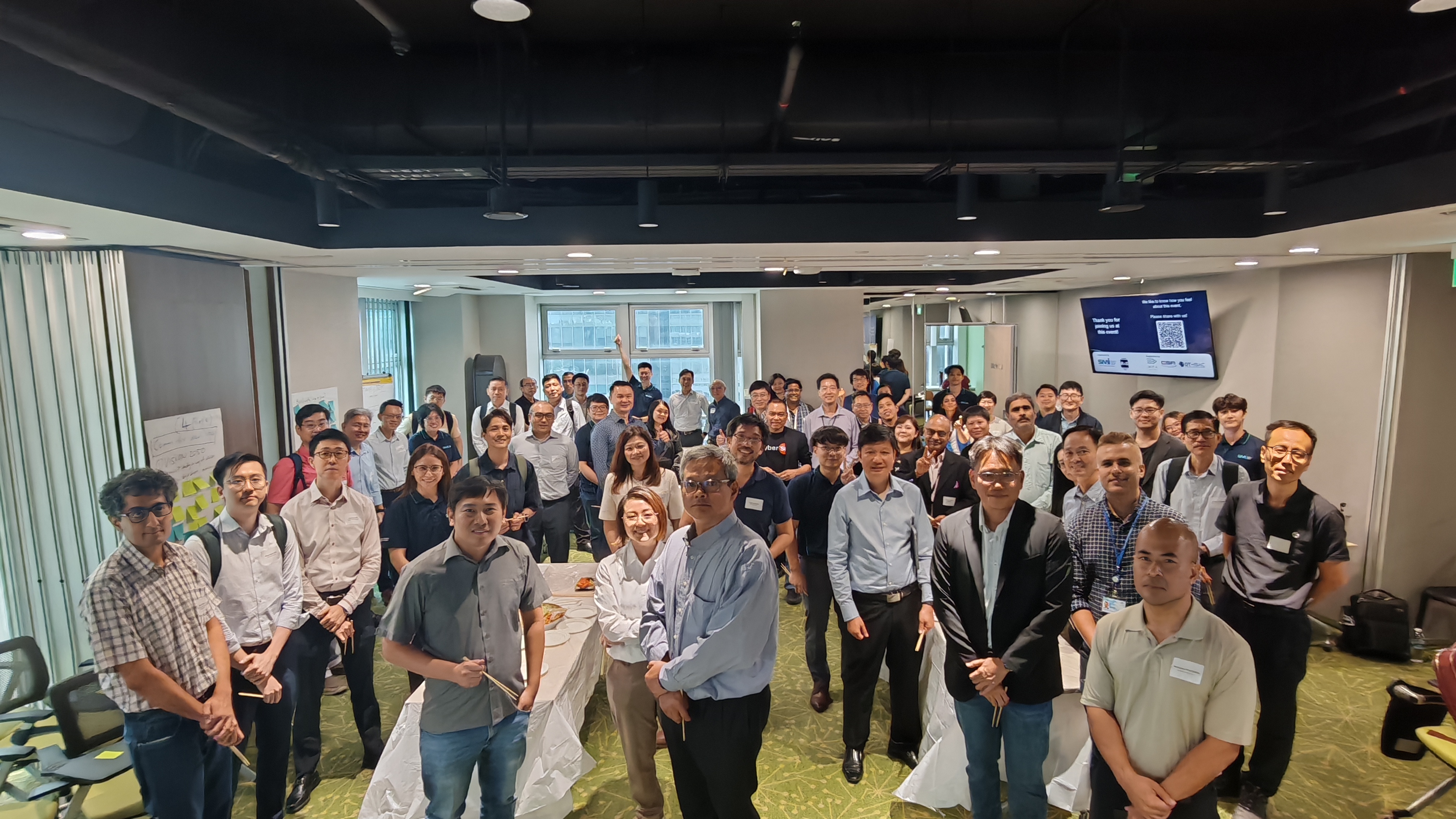
To address this, the Singapore Maritime Institute (SMI) and CyberSG Research & Development Programme Office, jointly organised the Maritime Cybersecurity and Communications Innovation Workshop on 28 January 2026, supported by Maritime and Port Authority of Singapore (MPA) and Cyber Security Agency of Singapore (CSA).
The workshop brought together 56 industry practitioners, academic researchers, and government agencies to achieve these key objectives:
- Identify emerging research trends in maritime cybersecurity and communications
- Surface critical operational gaps
- Foster collaboration between stakeholders including aligning academic research capabilities with end-user needs and clarifying ownership of problem statements to enable meaningful downstream impact.
Discussions highlighted three key challenges. First, the lack of integrated, port-wide simulation environments limits the ability to model cyber incidents, assess cascading impacts, or test mitigation strategies before deployment. Second, legacy and vendor-controlled operational technology (OT) systems onboard vessels often lack basic security controls and are difficult to patch, while crews have limited capacity to respond—creating risks that can escalate into safety failures. Third, securing resilient and interoperable communications for smart ports and autonomous vessels remains difficult, with uncertainty around future data requirements for Maritime Autonomous Surface Ships (MASS) complicating infrastructure and regulatory planning.
First, revealed a strong consensus that current tools and frameworks are insufficient to address the complexity of modern maritime cyber risks. Industry participants highlighted the absence of integrated, port-wide simulation environments capable of modelling realistic cyber incidents across interconnected port systems. This limits the ability of operators to assess system resilience, evaluate cascading impacts, and test mitigation strategies under credible threat scenarios before deployment in live operations.
Collectively, these insights point to strong industry demand for targeted R&D in maritime cybersecurity and communications. There are opportunities for academic research to translate into practical solutions when guided by real operational needs. The workshop reinforced the value of close collaboration across academia, industry, and government to ensure research outcomes are deployable, scalable, and aligned with sector priorities.
Through sustained cross-sector collaboration, maritime cybersecurity can evolve beyond risk mitigation to become a foundational enabler of innovation, safety, and long-term resilience for the global maritime ecosystem.
For more information on SMI's cybersecurity initiatives and upcoming grant calls, please contact smi@maritimeinstitute.sg or visit our website at https://www.maritimeinstitute.sg