
What Prospective Students Discovered About CCDS at Coffee Chat with NTU
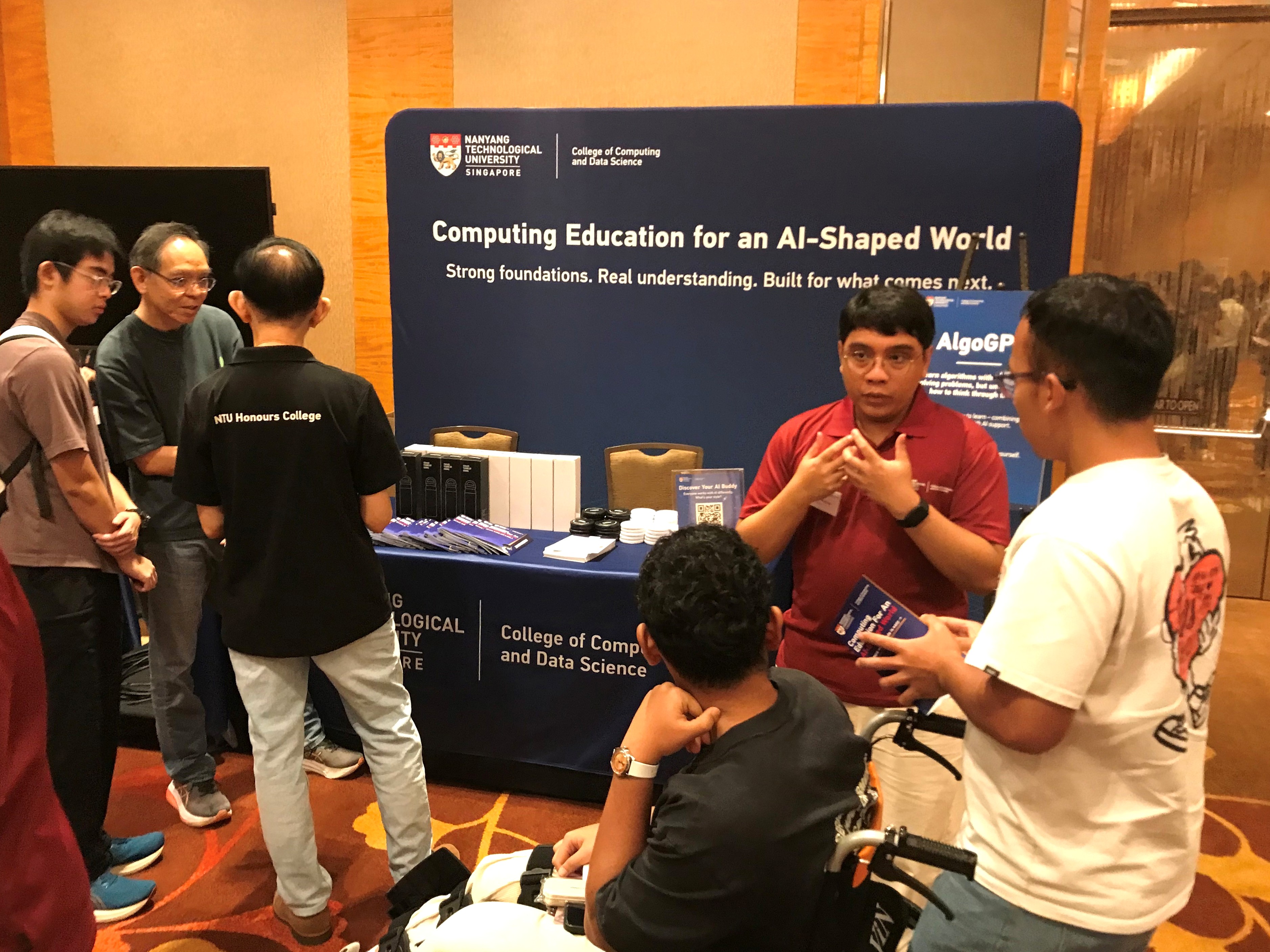
What's the difference between Computer Science (CSC), Computer Engineering (CE), Data Science and Artificial Intelligence (DSAI), and Artificial Intelligence and Society (AISC) undergraduate courses? Is getting a computing degree still worth it today, or will AI overtake the field before I graduate?
These are the kinds of questions prospective students bring to the College of Computing and Data Science (CCDS) when they get the chance to ask them in person – at outreach sessions, school visits, and most recently at events such as Coffee Chat with NTU, which brought junior college, polytechnic and International Baccalaureate students together with NTU faculty and student ambassadors at Marina Bay Sands.
For students considering an early application through the Early Admissions and Scholarship Exercise (EASE), the event provided an opportunity to explore their options before making a decision. Through conversations with faculty, students and staff, attendees gained a clearer understanding of the different programmes, the opportunities available and how each pathway could support their future goals.
Discovering different pathways
The answers rarely come in the form students expect. While a course list can tell them what programmes CCDS offers, it cannot tell them which one matches the way they think or where their interests lie. What it means to study computing in a world reshaped by AI becomes more tangible only when someone walks them through what that looks like in practice.
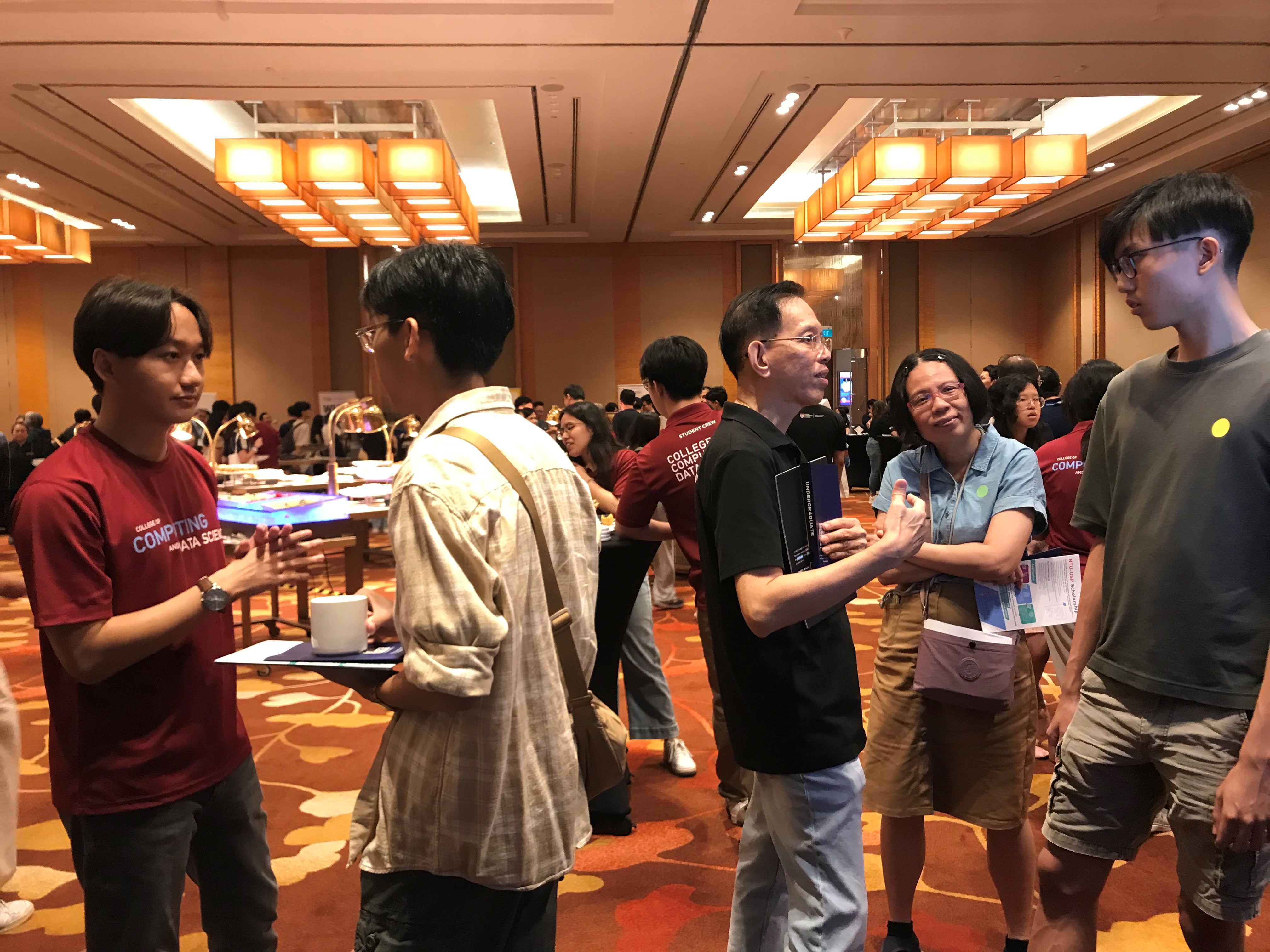
This was where CCDS professors and student ambassadors came in during Coffee Chat with NTU. They answered attendees’ questions whose curiosity were piqued, especially after listening to a presentation on NTU’s holistic education and a dialogue session on the student experience. Notable exchanges were the ones where students shared their experiences, such as specific modules offered in the courses, and how they juggled tight schedules and projects.
Conversations on AI worries also came to the fore. But prospective students were reminded that while AI is part of the curriculum framework, it is a tool used to strengthen their computing foundations, with human judgement and critical thinking kept at the heart of how they learn.
More queries were made at the Turing AI Scholars Programme (TAISP) booth where attendees learnt about the rigorous programme. With research opportunities, mentorship from AI specialists, and global exposure through overseas attachments, TAISP cultivates the talents of students eager to push the boundaries of AI research and create groundbreaking solutions.A glimpse into this research culture was on display through the student project AlgoGPT. A personal tutor for data structures and algorithms, it showed how CCDS students were able to integrate AI responsibly and innovate to deliver intuitive experiences.
These firsthand interactions provide valuable insights beyond what brochures offer, helping students envision their future in computing and make informed choices about their educational paths.