
How Pathways in Python Initiative is Empowering the Next Generation of Computing Talent
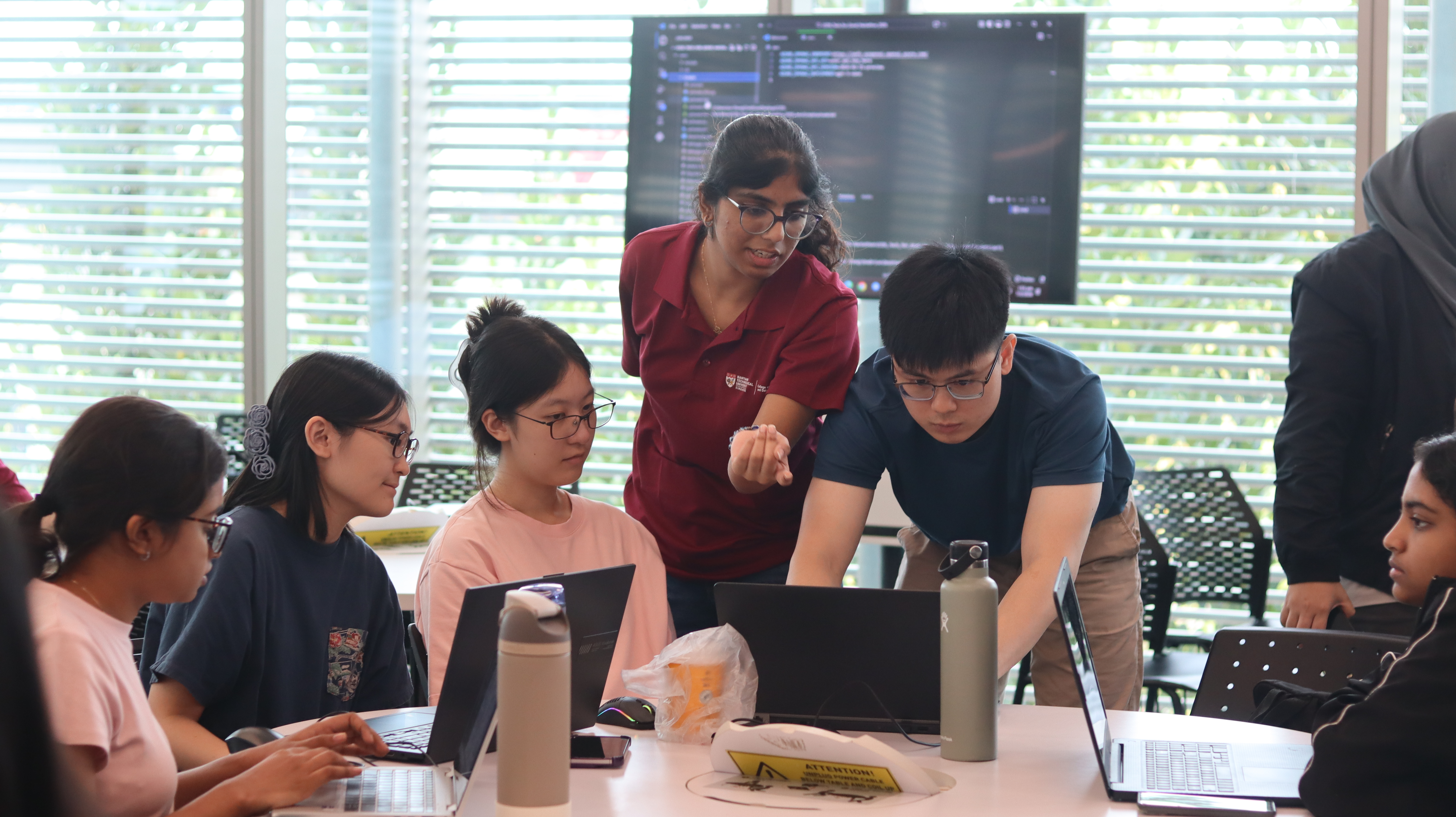
Guided, hands-on learning for PiP participants
Can a few weeks of intensive immersion bridge the gap between curiosity and a purpose-driven entry into the world of computing? For participants of Pathways in Python (PiP) – CCDS’ flagship introductory experience for junior college, polytechnic and pre-university students – the answer was a resounding yes.
Among the aspiring coders and developers was Team JAB, comprising Boo Jianhao (Nanyang Polytechnic), Ben Angelo (Temasek Polytechnic) and Alysa Yong (Temasek Polytechnic). The team noted that the experience went far beyond technical mastery. “It was really insightful and taught us a lot of things on how to collaborate as a team, as well as how to use tools that are available in the real world,” they shared.
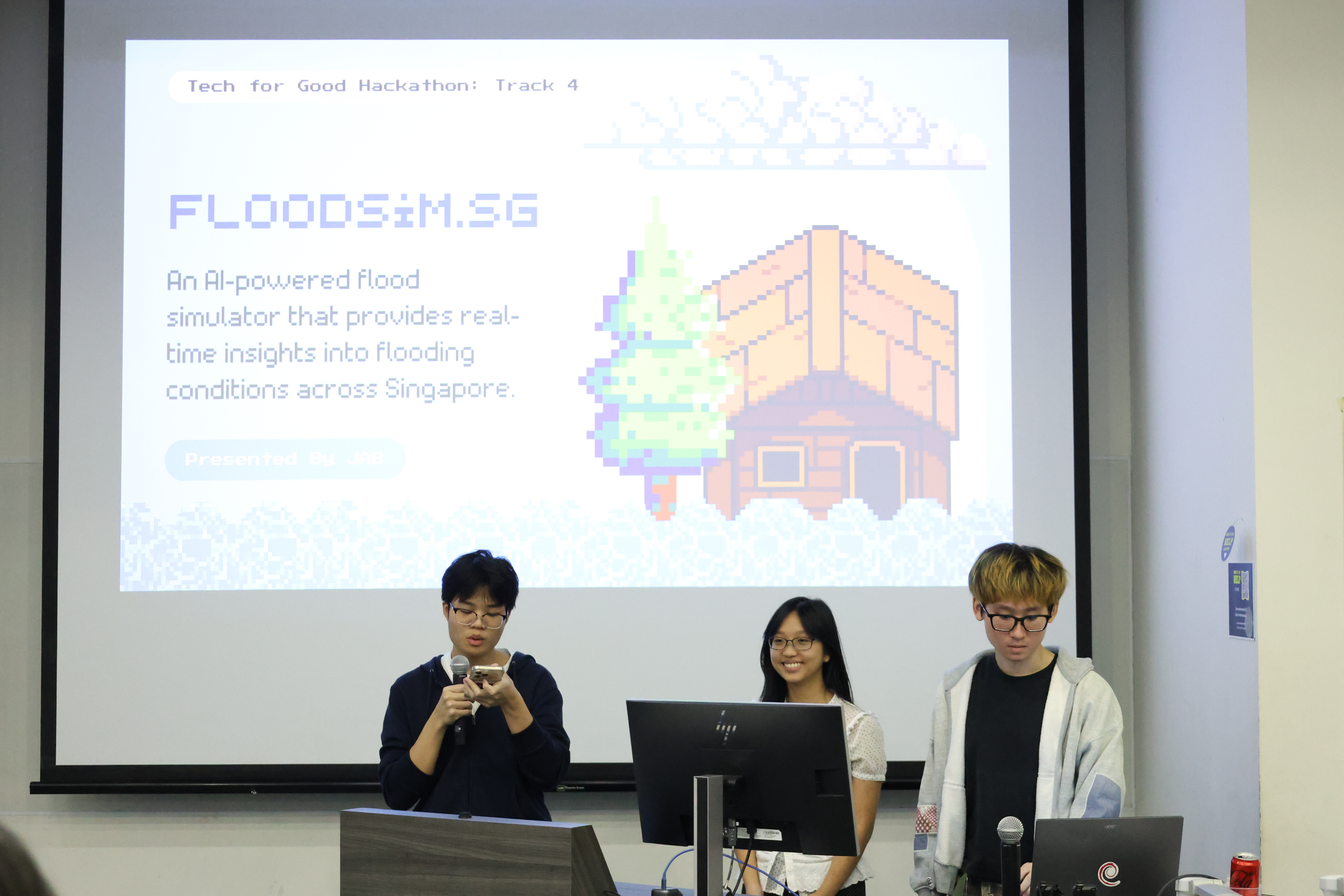
Team JAB presenting their project, FloodSim.SG
A clear pathway
Led by CCDS senior lecturer Dr Li Fang, PiP provides a clear roadmap in three stages: Python Intensive, Hackathon Challenge, and Tech for Good Showcase @ CCDS Open House.
Stage 1: Python Intensive saw students with limited or no coding experience learn to think like a programmer, design logical solutions, and express them in code. Held in January , it featured self-paced online modules alongside weekly face-to-face lab sessions.
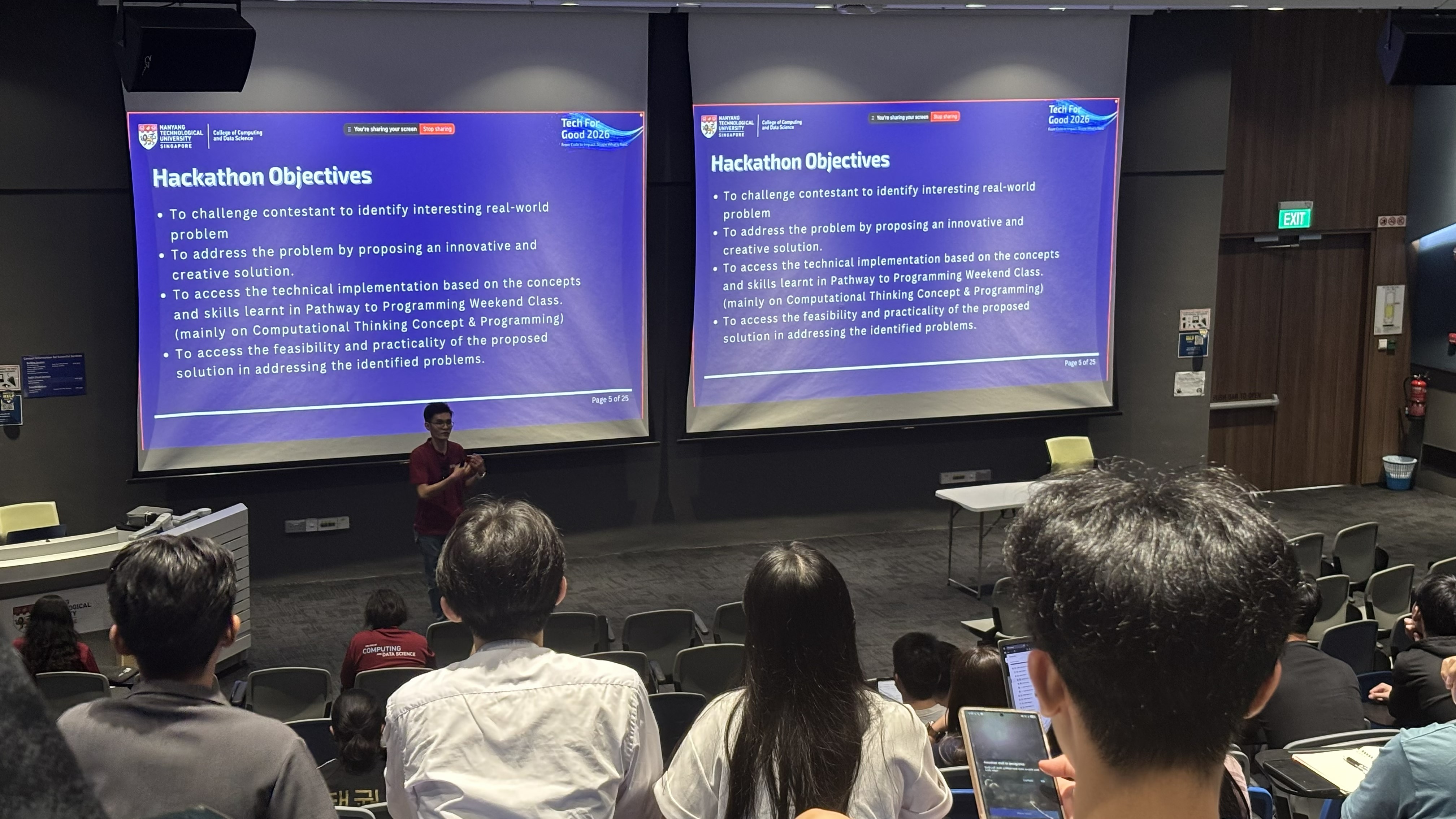
Introducing the PiP Hackathon
The next stage was a two-week-long PiP Hackathon led by lecturer Ong Chin Ann and his team of student mentors. The Hackathon was open to PiP Intensives participants and pre-university students with basic coding experience . By then, the participants were ready to apply their newfound skills to address real-world problems, transitioning from passive learners to active contributors.
Teams of three were challenged to design tech-based solutions that could make a positive difference, based on the theme “Tech for Good”.
And challenge it did. From an AI-powered flood simulator to gamified career and finance quests, 28 teams worked to prototype solutions, demonstrating how much they had grown since attending the first Python Intensive session.
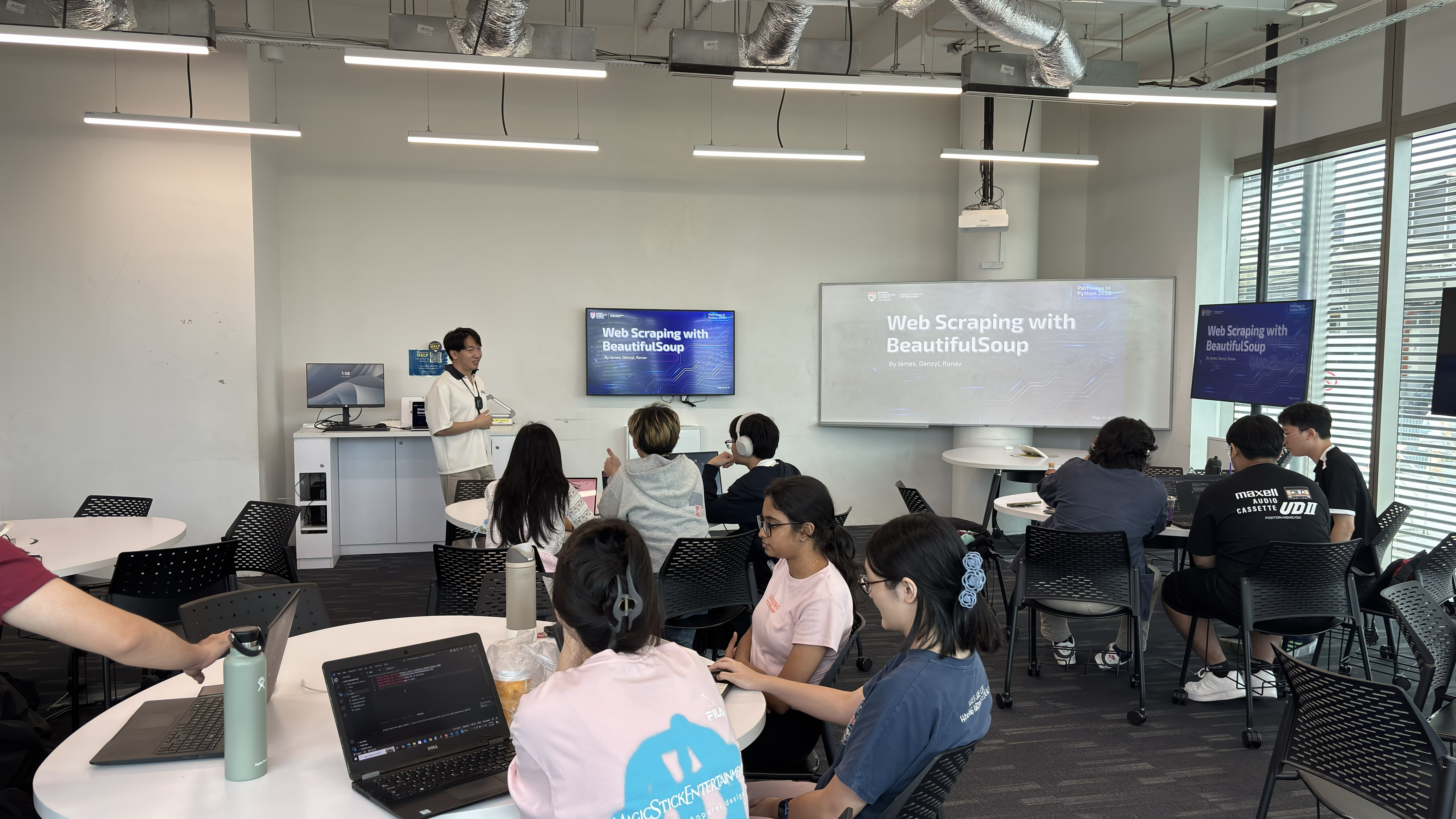
Intensive learning during the technical workshop
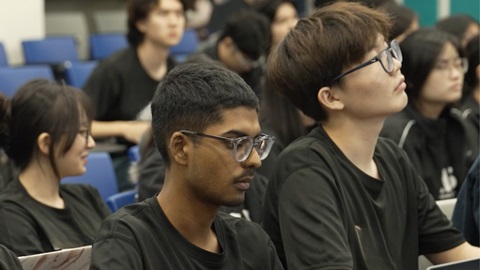
Top 10 finalists were selected for a technical workshop on 7 February, followed by a final presentation a week later. Team JAB landed a spot with their project FloodSim.SG. It simulates flood conditions based on real-time rainfall reading, and delivers data-driven advice for transportation and personal protection. While creating the app was not easy, the team shared that they were able to use AI to debug problems they could not initially fix.
Another finalist was Team Internal Pointer Variable. Temasek Polytechnic students Thiha Htoo Zin, Bhone Min Thant and Zin Hmue Paing integrated large language models into their project to help young people navigate the many paths of their educational journey while identifying their passions and interests.
Despite tackling challenges such as AI hallucinations and having to juggle tight schedules, they agreed it was a “very eye-opening experience”. In addition, PiP not only allowed them to acquire computing skills but also gave them the opportunity to learn from NTU mentors
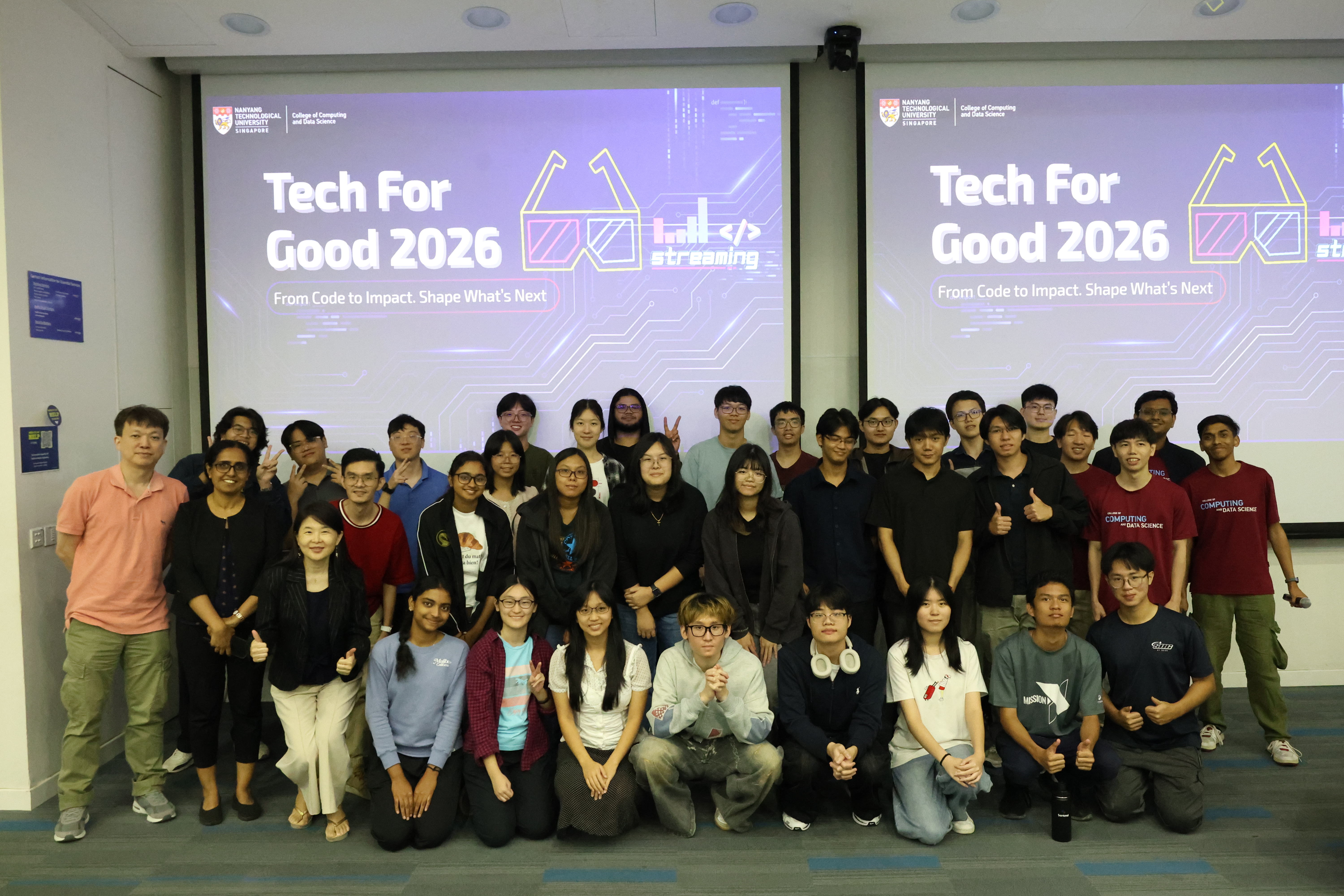
Finalists of the PiP Hackathon
The final reveal
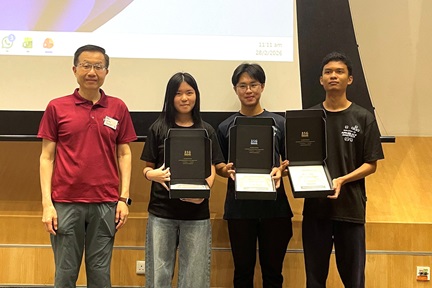
The PiP journey will culminate at the Tech for Good Showcase @ CCDS Open House on 28 February. The top three winners will be revealed and have the opportunity to present their work to a public audience of prospective students, parents and faculty.
So who will emerge as the winners of the Tech for Good Hackathon Challenge? What solutions have students produced to tackle the world's challenges?
Join us at NTU Open House this Saturday on 28 February to learn about their projects firsthand, and discover how your own journey in computing can begin at NTU.
-singapore-team-selection-test-6c639870-7d55-4d34-8fdc-3e49bcbdd219.tmb-listing.jpg?sfvrsn=43e2bfc5_2)