
From Birdsongs to an All-In-One Campus Assistant: Behind the Bold Ideas and Collaborative Research Culture of TAISP Research Day 2026
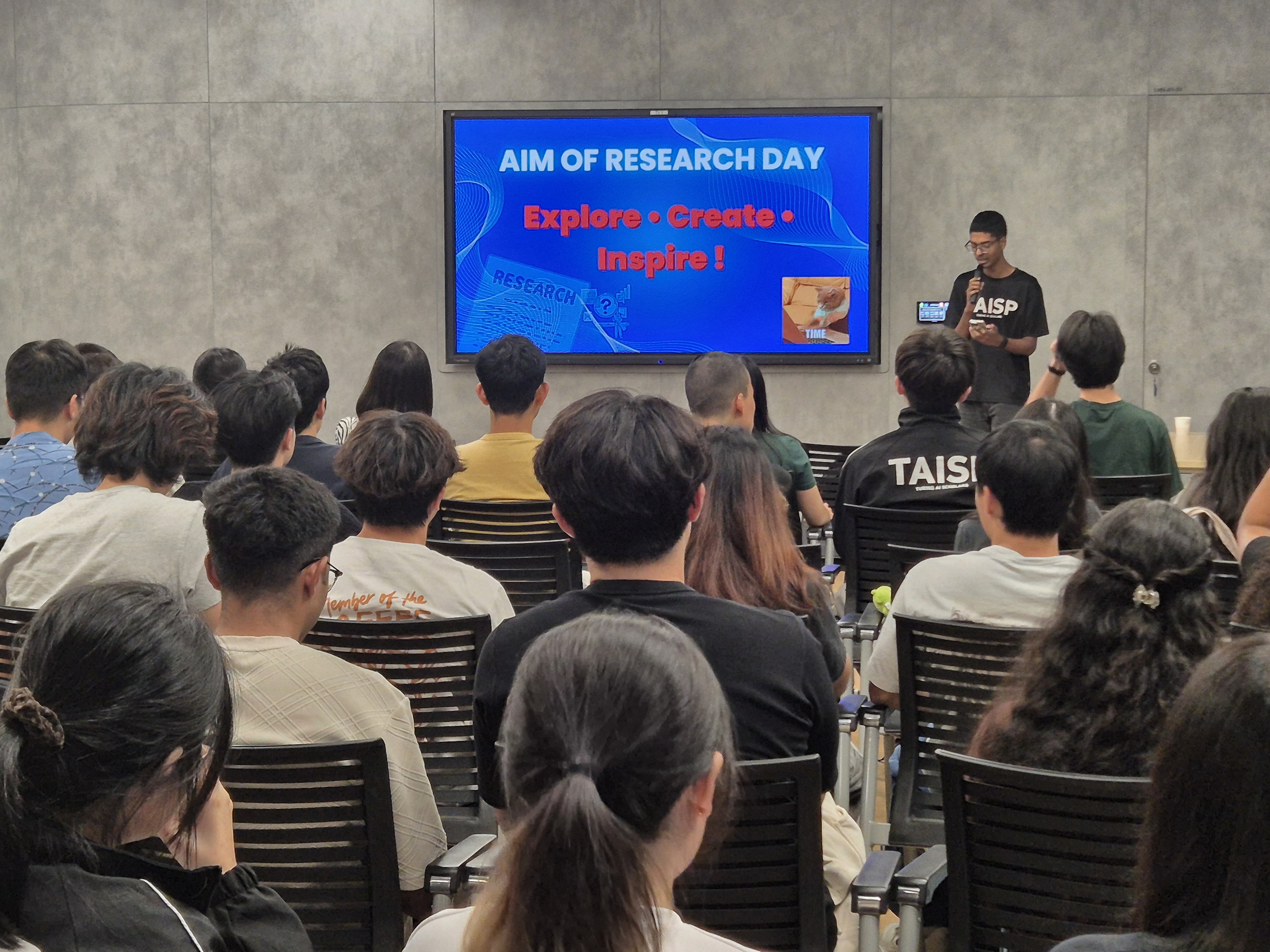 Turing AI scholars at TAISP Research Day
Most undergraduates spend their early semesters focused on coursework. Students under the Turing AI Scholars Programme (TAISP) get a more rigorous path: hands-on research opportunities alongside computing and AI foundations from the start of their undergraduate journey. Paired with sustained mentorship, global exposure through overseas attachments, and a supportive peer community, that early access produces work that crosses disciplines in unexpected ways.
The result is a cohort of students who don't just learn about AI – they start contributing to it early.
Across the programme, students are pursuing a wide range of questions that don't have easy answers. At events such as TAISP Research Day, this breadth becomes especially visible. Their projects, often shaped by their own curiosity and lived experience, span everything from ecological monitoring to everyday campus tools, and reflect the kind of exploratory, peer-driven culture TAISP is designed to nurture.
Listening to a rainforest – with AI
One such project is "Soundscape Source Separation for Southeast Asian Birds" by Year 2 Data Science student Chamadol Thongthornpatch. In the tropical forests of Southeast Asia, dozens of bird species vocalise simultaneously, creating dense acoustic "choruses" where individual calls mask one another. This high acoustic density is one of the biggest obstacles to automated biodiversity monitoring in the region, and it's the problem Chamadol is trying to solve. His project develops a source separation framework tailored for these complex tropical soundscapes, aiming to isolate specific species from layers of overlapping sound.
This matters for biodiversity monitoring because it allows researchers to understand which species are present, and in what numbers. That in turn helps gauge the health of an ecosystem, and allows for targeted conservation efforts to protect and preserve biodiversity.
What makes this project striking is that it sits at the intersection of data science, AI and ecology, embodying the interdisciplinary learning encouraged at CCDS as well as TAISP's focus on impactful research and innovation.
Finding solutions in daily frustration
Another Turing AI scholar, Year 2 Computer Science student Ariq Koh Boon, tackled a problem much closer to home. "I noticed that many platforms and links students access daily are fragmented," Ariq said. "I often had to switch between my photo gallery, NTU SharePoint, and the omnibus app. I was constantly asking myself, where can I retrieve this information?"
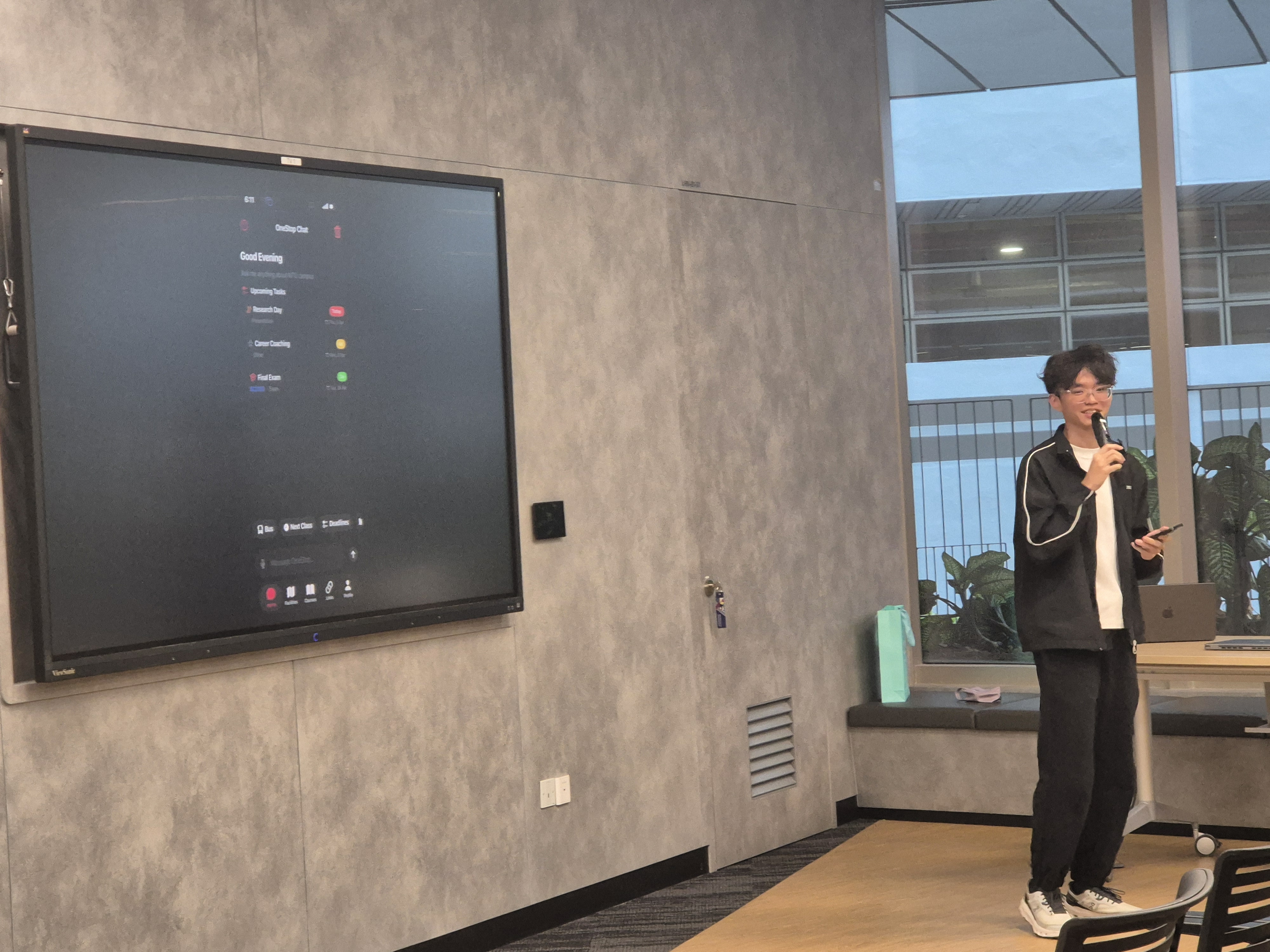 Ariq Koh Boon Xiong presenting his OneStop app
So he decided to create OneStop, an all-in-one campus assistant app. It brings together an AI-powered chatbot, real-time bus arrivals, course tracking, and an interactive campus map into a single tool designed to enhance student life at NTU. The app is fully functional and available for download on the App Store.
Different as they are, both projects reflect what early research access and support can produce: students who identify real problems and pursue them on their own terms.
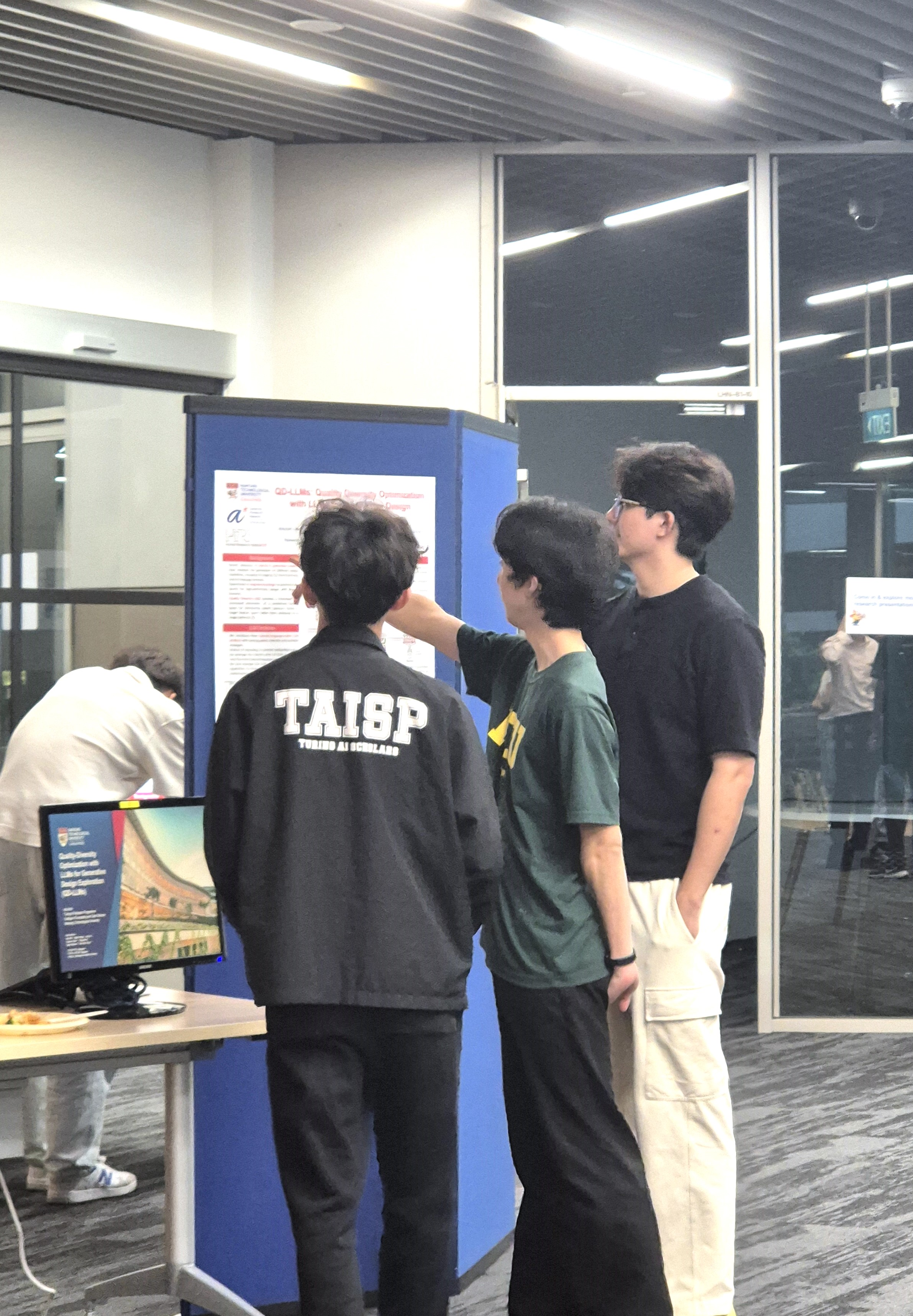 Walkabout segment at TAISP Research Day
Other scholars tackled a range of topics which reflected their diverse interests and pursuits. From news-driven financial modelling using multi-agent systems to visual storytelling through video diffusion models to Chinese language data generation with LLMs, the projects were a demonstration of the intellectual curiosity running through TAISP.
Far from the end of their research journey, the scholars presenting their work were still very much in the process of discovery, learning to refine their questions as much as their methods.
The realities of research
This same thread runs through conversations with faculty mentors. Nanyang Assistant Professor Pu Yewen, in reflecting on what it actually means to pursue a life in research, does not romanticise the journey.
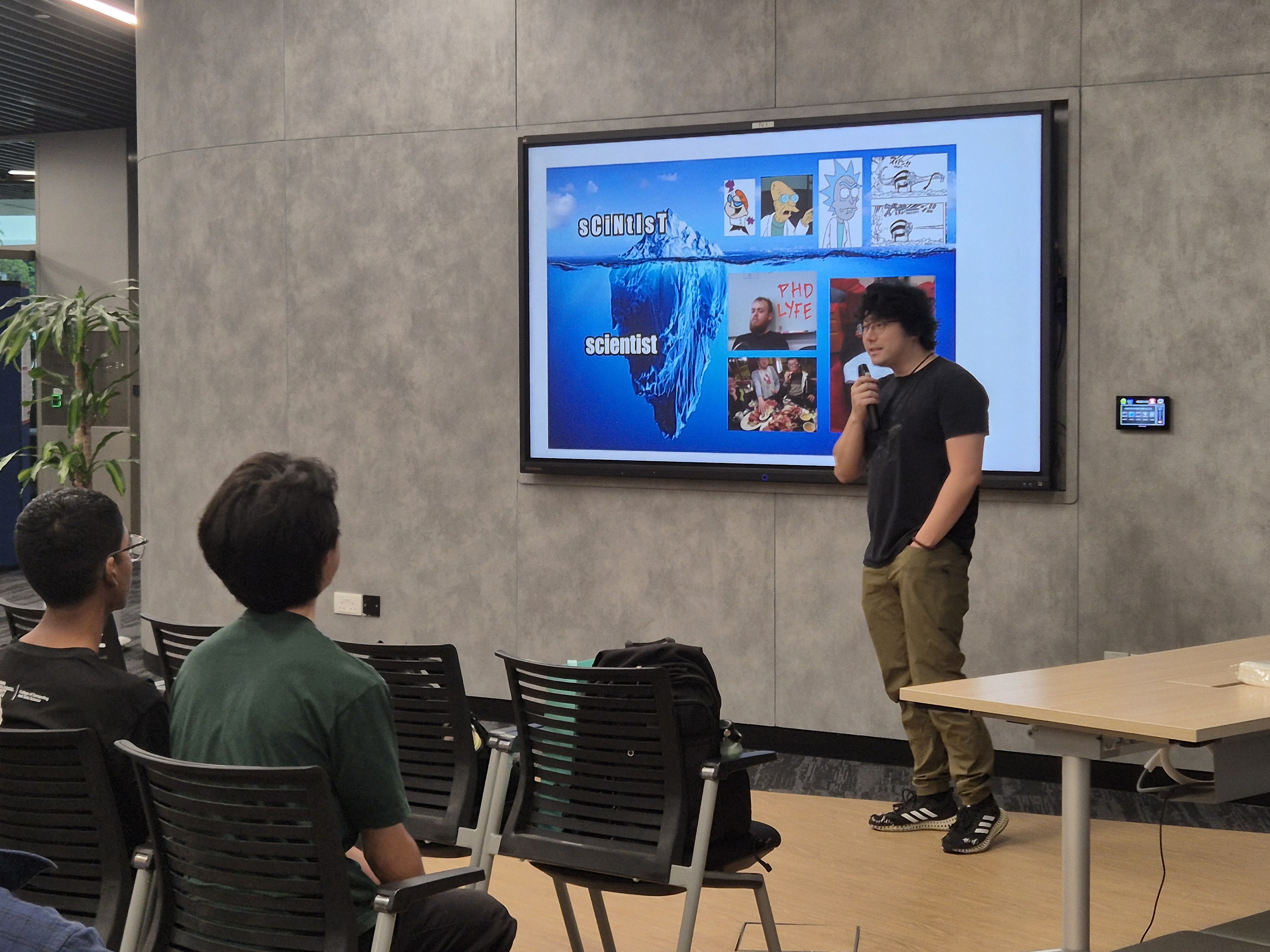 Nanyang Assistant Professor Pu Yewen
He spoke about the discipline of sitting with uncertainty, the persistence required when hypotheses fail, and the long stretches of iteration before a result takes shape. Research, he reminded scholars, is not a sequence of breakthroughs; it is the slow, often invisible work of asking better questions and learning to trust the process.
That perspective sits at the heart of what TAISP aims to offer: a vibrant research culture grounded in exploration and collaboration where students are empowered to transform innovative ideas into impactful realities.