
Seminar: Generalization in AI algorithms and in models of brain function

Abstract:
The ability to generalize to novel tasks remains one of the
Achilles' heels of current AI algorithms. I will show that, despite
remarkable successes, many algorithms struggle when faced with
out-of-distribution samples or new tasks. A remarkable aspect of AI algorithms
beyond their engineering prowess is that they have also been proposed as
potential mechanisms of brain function. Comparing neural network
activations, neurophysiological recordings from monkeys and humans, and
behavioral measurements, I will show that generalization is also a major
challenge for brain models. I will then introduce some ideas that enhance
generalization, focusing especially on the training diet fed to the
algorithms, arguing that improving generalization in AI also leads to
better generalization in models of brain function and vice versa.
Bio:
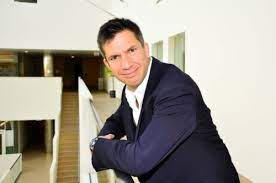
Gabriel Kreiman is a Professor at Harvard Medical School and Children’s Hospital and leads the Executive Function and Memory module in the Harvard/MIT Center for Brains, Minds and Machines. He received his M.Sc. and Ph.D. from Caltech and was a postdoctoral fellow at MIT. He received the NSF career award and NIH New Innovator award, among other accolades. His research group combines computational models, behavioral measurements and neurophysiological recordings to decipher how the brain implements vision and memory and also to develop AI systems constrained and inspired by neural circuits. He is now also the CEO of Memorious, a newly formed AI company devoted to building a human-like external memory to augment human cognition.