
How did South Africa restore public trust in tax authority?
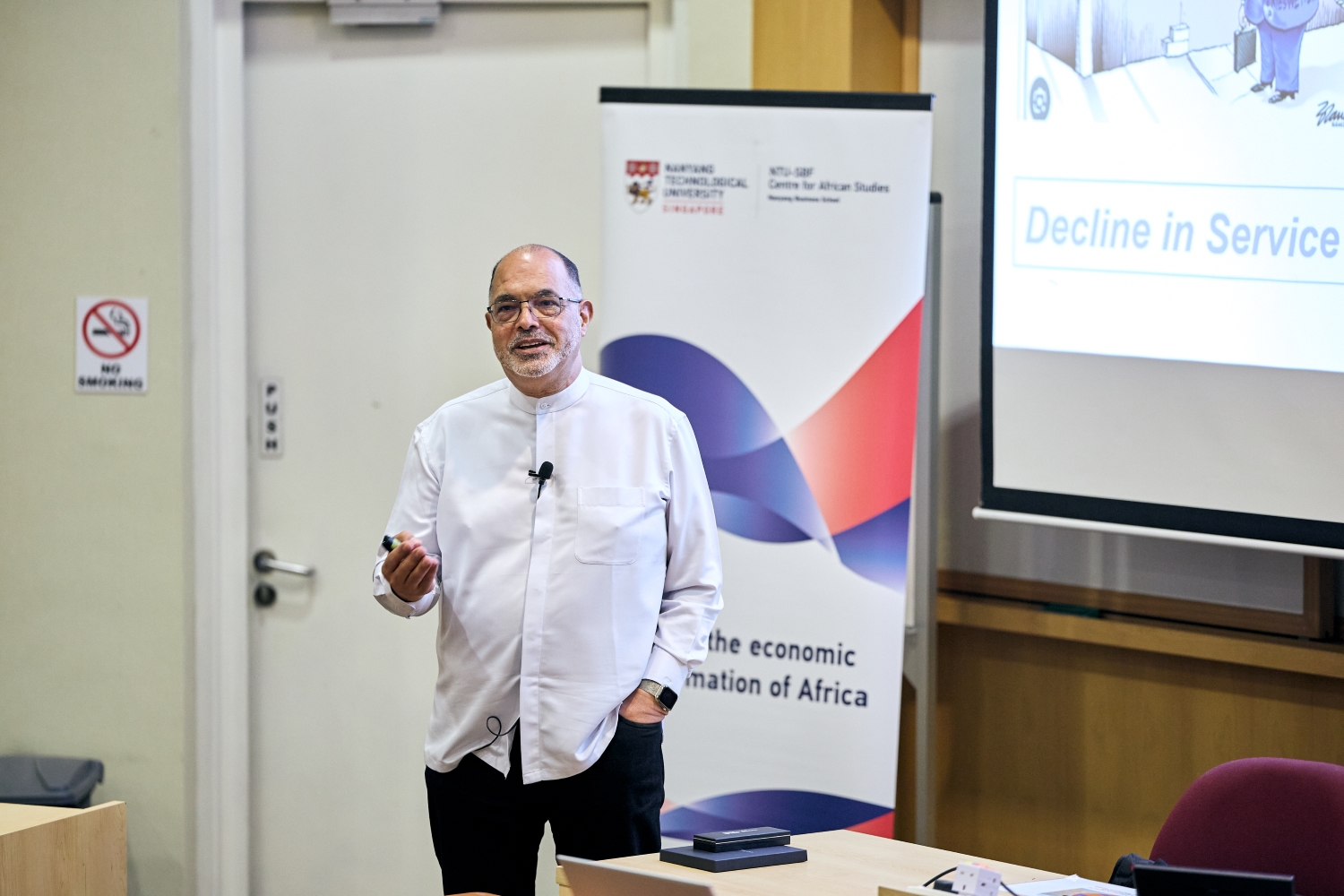
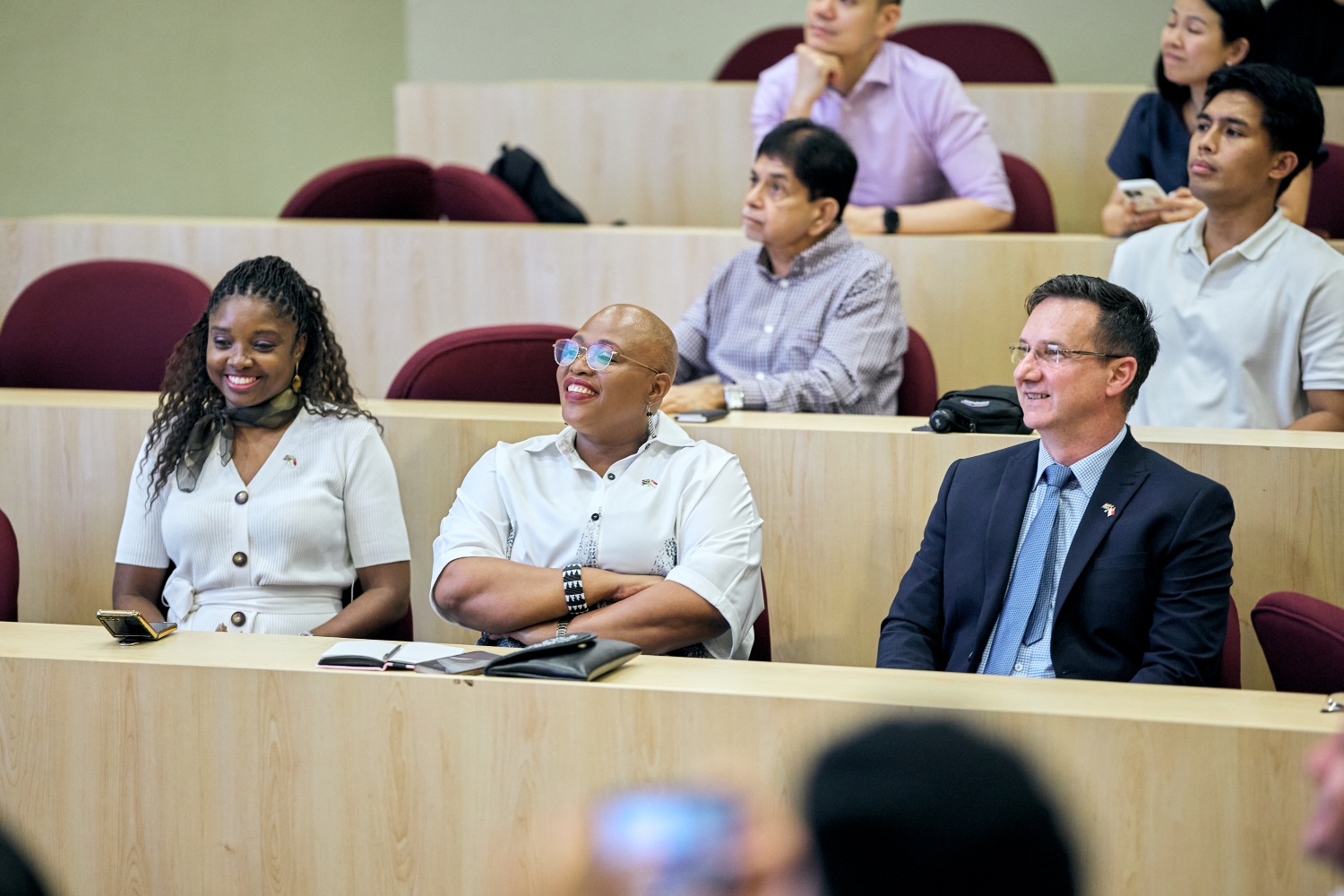
The NTU-SBF Centre for African Studies (CAS) hosted a public lecture on 6 August, where Edward Kieswetter, Commissioner of the South African Revenue Service (SARS), shared how South Africa restored public trust in its tax authority and improved compliance. The event drew a wide audience, including students, academics, industry partners, and members of the public. Among the distinguished guests were the Commissioner of the Inland Revenue Authority of Singapore (IRAS) and his team, as well as the High Commissioner of South Africa to Singapore.
Commissioner Edward Kieswetter presented a compelling account of SARS’s journey from institutional decline to becoming one of the most trusted public service institutions in the country by 2025. He demonstrated how, through strategic leadership, a focus on integrity, and the innovative deployment of technology, SARS successfully rebuilt public trust, enhanced employee engagement, and significantly improved its performance.
He opened the lecture by recounting the severe crisis SARS faced between 2014 and 2019. During this period, the institution experienced a massive decline in service, trust, and performance. He contextualised this challenge within South Africa's history, where citizens historically feared tax authorities and tax avoidance was common, perpetuating wariness even after apartheid.
However, the years 2019 to 2025 marked a period of dramatic recovery and transformation for SARS. Public trust in SARS rose from 61% to 71%, taxpayer service satisfaction jumped from 54% to 87%, and employee engagement increased from 66% to 77%. Net revenue grew at a Compound Annual Growth Rate (CAGR) of 7%, and Compliance Revenue CAGR reached 19%.
Commissioner Kieswetter noted that this stunning success stems from the belief that “Most people are honest and their trust must be earned by first showing trust.” This philosophy underpins SARS’s strategic intent to build a tax and customs system based on voluntary compliance and its vision to become a smart, modern SARS with unquestionable integrity.
He outlined that SARS’s strategic intent was implemented through nine strategic objectives that balanced service with risk: providing clarity, making compliance easy, detecting non-compliance, developing a high-performing workforce, expanding data use, modernising systems, demonstrating effective resource stewardship, working with stakeholders, and building public trust and confidence in the tax administration system.
A key enabler of this transformation, he noted, was the use of data science, machine learning, and artificial intelligence (AI) to facilitate voluntary compliance. For instance, in just one month of the 2025 tax filing season, 7 million taxpayers were assessed, with 5.8 million auto-assessed. Over 1 million filed online, and fewer than 100,000 visited service centres where their submissions were digitised. Noteworthy is how these assessments were issued within 5 seconds—a stark contrast to an average of six months per assessment in 2007. The financial impact of this approach was significant. It prevented US$400 million in fraudulent refunds and raised US$325m in additional taxes in a single month. Since 2019, SARS has saved over US$26bn.
Beyond systems and processes, the Commissioner also shared key leadership insight: lead with a higher purpose, put people at the centre of all operations, lead with vision and a compelling story, and stand for something worthy. He stressed the necessity of authenticity and, in the age of AI, highlighted human qualities like curiosity, empathy, wisdom, and ethical judgment as the only competitive advantage. He also advised leaders to lead by example by embracing technology and AI with a clear purpose.
Closing with a quote from Nelson Mandela, Commissioner Kieswetter reflected on the enduring nature of reform: “After climbing a great hill, one only finds that there are many more hills to climb.” This poignant reminder reinforced the idea that SARS’s journey of transformation and trust-building is a continuous process.
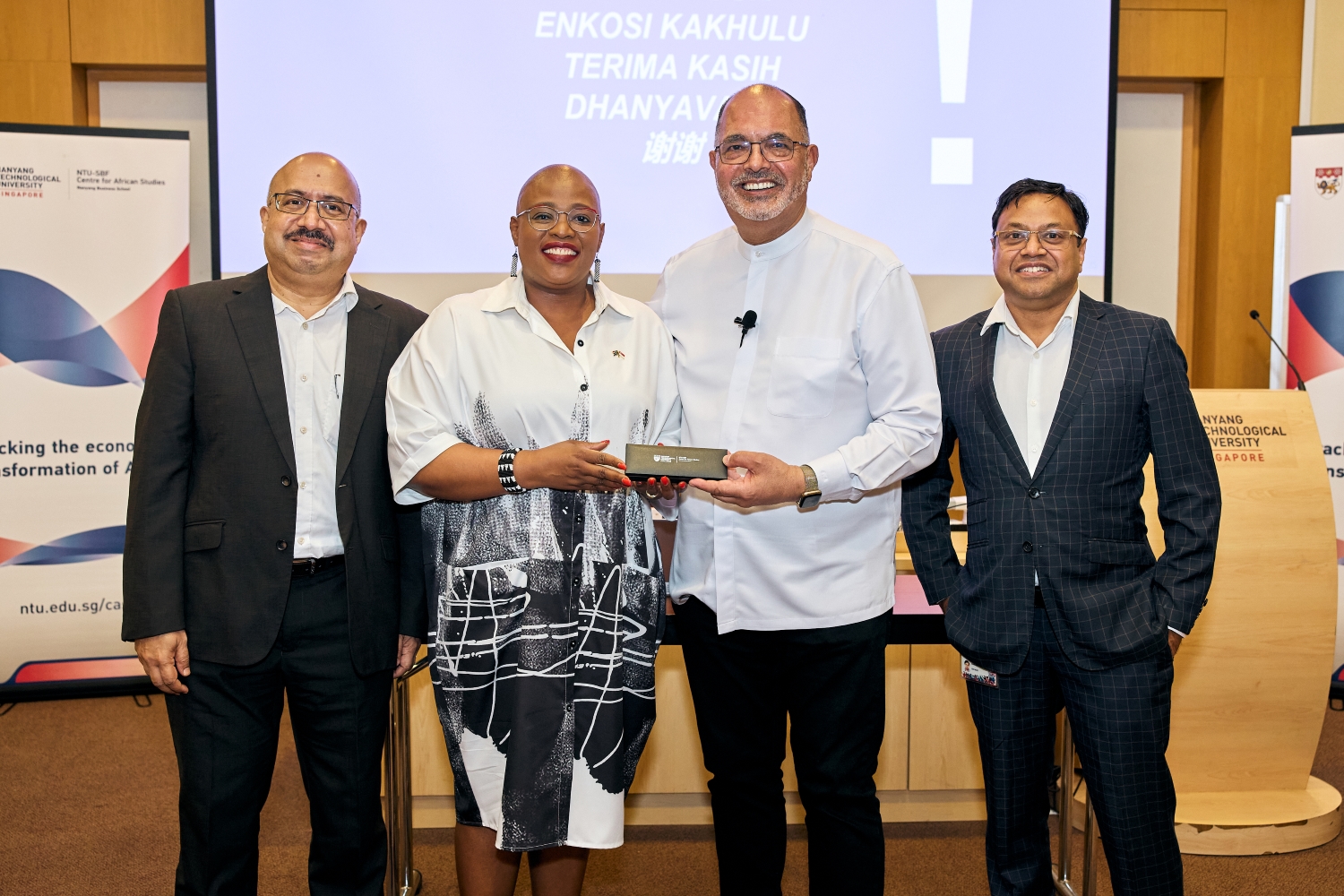 Mr Venkataramani Srivathsan, Director of Arise P&L and H.E. Madiepetsane Charlotte Lobe presenting a token of appreciation to Commissioner Edward Kieswetter.
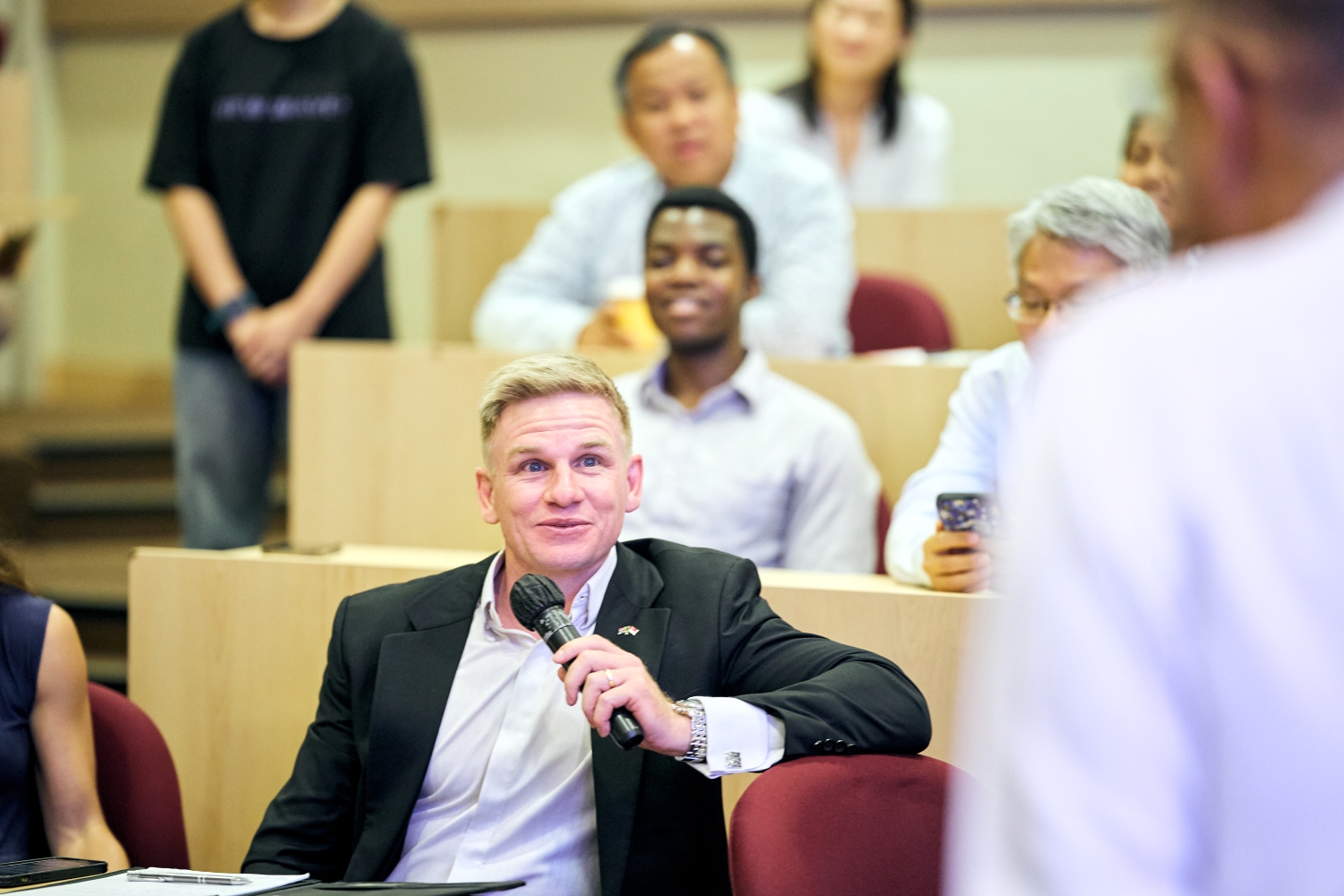
The event concluded with fruitful exchanges among audience members and representatives from the South African and Singaporean tax authorities, who compared notes and explored opportunities for mutual learning.

Subscribe to Newsletter  |