Redefining Volcano Eruption Timelines
Scientists from the Earth Observatory of Singapore and the Asian School of the Environment at NTU have developed a new way to reconstruct the timescales of magmatic processes preceding volcanic eruptions. Experts have typically analyzed crystals trapped in magma to figure out its movements prior to an eruption. However, traditional one-dimensional modelling of these crystals has led to potentially inaccurate timescales. To fix this, the NTU team used novel 3D modelling methods that recreate more realistic digital reconstructions of these crystals, providing a far more accurate overview of volcanic histories.
Forecasting volcanic eruptions
Across the world, approximately 29 million people live within 10 kilometres of active volcanoes. While these geological marvels pose plenty of hazards, they also offer numerous benefits, such as fertile volcanic soil perfect for cultivating crops, geothermal energy, and critical metals for green transition.
With so many communities settled on the flanks of active volcanoes, predicting eruptions as early as possible becomes a vital challenge. Doing so relies on understanding how quickly magma can move from deep subterranean reservoirs to the surface, a journey that can be mapped out by examining the crystals located in hardened volcanic rock.
Olivine crystals: natural volcanic stopwatches
When magma mixes and ascends towards the Earth’s surface, it undergoes chemical changes. Tiny olivine crystals present in the magma trap samples of these chemical fluctuations, acting as natural stopwatches that record periods of the magma’s activity. By examining these crystals, scientists can chart an eruption's historic timeline. These crystals can show scientists how long magma has sat in an underground reservoir, or how long it has taken to travel to the surface.
Traditional modelling methods
While these crystals can provide a detailed, time-resolved history of volcanic processes, current analysis methods often require simplifying natural crystals into one-dimensional lines to make calculations easier. However, nature is rarely so regular. Trying to fit natural crystalline shapes into a one-dimensional scientific model has resulted in distorted volcanic timelines, and inaccurate forecasts can spell disaster for the communities living in harm’s way.
New 3D modelling
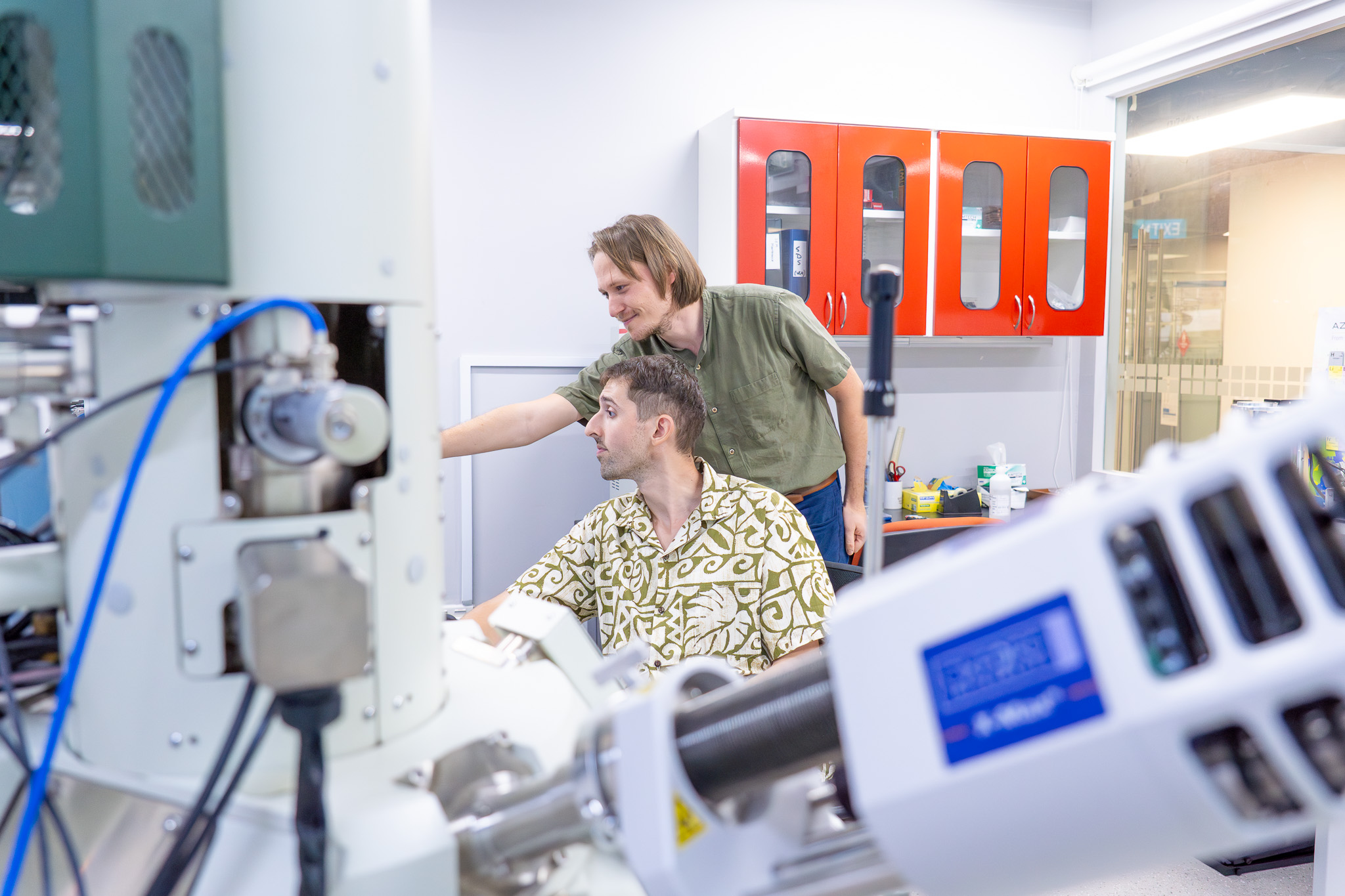
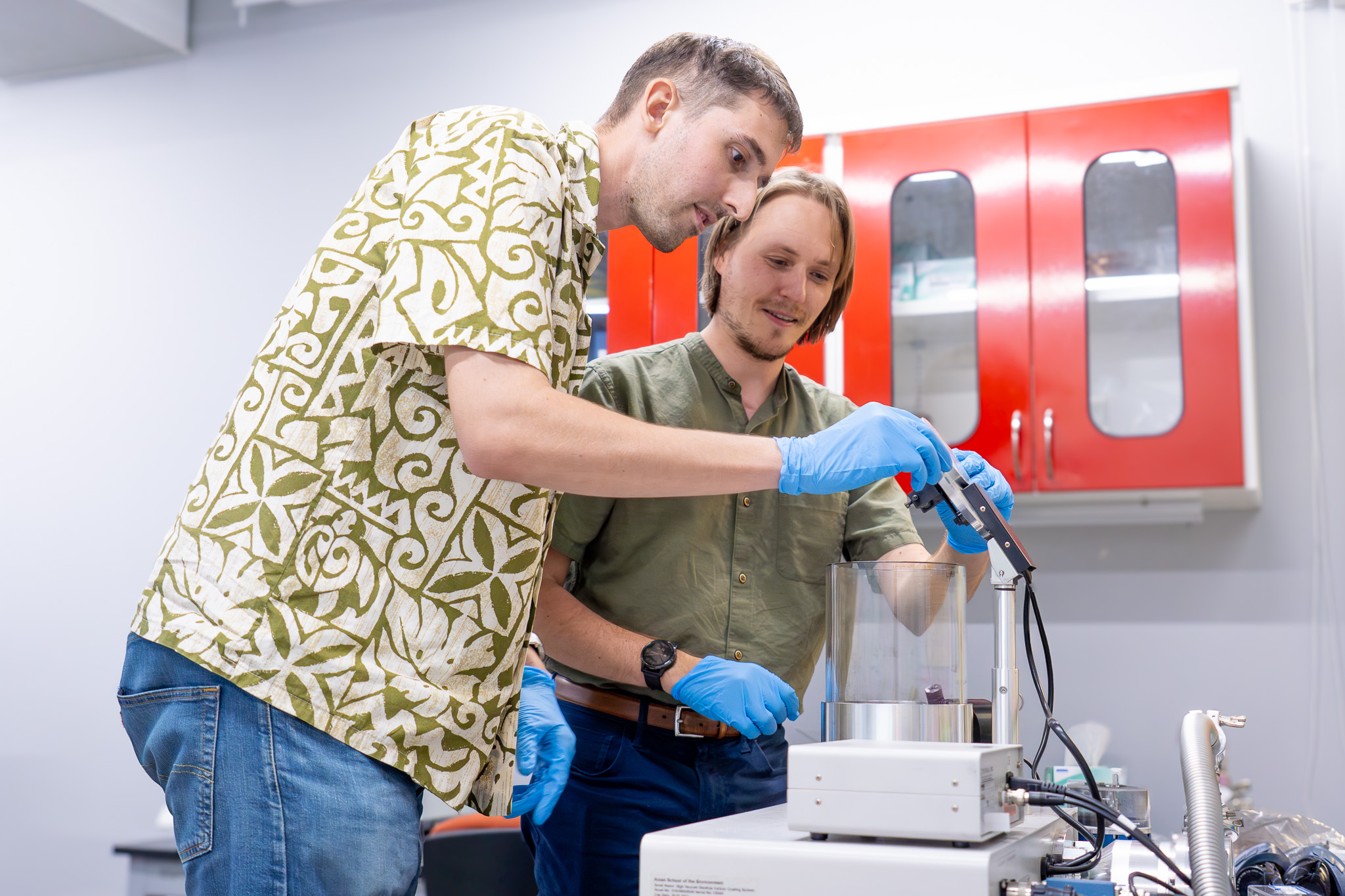
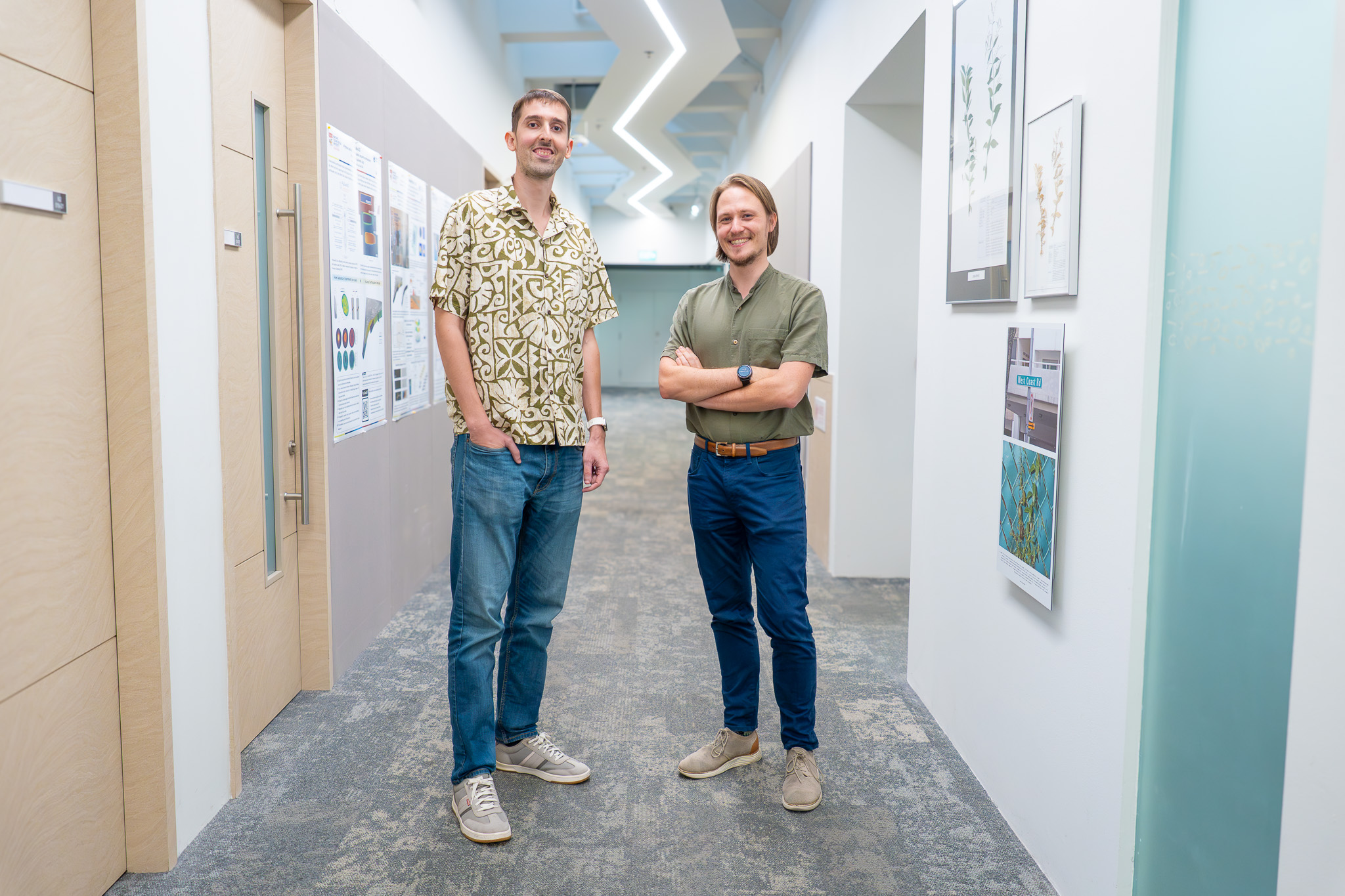
In an effort to improve volcanic activity forecasts, the NTU team – led by Dr Adrien Mourey and Assistant Professor Euan Mutch from the Earth Observatory of Singapore and the NTU Asian School of the Environment – combined three-dimensional X-ray imaging with advanced 3D modelling simulations to create a highly accurate prediction model.
In their paper, published in Nature Communications, the duo utilized X-ray microtomography – which uses X-rays to visualize internal structures of objects – to reconstruct the true forms of complex olivine crystals recovered from the 1820 golden pumice eruption of Kīlauea in Hawai‘i. They then plugged these 3D shapes into advanced numerical software to simulate how exactly chemical elements diffused through the crystals’ geometry.
With this new method, the researchers were able to successfully reconstruct a timeline of events leading up to the 1820 eruption. This included everything from the underground magma storage that was operating decades before, to magma mixing that occurred in the final weeks before the eruption, and down to the cooling processes that took place in the minutes and hours following the eruption.
To put this model’s improved accuracy into perspective, an olivine cluster examined using the older 1D method showed that the magma had sat in an underground reservoir for over 30 years. However, when the exact sample was put through the team’s improved 3D framework, it demonstrated a timescale of just 14 years.
The significance of accurate volcanic predictions
The ultimate impact of this work lies in fundamentally improving how we interpret what happens beneath active volcanoes before an eruption, thereby protecting millions of lives and trillions of dollars’ worth of property. By tracking how magma is stored, transported, and how it eventually erupts, this approach provides crucial insights for understanding future volcanic behaviour and evaluating potential hazards.
Furthermore, because these erupted crystals can preserve chemical data indefinitely, scientists can now analyze eruptions that occurred long before the invention of modern monitoring instruments. This method is also a gamechanger for studying volcanic systems that do not erupt frequently, which typically do not leave behind enough data for scientists to study.
The future
Looking ahead, the NTU team plans to apply this framework to other volcanic systems globally to test how widely these 3D methods can be used. They are also working to refine the simulations further by integrating them with traditional monitoring datasets, such as seismic activity, ground deformation, and volcanic gas compositions.
The ultimate goal is to create a precise unified warning system that improves how we interpret pre-eruption signals, giving us a clearer window than ever before into future volcanic activity.
You can explore their research at the link here.
-and-nap-kyle-morgan-(right).tmb-listing.jpg?sfvrsn=84593724_1)

.tmb-listing.jpg?sfvrsn=cb08705a_2)