
Tier 1 grant to Asst Prof Kelly Andersen: How will Singaporean forests respond to global environmental change?
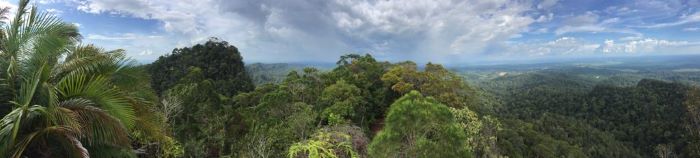
Congratulations to Asst Prof Kelly Andersen, who has won a Tier 1 grant! With this grant, Asst Prof Andersen fill a fundamental knowledge gap on plant nutrient acquisition in the tropics and the role it plays for how plants respond to environmental change. Environmental changes such as carbon dioxide enrichment, warming and increased frequency of extreme weather have the potential to alter basic tropical ecosystem properties through their regulation of the carbon cycle (balance of a carbon pools between tree biomass, soil and the atmosphere), the water cycles, temperature and more. Specifically understanding the response of tropical forests is crucial because of their great biomass; they account for up to 30% of global plant productivity on land, and this makes them key players in the game of global environmental change.
In the tropics, phosphorus is the main plant nutrient limiting tree growth and response to carbon dioxide enrichment (by absorbing more carbon dioxide from the atmosphere through photosynthesis). The soils in Singapore are generally low in phosphorus, but currently we know very little about how tropical trees deal with phosphorus limitation and how that affects the carbon balance of the forest ecosystem. Does phosphorus limit tree growth directly, by constraining photosynthesis, or can the trees use the available phosphorus more efficiently by minimizing loss, or do they invest in roots and root fungal symbionts to increase nutrient uptake from the soil? How large trees like those in Bukit Timah coop with phosphorus limitation is in turn linked to the amount of carbon that they take up and store in their biomass (thereby reducing the amount of carbon dioxide in the atmosphere) and how resistant they are to changes in e.g. temperature, rainfall patterns and storms. Today the scientific predictions of how rainforests respond to environmental change ranges from increased productivity to catastrophic diebacks, in other words: it is extremely uncertain. This study will contribute fundamental knowledge on Singaporean forest ecosystems that can also be used in model scenarios to predict trajectories of Southeast Asian rainforest ecosystems in a future of environmental change.
Text by Anna Lagerström based on information from Kelly Andersen