
Experts vote on the 100 most pressing biodiversity and sustainability research questions in Southeast Asia
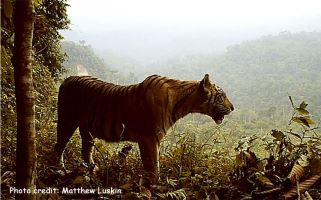
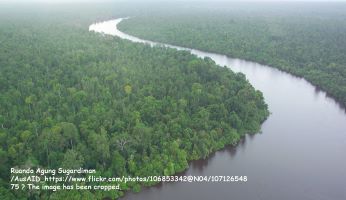
The rainforests of Southeast Asia have some of the most diverse ecosystems on earth, but are also among the most severely threatened. Many threats to this biodiversity are of a global nature, such as urban development, pollution and global warming, but where to start if we want to address these problems here in Southeast Asia? What knowledge is needed to help advance biodiversity conservation and sustainable development here? This is what a group of 64 scientific experts on conservation biology and sustainability in Southeast Asia asked themselves. They used voting to narrow down a list of 333 questions to the 100 most pressing. The outcome of this exercise was recently published in article in the journal Biological Conservation, with ASE’s Asst Prof Janice Lee, Dr Matthew Luskin as co-authors, as well as Dr Eleanor Slade from Oxford University who is joining the ASE as an Asst Prof this month.
The initiative, led by Dr Joanna Coleman from NUS, is unusual not only because of its focus on Southeast Asia as a region, but also because it brought together experts from different institution, including biology, conservation and wildlife, geography, environmental affairs, agricultural and social science to find common research priorities. Asst Prof Janice Lee, who is a co-author of the paper, comments: "The discussion brought together scientists from a wide range of backgrounds and it's great to see a how scientists converge on specific issues of importance for conservation in Southeast Asia."
It may seem obvious that lasting solutions require holistic approaches, particularly when dealing with a region with where rapid change in land-use and land-cover coincides with fast population growth, economic development, industrialisation, and unsustainable management of natural resources. But one of the problems of conservation research is that it is often species specific, or has a narrow focus. In the words of co-author Dr Matthew Luskin: "Scientists face ego problems: everyone thinks their particular research topic is the most important. And when it comes to understanding the biodiversity crisis in Southeast Asia, there is compelling evidence for thousands of specific topics. At some point, we must agree to focus on a more narrow and achievable set of research questions and objectives".
So what did the researchers find? What questions should conservation and sustainability research in Southeast Asia focus on? Wildlife harvesting (driven by trade that is often illegal) and agricultural expansion (leading to deforestation) are threats to biodiversity that are especially severe in Southeast Asia, and leading causes of biodiversity loss. There is also less conservation-relevant research in general (due partly to lack of funding), compared to many other regions of the world, particularly transboundary research is lacking (between ASEAN countries), which results in knowledge gaps on basic information such as species distributions, livelihoods and threats. This lack of information, as well as a great complexity of interactions, were characteristic of the region and highlights the need for collaboration, between scientist from different disciplines, but also between scientists and governments, and between countries.
The authors hope that the paper will stimulate studies that will help “…advance the urgently-needed conservation of SE Asia's biodiversity” and that the suggestions they provide helps to break the “research- implementation gap”, translating research information into conservation and sustainability actions.
Read the publication by Coleman et al. here