
Second Major in Entrepreneurship
Course Overview
The Second Major in Entrepreneurship (SMiE) is developed to nurture innovation-driven entrepreneurs who can contribute to Singapore's Smart Nation goals. This also allows greater flexibility for undergraduates to pursue interdisciplinary programmes and pan-university majors. Students will be inspired to be venturesome and more resilient in this ever-changing world.
Currently available to students from the College of Engineering (CoE), College of Science (CoS), Nanyang Business School (NBS), and the College of Humanities, Arts and Social Sciences (CoHASS), the Second Major in Entrepreneurship (SMiE) programme will progressively be offered by other Schools. Upon completion of the programme, SMiE students will receive a degree in their respective major along with a separate certification for the Second Major in Entrepreneurship.
Course Duration
3 - 4 years
Course Mode
Full-time
Course Intake
Please contact us if you wish to enrol after matriculation.
List of Courses
Courses
| Semester 1 (Aug - Nov) | Semester 1 (Dec) | Semester 2 (Jan - May) |
ET5001 Foundations of Innovation and Entrepreneurship (3AU)* | ✔ | ✔ | ✔ |
ET5003 Leading and Managing Growing Enterprises (3AU)* | ✔ | ✔ | ✔ |
ET5132 New Venture Financing (3AU) | ✔ | ✔ | ✔ |
ET5135 Business Venture Implementation (3AU) | ✔ |
| ✔ |
ET5053 Entrepreneurship Simulation (3AU) | ✔ |
| ✔ |
ET5054 Rethinking Innovation and Entrepreneurship for Sustainability (3AU) | ✔ |
| ✔ |
ET5055 Building Digital Ventures (3AU) |
|
| ✔ |
ET5056 Entrepreneurial Sales and Marketing (3AU) |
|
| ✔ |
ET5090 Turning Ideas into Compelling Pitches (1AU) | ✔ | ✔ | ✔ |
ET5092 Experiencing Entrepreneurship (1AU) | ✔ | ✔ | ✔ |
ET5122 E-startups & Social Media Strategies (3AU) | ✔ |
| ✔ |
ET5216 Venture Capital Investment & Practices (4AU) | ✔ |
|
|
ET5218 Innovation & Commercialisation of Technologies (3AU) | ✔ |
|
|
* ET5001 Foundations of Innovation and Entrepreneurship (3AU)
[Replacing ET5211 Entrepreneurial Mindset and Technology Innovation (3 AU) and ET5131 Venturing into Entrepreneurship (3AU)]
* ET5003 Leading and Managing Growing Enterprises (3AU)
[Not offering in AY26S1. Offering every semester from AY27S1 onwards]
[Will be offered based on demand]
Students will be required to take 4 courses for 12 AU as Compulsory Courses so that they will be equipped with the fundamental entrepreneurship competency and the technopreneurial mindset, with an emphasis on experiential exposure and interactive learning:
ET5135 Business Venture Implementation (3 AU)
ET5001 Foundations of Innovation & Entrepreneurship (3 AU)
This course provides a comprehensive introduction to entrepreneurship across individual, organizational, community, and societal levels. Students will explore global trends shaping the future of innovation and examine how technological advances drive economic and social transformation. The course introduces multiple pathways to entrepreneurship-start-up founder, corporate innovator, social entrepreneur, and more-to broaden students' awareness of potential innovation- and entrepreneurship-related careers. Through a structured exploration of early-stage venture creation, students will learn key concepts such as opportunity identification, value proposition design, business model development, customer validation, and go-to-market planning. Foundational theories and approaches-including effectuation, design thinking, and the lean startup-equip students with practical, evidence-based methods for navigating uncertainty. The course emphasises experiential learning. Students will apply entrepreneurial tools and frameworks through hands-on exercises, team projects, and real-world problem solving. By the end, students will develop the mindsets, skills, and confidence to bring innovative ideas to life in a variety of contexts.
Mutually exclusive with : EE5083, ET5131, ET5211
ET5003 Leading and Managing Growing Enterprises (3 AU)
TBA
ET5132 New Venture Financing (3 AU)
This course aims to provide you an understanding of the start-up formation process, such as the forms and regulatory compliances of different business structures, types and sources of funding for starting up and growth, ultimately leading to a viable exit strategy for all stakeholders. You will be able to understand the entrepreneurship development from a financing viewpoint. At the same time, you will gain insights into the investment opportunities from the perspectives of both the entrepreneurs and investors, with respect to the funding cycles and expectations. You will also learn how to assess a venture's financial health through understanding the financial statements, essential financial indicators, creating financial projections, capital budgeting techniques and preliminary valuation methods. This course is suitable for those who are planning to embark on and/or currently involved in startup creation, with or without prior knowledge of accounting and finance, and would like to gain a working knowledge of how to `read' the financial statements in ways that will support business activities and decision making from the perspective of a startup.
Mutually exclusive with : ET5214
ET5135 Business Venture Implementation (3 AU)
This course allows students to experience the critical role of opportunity creation & recognition, and to practice the method of evaluating new venture concepts. Essentially this course integrates what students have learned in the foundational courses of the Entrepreneurship. Throughout this course, students will be exposed to the many 'ups and downs' that starting and operating a new business venture and/ r an under-performing or `turn-around company? entails. The objectives of the course are to cultivate the proactive mindset of the students to tap into the entrepreneurial ecosystem in Singapore, to meet & mingle with venture capitalists, entrepreneurs, business leaders, business angels, government of officers, and intellectual property lawyers. This will facilitate students to explore potential business ideas in forums where like-minded people meet. In addition, students will get to experience the importance of networking & professionalism.
Mutually exclusive with : ET5051, ET5091, ET5101, NH5001
To allow students to build greater breadth and depth in entrepreneurship, they will select at least 13 AU of Elective Courses based on their interests and needs. A diversified range of topics will be offered by NTU Entrepreneurship Academy (NTUpreneur) and other Schools* to promote interdisciplinary learning in SMiE.
ET5053 Entrepreneurship Simulation (3AU)
ET5054 Rethinking Innovation and Entrepreneurship for Sustainability (3AU)
ET5055 Building Digital Ventures (3AU)
ET5056 Entrepreneurial Sales & Marketing (3AU)
ET5090 Turning Ideas into Compelling Pitches (1AU)
ET5092 Experiencing Entrepreneurship (1AU)
ET5122 E-Startups and Social Media Strategies (3AU)
ET5216 Venture Capital Investment & Practices (4AU)
ET5218 Innovation and Commercialisation of Technologies (3AU)
*CB4216 Entrepreneurship in Medtech and Biotechnology (3AU)
*EE5083 From Passion to Action: Six Steps to a Start-up! (3AU)
*ET5212 Entrepreneurial Ecosystem (3AU)
*BU5302 Law of Intellectual Property & New Media (3AU)
*AB0603 Social Entrepreneurship (3AU)
*PS5888 Making and Tinkering (4AU)
*DR5004 Design and Systems Thinking (3AU)
*DV2003 Beyond the Logo: Introduction to Branding (3AU)
ET5051 Deep Dive into Lean Startup (3 AU) |
This course is one of the Deeper Experiential Engagement Projects (DEEP) series of BDEs/GERs. It aims to make use of projects initiated from interest-based or problem-driven activities to develop your awareness of the practical relevance of entrepreneurship and innovation beyond the classroom. In this course you will learn from entrepreneurship faculty and be mentored by experienced entrepreneurs. The course will expose you to entrepreneurial ecosystem and support networks at NTU. You will be introduced to the fundamentals of entrepreneurship, innovation and new venture creation process. You will learn to generate ideas, identify opportunities, discover customer needs, design a product or service, and develop a relevant prototype and business model. This training will enable you to develop the entrepreneurial mindset and practical entrepreneurial skills which are highly relevant to any entrepreneurship undertaking in the future. This experiential learning project may take place in halls with Residential Education facilities, NTU Clubs and Society spaces, or any appropriate spaces made available by the Schools or Institutes for such work. You will learn experimental (experiential) approaches, how to manage time and resources, and consider how your newly acquired knowledge and skills can be used to benefit others. |
ET5053 Entrepreneurship Simulation (3AU) |
The course aims to equip students with a holistic understanding of a startup management, spanning the early launch phase through growth and expansion. Using a simulation software, students will collaborate in teams to run their startups as an integrated entity rather than isolated functional units. The students will deliberate on operations decisions and execute key business choices to achieve long-term strategic objectives of the startups. In addition, the students will be introduced to business, strategy and key performance frameworks that support the attraction of venture capital and potential business partners. The students will scale and compete in an industry against the simulation algorithm and then in direct competition amongst their peer teams. The students will broaden and deepen their analytical skills, reflecting on the interrelated impact of decisions when running their startups in a safe, practice-oriented environment. This is a replacement course for ET5134 Enterprise Strategy. |
ET5054 Rethinking Innovation and Entrepreneurship for Sustainability (3AU) |
TBA |
ET5055 Building Digital Ventures (3AU) |
TBA |
ET5056 Entrepreneurial Sales & Marketing (3AU) |
TBA |
ET5090 Turning Ideas into Compelling Pitches (1AU) |
The proposed course, (ET5090 Turning Ideas into Compelling Pitches), is developed in response to a growing institutional need to equip students with practical communication skills that support their entrepreneurial aspirations and professional readiness. As innovation and interdisciplinary problem-solving become core pillars of NTU's educational direction, students must be prepared not only to develop ideas but to clearly and persuasively communicate those ideas to diverse stakeholders. This course aims to address a critical skill gap often observed in students keen in innovation, which is the ability to articulate and communicate clearly on the value and relevance of their projects. By adopting the widely recognised 'elevator pitch' framework, the course offers students a structured yet flexible approach to building core persuasive communication capabilities in various scenario settings. The course is designed to be experiential, interactive, and outcome-driven. In additional to the theory and framework learnt, students will also participate in iterative pitch practices, structured peer feedback, and live pitching simulations involving both peer audiences and external mentors. The course will culminate in a hands-on pitching for investment setting, allowing students to apply their learning in a dynamic, real-world environment. The key competencies this course seeks to develop include: 1 Clear and concise communication 2 Convey complex ideas for a non-technical audience without losing conceptual depth 3 Problem-solution framing for presenting a focused, user-driven solution 4 Value proposition where students will define their ideas differentiation 5 Public speaking confidence through practice and repetition, 6 Handling objections and Q&A Beyond communication, the course also supports broader learning outcomes such as critical thinking, emotional intelligence, adaptability, and confidence. This course is relevant across disciplines and may particularly benefit students involved in innovation presentation, entrepreneurship competitions, capstone projects, research commercialization, or even social impact ventures. In summary, Turning Ideas into Compelling Pitches complements NTU's student development strategy by preparing learners to effectively articulate their ideas in a real-world setting. |
ET5092 Experiencing Entrepreneurship (1AU) |
The aim of ET5092 Experiencing Entrepreneurship is to provide students with an engaging and accessible introduction to innovation and entrepreneurship (I&E). The course seeks to: 1. Build foundational awareness of the entrepreneurial landscape, including key concepts, terminology, and processes within the startup ecosystem. 2. Cultivate an entrepreneurial mindset by encouraging creativity, curiosity, adaptability, and problem-solving through experiential activities. 3. Introduce entrepreneurial tools and frameworks, preparing students for deeper I&E coursework and project-based learning. 4. Raise awareness of I&E-related career pathways, including entrepreneurship, intrapreneurship, and innovation-focused roles across industries. |
ET5122 E-Startups and Social Media Strategies (3AU) |
This module seeks to impart foundational knowledge pertaining to Social Media Marketing, with a particular emphasis on its application in E-Startups. To facilitate this, a range of social media strategies suitable for E-Startups will be taught. In addition, the principles and deployment of e-commerce will be discussed in depth. The curriculum will further encompass other digital marketing techniques, including Search Engine Marketing, the Google Display Network, and Search Engine Optimization. Armed with the aforementioned competencies, you will be equipped to conceptualize and implement a robust digital marketing strategy for their E-Startups. |
ET5216 Venture Capital Investment & Practices (4AU) |
This course helps you understand how to value startups, corporate ventures, and commercial projects by exploring different valuation models to secure Venture Capitalists (VC) funding. It is also intended to help you to begin with the end in mind. As you develop your startup for investment potential from the early stage, you are now more likely to have a desired outcome at the end. Besides gaining a theoretical understanding of venture capital investment, you will gain first-hand perspective and guidance from practitioners. You will put on two different hats to understand venture capital investment from the perspectives of both the founder and the investor. In addition, you will learn how VC firms take an active role in the startups' performance; guidance, expertise, and industry connections can be just as valuable as financial capital. This course enhances your understanding of venture capital investment term sheets and investment agreements, which covers important facets of the VC financing process : economic issues such as the valuation given to the company (the higher the valuation, the less dilution to the entrepreneur); control issues such as the Board of Directors composition and reserved matters, approval or 'veto' rights the key investors will enjoy; and post-closing rights of the investors, such as the right to participate in future financings, senior management appointment, information rights, etc. VC's post investment roles, commitments, and contributions to the investee's growth and its exit strategy. The course also examines a few real-life venture capital investment deals. You will identify best practices and draw lessons from actual cases to deepen your knowledge and skills in VC investment. |
ET5218 Innovation and Commercialisation of Technologies (3AU) |
The course aims to explore key issues of successes and failures in commercializing inventions and technological innovations of products and services. You will examine new challenges posed by the shortened life cycles of products and services and identify technology commercialization possibilities. You will also survey the challenges and opportunities posed by the emerging technologies seen in the Fourth Industrial Revolution. The course emphasises on the successful transfer of technologies of deep-tech from a research environment for commercialization to the global market. You will understand values and skillsets needed as an entrepreneur or corporate entrepreneur in the development of new products and services in start-ups or corporate entities to remain competitive. |
CB4216 Entrepreneurship in Medtech and Biotechnology (3AU) |
This course provides students with interest in medical innovation and entrepreneurship with a systematic scientific framework towards a commercialization pathway for biotechnology and medical devices. Entrepreneurship is not only a mindset, but can be taught as a skillset to significantly improve the odds of creating a successful and impactful ventures. The course is designed as an integrated toolbox by introducing key lean start-up fundamentals and presenting practical guides in customer discovery and market validation, MedTech product development and regulation, and business model design. These concepts will also be illustrated with selected case study of biotech and medtech start-ups. Contact the course offering school, School of Chemistry, Chemical Engineering and Biotechnology (CCEB), for more details. |
EE5083 From Passion to Action: Six Steps to a Start-up! (3AU) |
This course aims to guide aspiring student entrepreneurs through their ideation, planning and validation phases. Students will have the opportunity to develop a start-up idea from scratch using a simple but structured framework. Close guidance from faculty and industry mentors will be provided to help students iterate, refine and present their business ideas. In certain weeks, awareness sessions will be conducted to introduce students to useful tools and platforms for their prototypes. At the end of the course, student groups will pitch their start-up ideas and demonstrate their prototypes to a panel of judges. Students should leave the course with a better understanding of the entrepreneurial mindset and align their thinking with the principles for success in a future venture. Contact the course offering school, School of Electrical and Electronic Engineering (EEE), for more details. |
ET5212 Entrepreneurial Ecosystem (3AU) |
Upon completion of this course, you will know how to recognize and evaluate new venture opportunities; will understand the issues faced by entrepreneurs when starting a venture; and will have the fundamental skills and tools required for starting and growing a new business. In addition, you will know and understand the difference between an opportunity and an idea; the value proposition and how it applies to a new venture; the need for sustainable competitive advantage; and the methods to estimate profitability of a new venture. Finally, you will be able to better assess your potential and interest in becoming an entrepreneur.
Contact the course offering school, Nanyang Business School (NBS), for more details.
|
BU5302 Law of Intellectual Property & New Media (3AU) |
The knowledge-based economy is underpinned by laws which protect information assets, shapes transactions and provides security for the various parties of interest to electronic transactions. Topics covered include protection and management of intellectual property, validation and protection of electronic agreements, data security and privacy, cyber-crime and the laws that apply to virtual worlds. This course is designed to give an understanding on the relationship between law and intellectual capital and new forms of media as well as how businesses work within the rules affecting the knowledge-based economy. The approaches to this subject will involve both critical thinking and practical work. Contact the course offering school, Nanyang Business School (NBS), for more details.
|
AB0603 Social Entrepreneurship (3AU) |
Social entrepreneurship is rapidly emerging. These entrepreneurs help solve social and environmental challenges which are ignored or missed by businesses and pursue predominately donor-driven models of the nonprofit sector. This field includes “social intrapreneurship,” where employees in companies develop new income opportunities for their firms by addressing social and environmental challenges in a profitable and scalable manner. In this evolving social entrepreneurship landscape, the traditional lines blur among nonprofits, government, and business. Through use of case studies and class discussions, lectures, guest speakers, and a field project, students will gain better understanding on the opportunities and challenges in this landscape. Students will learn what a social enterprise is and its similarities and differences with other types of business, engage in problem/ opportunity assessment, and learn about the trade-offs between social and financial returns on investment. Contact the course offering school, Nanyang Business School (NBS), for more details. |
PS5888 Making and Tinkering (4AU) |
This course aims to create an environment that allows students to apply their scientific knowledge to identify and solve open-ended, real-life problems together with their peers from different disciplines. You will have the opportunities to freely explore, take risks and even if you fail, you will be able to learn from your failures. The end-product of the investigation will be a (possibly novel) prototype designed and created by you and your team to solve the problem you identified. You will also be required to do presentations of your project. Contact the course offering school, School of Physical and Mathematical Sciences (SPMS), for more details. |
DR5004 Design and Systems Thinking (3AU) |
In this course you will engage with two aspects of the human thinking process: 1) the versatile investigation and problem-solving process known as design thinking where you will experience new ways of gaining insights when designing for a situation where the emphasis is on human considerations. By applying the design thinking process, you will respond with solutions that are appropriate to the intended audience. 2) the holistic approach to investigation and analysis of systems thinking focusing on the way that a system's constituent parts interrelate and work over time and within the context of larger systems. You will be exposed to constraints and boundary conditions of systems, their interconnectivity and dynamics that define real-world challenges. You will use methods of systems thinking to break systems down into their separate elements and apply strategic processes to aid in the development of viable solutions. Contact the course offering school, School of Art, Design and Media (ADM), for more details. |
DV2003 Beyond the Logo: Introduction to Branding (3AU) |
In this introductory level course, you will be introduced to a theoretical overview of how branding is situated in our contemporary society and its roles through the lens of art, design and media. You will gain a broad understanding of the evolution of corporate brand communication and identity, brand consumption theories and patterns which led to the rise of various alternate brand movements. A basic anthropological analysis of brands as an economic force to becoming a cultural artefact will also be discussed. Through various analytical in-class exercises and hands-on assignments, you will gain theoretical and practical knowledge to develop a critical voice to make brand creation decisions. Contact the course offering school, School of Art, Design and Media (ADM), for more details. |
Experiential Learning Requirement
As part of the programme requirements, SMiE students are required to complete an approved entrepreneurship-related experiential component.
| Internship Requirement by Cohort | |
| Student Intake | Internship Requirement |
| AY2023 and earlier : | 10 AU internship requirement* |
| AY2024 onwards : | Minimum 5 AU internship requirement* |
Students should continue to follow the curriculum structure applicable to their intake cohort.
Important : Obtain NTUpreneur's Approval
The internship recorded under your primary degree programme is not automatically recognised as an entrepreneurship internship for SMiE purposes.
Students are strongly encouraged to submit their internship details to NTUpreneur for review before commencing the internship.
This allows NTUpreneur to assess whether the internship provides sufficient entrepreneurship-related exposure and is suitable for fulfilling the SMiE experiential learning requirement.
Where necessary, students may be asked to provide :
- Internship job description
- Organisation profile
- Scope of work
- Learning objectives
Students who fail to seek prior advice may risk completing an internship that does not satisfy the SMiE experiential learning requirements.
Admission Info
Entry Requirements
Candidates must meet the minimum entry requirements of their Bachelor Degree, including the minimum subject requirements.
For more information, you may refer to the Office of Admissions.
Graduation
Students satisfying all academic requirements for the SMiE will be awarded their respective Bachelor’s degree in their chosen major with a separate certificate for the Second Major in Entrepreneurship upon graduation.
Career Prospects
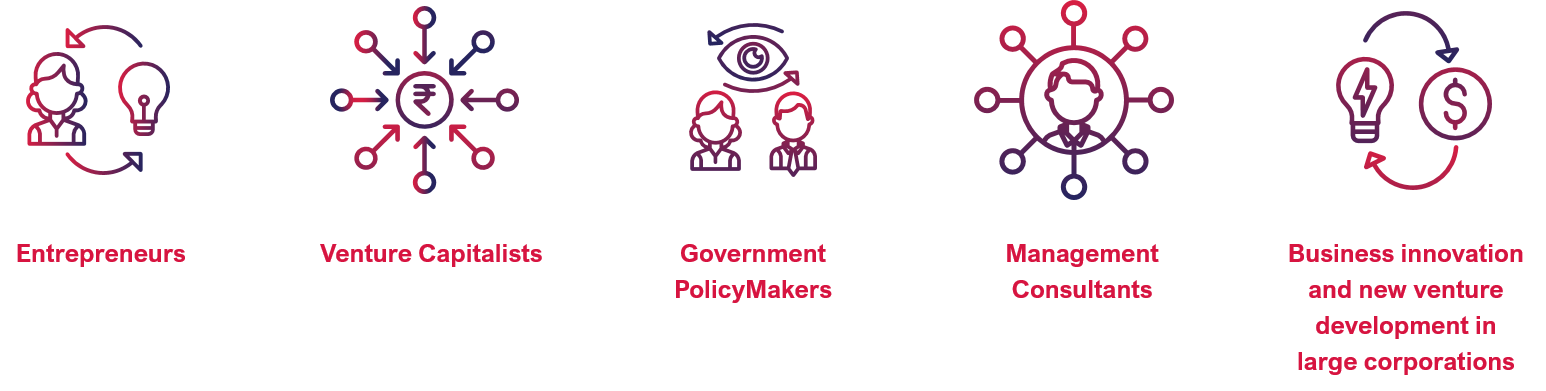
The Second Major in Entrepreneurship (SMiE) provides NTU students the unique competitive advantages in highly transferrable skills, entrepreneurial mindsets, and global exposure to address the world’s grand challenges. SMiE students will be the game changers and have the versatility to choose from a wide range of career options as entrepreneurs, venture capitalists, government policymakers, management consultants, business innovation and new venture development in large corporations.
Application Process
You can apply for the SMiE programme upon admissions or through your school as a matriculated student. Please check the respective School's websites for the complete details.
Frequently Asked Questions
1. If I apply for the SMIE during semesters, do I need to pay extra school fees?
No, you do not need to.
2. Do I have to complete two internships, one for my specialisation and one for SMiE?
No, you do not. You only need to complete ONE internship.
3. Do I have to intern at start-ups?
No, you do not need to. You can intern at any organisation, including start-ups and VCs. However, do ensure that the Job Description allows you to pick up skills on product or service management and development, business cycle and development, strategic planning and problem solving.
4. Besides going for the local internship, can I go for an overseas internship?
Yes. NBS students can go for a 10-week overseas internship with Overseas Entrepreneurship Programme (OEP) during Special Term. CoE students can go for a 20-week (one semester) overseas internship with OEP.
5. Can I withdraw from the SMiE programme halfway through?
You are strongly discouraged from withdrawing. If you decide to do so, you will need to inform your school of your decision. The courses that you have completed will count towards your BDEs.