Seminar on Reasoning Models for Physical AI
31 Aug 2026 02.30 PM - 03.30 PM LT11 (North Spine, NS2-04-15) Current Students, Public

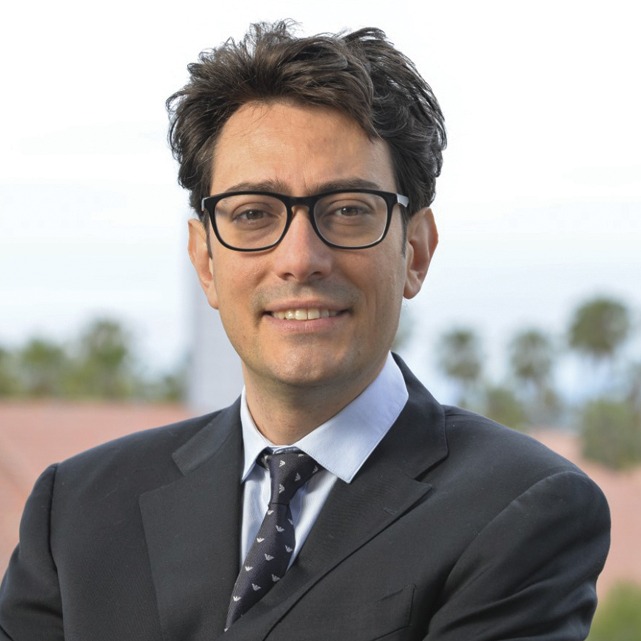
Professor Marco Pavone

Stanford University, United States

This seminar will be chaired by A/P Lyu Chen.

Seminar Abstract

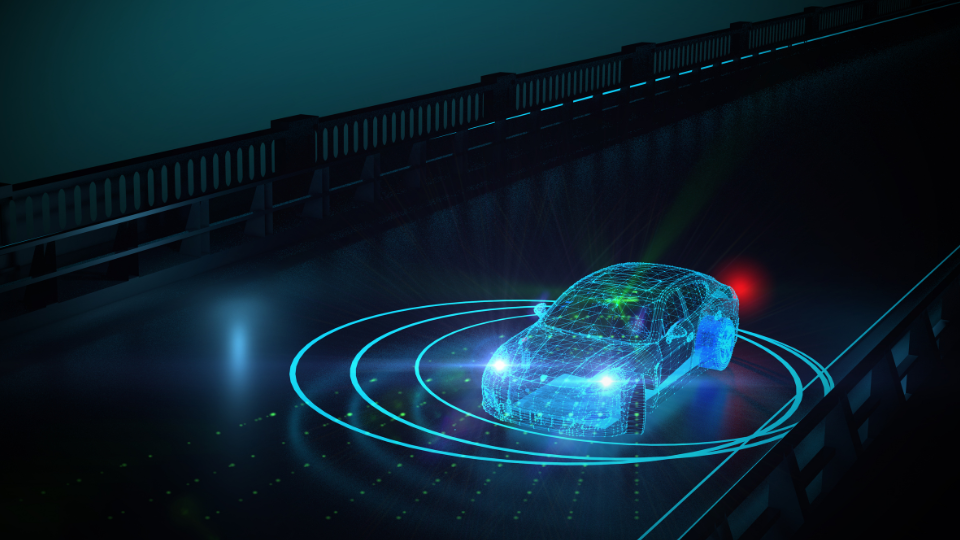
Reasoning models for Physical AI aim to enable embodied agents — such as robots and autonomous vehicles—to perceive, understand, and act in the real world through contextual and causal reasoning. In this talk, I’ll provide an overview of our recent research in reasoning-centric AI for physical systems, highlighting the emergence of chain-of-thought reasoning in autonomous driving models such as NVIDIA’s Alpamayo family, which bridges human-like reasoning with trajectory planning to improve handling of complex scenarios. I will discuss model design principles, training strategies that promote causal reasoning, tools and datasets for development and evaluation, and open challenges at the intersection of physical reasoning, safety, and real-world deployment.

Speaker's Biography 
Marco Pavone is a Professor of Aeronautics and Astronautics at Stanford University, where he directs the Autonomous Systems Laboratory and the Center for Automotive Research at Stanford. He is also a Distinguished Research Scientist at NVIDIA, leading autonomous vehicle research. Prior to joining Stanford, he was a Research Technologist in the Robotics Section at NASA’s Jet Propulsion Laboratory. He received his Ph.D. in Aeronautics and Astronautics from the Massachusetts Institute of Technology in 2010.His research focuses on the analysis, design, and control of autonomous systems, with applications in self-driving cars, autonomous aerospace vehicles, and future mobility systems. He has received numerous honors, including the Presidential Early Career Award for Scientists and Engineers, ONR Young Investigator Award, NSF CAREER Award, NASA Early Career Faculty Award, and the Robotics Science and Systems Foundation Early-Career Spotlight Award. He has also been recognized by ASEE as one of America’s 20 most promising investigators under 40, and his work has received numerous best paper awards and nominations at leading conferences in robotics, computer vision, control, and intelligent transportation systems.