Seminar on Unsteady Turbulent Flow Dynamics in Engineering Innovation
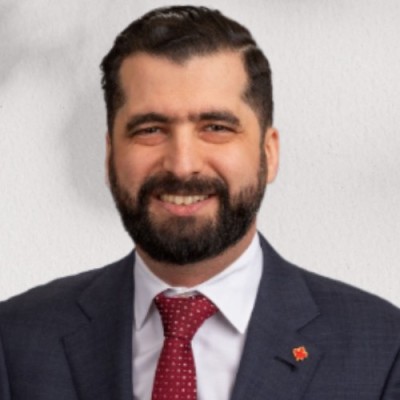
A/P Arman Hemmati University of Alberta, Canada This seminar will be chaired by Dr Mohamed Arif Bin Mohamed. | ||
| Seminar Abstract | ||
Unsteady turbulent flow dynamics is the foundation of many engineering applications involving heat and fluid flow. With a focus on both fundamental discovery and practical innovation, my research at the University of Alberta bridges the gap between theory and application, targeting new tool and technology developments for the energy, aerospace, and biomedical industries. Particularly, my expertise in computational fluid dynamics (CFD) provides me with a powerful tool to expand our understanding of turbulent fluid dynamics and harness that knowledge to develop transformative technologies, whether in sustainable energy systems like geothermal energy extraction and bio-inspired underwater energy harvesting, advanced aerodynamic designs for vehicles and infrastructure, or cutting-edge tools for environmental monitoring. The following examples provide a more tangible understanding of my research vision and current efforts in this field. The first example is a project focused on development of a new pipe flow manipulator (Fourier Pipe) for high efficiency fluid extraction in geothermal wells. Utilizing the knowledge from turbulent pipe flow response to targeted wall-shapes and its recovery dynamics, Fourier Pipe inserts manipulate the flow towards reduced frictional drag and enhanced heat retainment, improving power extraction rates in geothermal wells. Moreover, combining our understanding of pipe flow response with insights gained from the study of wake dynamics behind long wall-mounted prisms, my group has completed feasibility study of the Bloodflow Manipulator technology. This tool aims to suppress blood flow irregularities in the aorta and treat aorta wall anomalies. Furthermore, exploiting our fundamental research on aero/hydrodynamics of oscillating foils, their wake dynamics and flow instabilities that were inspired from swimming locomotion of aquatic animals and fish schools, we have explored the development of new technologies for drones, flow detection systems and energy harvesting tools. For example, my team has developed deployable wings for multi-rotor drones to increase their endurance during cruising flight. Understanding how fish utilize odor and acoustic signals for navigation and flow control has motivated our efforts in developing anomaly detection systems in turbulent flows. This is the basis of our current efforts to develop new tools for surveillance of biological and non-biological entities in arctic waters. The same fundamental understanding of flow physics has also motivated our work on the development of a novel leak detection system in pipelines, utilizing innovative physics-informed machine-learning models. Finally, our fundamental research on turbulence statistical analysis has led to the introduction of a new technique using Fourier-Averaged-Navier-Stokes (FANS) equations. This has set the groundwork for development of new reduced-order-models and physics-informed machine-learning-based flow prediction tools. Despite their diversity, these projects all coincide on a single fundamental topic: unsteady turbulent flow dynamics. To succeed in this endeavor, I have active collaborations with a variety of experts in mathematics, environmental sciences, machine-learning, medical sciences, and business administration. This provides me with access to a diversity of thought and vision that is key to succeeding in research and development within an ever-growing global society.
| ||
| Speaker's Biography | ||
|