NTU-CEE Seminar Series: Associate Professor LI Binbin
Learn about Sequential Multiple Importance Sampling (SeMIS) as a unified computational framework for model updating and rare-event probability estimation for structural reliability.
About the Seminar
Topic: Multiple Importance Sampling for Bayesian inference and Reliability Estimation
Uncertainty quantification in complex engineering systems is fundamentally bottlenecked by the challenge of computing high-dimensional integrals. This presentation introduces Sequential Multiple Importance Sampling (SeMIS) as a unified computational framework that simultaneously addresses two cornerstone problems in this domain: Bayesian evidence estimation for model updating and rare-event probability estimation for structural reliability. The key idea of SeMIS is to circumvent the inefficiency of conventional Monte Carlo integration by constructing a trategic sequence of intermediate target distributions that gently bridge the initial, known distribution and the final, intractable integrand.
Rather than forcing a single proposal density to approximate an elusive optimal distribution, SeMIS adaptively builds a chain of softly truncated or expanded intermediate proposals. The algorithm estimates the target high-dimensional integral as the product of normalization constants across this sequence, while simultaneously providing posterior samples via an importance-resampling scheme. The efficacy of this unified framework is validated across low- and high-dimensional benchmark problems alongside real-world engineering applications. It provides a robust, versatile, and elegant computational engine for tackling the most demanding uncertainty quantification challenges in civil engineering and beyond.
About the Speaker
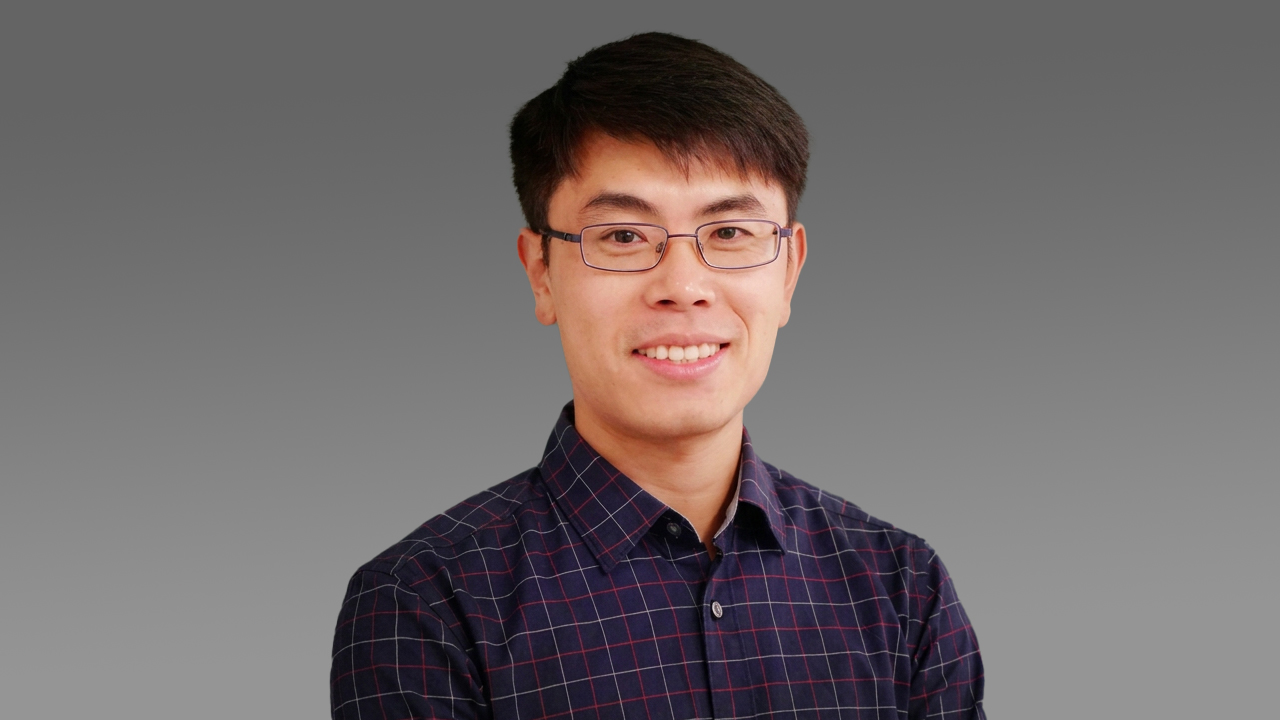
Associate Professor LI Binbin, Urbana-Champaign Institute at Zhejiang University
Binbin Li is an associate professor in the Zhejiang University/University of Illinois at Urbana-Champaign (ZJU-UIUC) Institute at the Zhejiang University, China. He obtained his Ph.D. from the University of California-Berkeley (2016). His research focuses on developing innovative statistical methods to address safety, sustainability and resilience issues of the built civil infrastructure systems including bridges, buildings, and road/rail networks. His specific interests include Bayesian system identification, operational modal analysis, infrastructural network modeling and field test, for structure and infrastructure health management.
His research has been supported by NSFC and NSF-Zhejiang, and has been awarded several prizes, including the MOE First Prize in Science and Technology Progress Award (2022).
Venue
CEE Seminar Room A (N1-B1b-06)