Who really shapes economic policy in emerging markets?
Corentin Cohen examines global professional service firms' role in shaping special economic zones and privatisation programmes
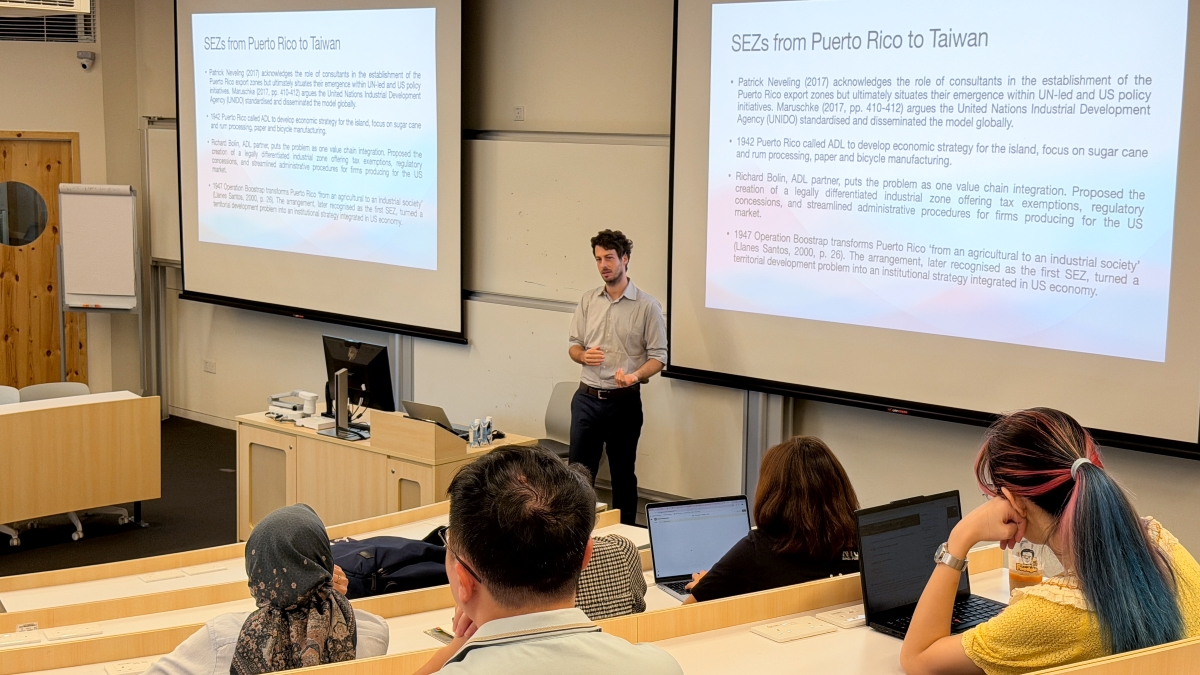
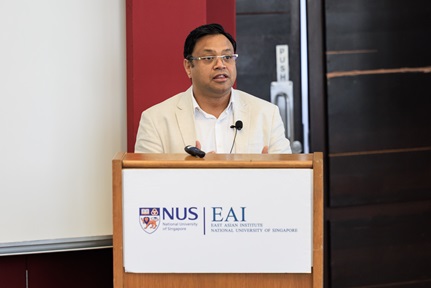
On 1 September, the NTU-SBF Centre for African Studies welcomed Dr Corentin Cohen, Associate and Lecturer at the University of Oxford and editor of the Journal of Modern African Studies, for a presentation examining the political and economic power of professional service firms in Africa and Latin America. Supported by a Marie Sklodowska-Curie grant under the EU Horizon programme, Dr Cohen’s four-year research initiative bridges political economy, sociology, and business studies to explore how leading management consultancies and Big Four accounting firms influence state transformation — a crucial inquiry at a time when many corporate professionals have accessed top political responsibilities.
Standard accounts of global economic integration traditionally prioritize three main actors: states, multinational enterprises, and international organizations. Within this narrative, the expansion of professional service firms across developing economies is typically traced to the structural adjustment programmes of the 1980s.
Dr Cohen’s research revisits this chronology, demonstrating that global professional service firms (GPSFs) acted as pivotal brokers and intermediaries throughout the twentieth century. By opening the "black box" of these organizations, his work illustrates how they diversified into unprecedented advisory domains and ventured into emerging regions, while also shedding light on how several firms became engulfed in high-profile corruption scandals and state capture in countries like Angola and South Africa.
Drawing on historical case studies, the presentation showed how professional service firms designed and implemented key development instruments, such as state planning policy design and institutional reshuffling while embedding their own interests. By weaving their solutions into institutional arrangements, these firms successfully generated new markets and contracts for their services.
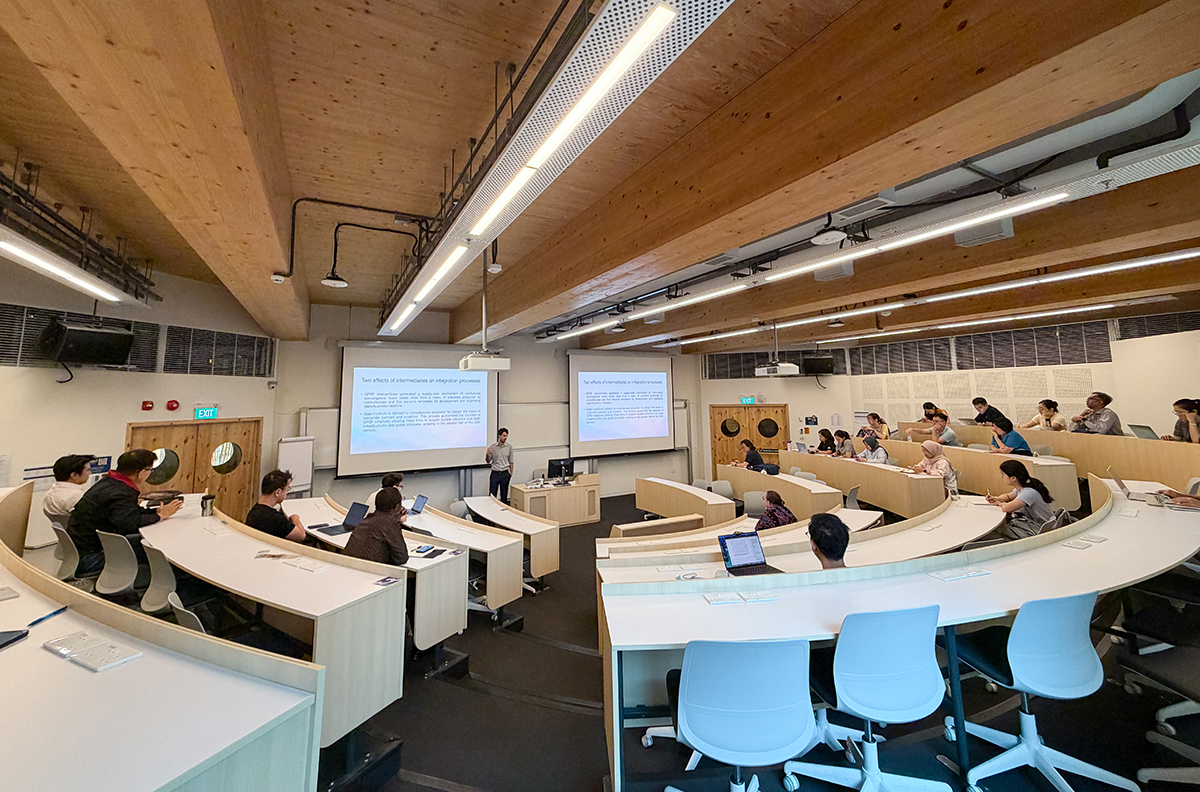
In a paper co-authored with Professor Ronen Palan, the presentation also highlighted how consultancies and accounting firms spearheaded the spread of special economic zones (SEZs) and privatisation programmes. GPSFs operated both as brokers and institutional architects, producing two lasting structural effects:
- Supply-side institutional convergence: Rather than independently selecting reforms, states could draw from a menu of policy and institutional solutions produced by consultancies. This dynamic steered SEZ development across Puerto Rico, Mexico, Central America, Nigeria, and Taiwan. Similarly, Coopers & Lybrand (now PwC) established early global standards for privatisation, securing a dominant footprint across Latin America, Africa, and the Middle East.
- Influence "by design": Consultancies crafted state policies and institutions to align directly with the expectations of corporate partners and investors. This institutional design gave GPSFs enduring influence over state infrastructures and global economic governance, effectively embedding their solutions to guarantee a continuous stream of future advisory contracts.
The presentation sparked discussions with faculty members, as well as many students interested in exploring the role of professional service firms and technical experts in development.