Moving from symptom-based diagnosis to AI-driven precision psychiatry, integrating multi-omics data for mental health diagnosis and prognosis: Research
Mental health conditions are rising worldwide, yet clinicians still rely heavily on subjective symptom reports, with limited support from objective molecular markers. High-throughput molecular profiling technologies (multi-omics) offer a powerful opportunity to complement clinical assessments, but they demand sophisticated data handling and modelling to be clinically useful.
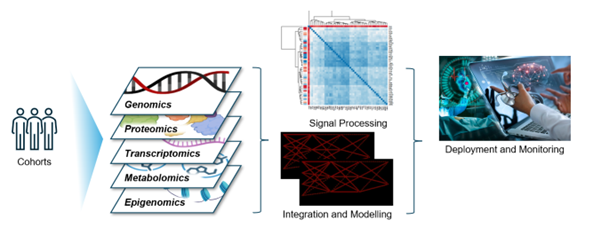
In the research “Multi-omics Data Integration for Diagnosis and Prognosis in Transdiagnostic Mental Health Cohorts” lead by Asst. Prof Wilson Goh, it proposes to harnesse genomics, transcriptomics, metabolomics, and proteomics to improve the early detection and prediction of depression, anxiety, psychosis, and bipolar disorder. Each omics layer is systematically optimized by addressing its unique data challenges using advanced data science and artificial intelligence (DS/AI) methods, and design new approaches for multimodal data fusion and longitudinal semi/self-supervised learning.
The impact of this study in mental health research is potentially earlier detection of high-risk individuals, more accurate diagnosis as biological evidence can be used to support clinical decisions, and personalised treatment. By strengthening the understanding of mental health conditions using the biological foundations, social stigma may be reduced.
Possible research directions include: translating molecular discoveries into clinically actionable insights and building AI models for longitudinal risk prediction
Team
Chan Wei Xin, Kong Weijia, Harvard Hui Wai Hann, Wong Jing Jie, Peng Hui, Yee Jie Yin, Jimmy Lee (Co-lead), Wilson Goh Wen Bin (Lead)
C-AIM Lead
 | GOH Wen Bin Wilson |
Related Research domain: Mental Health
Keywords: Precision Psychiatry, Transdiagnostic Mental Health Disorders, Multi-omics Data Integration, AI Workflow Optimization, Missing Value Imputation
.tmb-listing.jpg?Culture=en&sfvrsn=2a62f216_1)