Nanotechnology offers powerful ways to better manage the environment. For instance, it has significant potential to improve water treatment technologies, crucial for resource-scarce countries like Singapore, as featured in Issue 26 of NTU Pushing Frontiers.
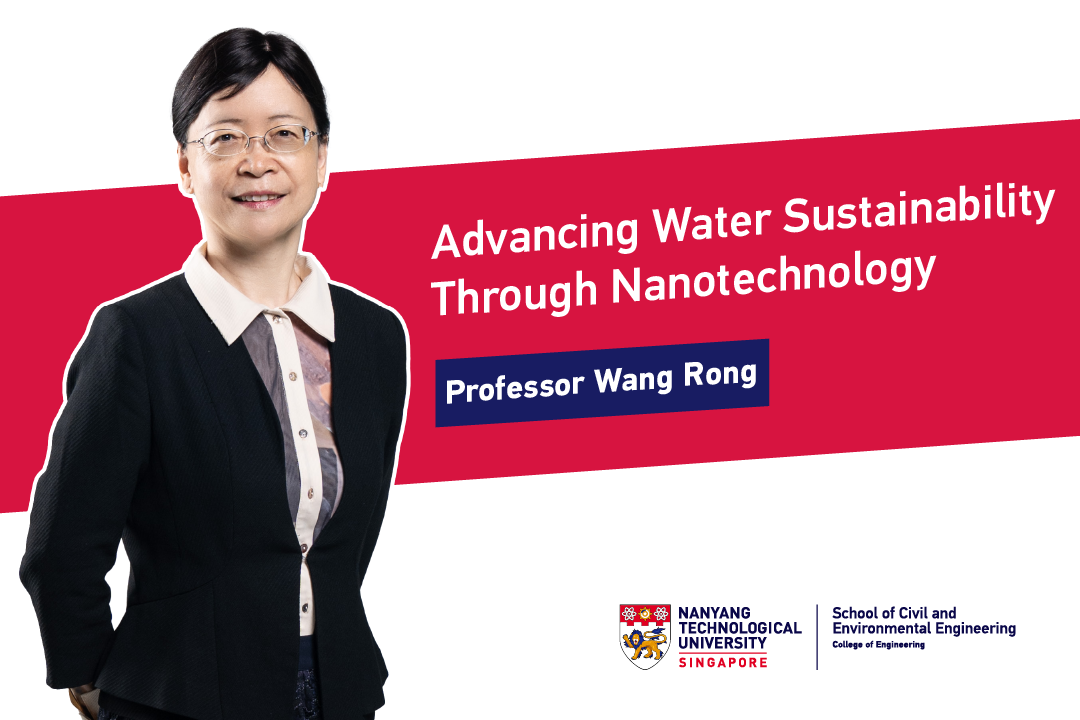
Professor Wang Rong, Executive Director of NTU’s Nanyang Environment & Water Research Institute, whose work involves developing nature-inspired nanoscale membranes, highlights this potential.
“With the growing impact of climate change, Singapore’s water resilience increasingly depends on our ability to produce water in a more energy-efficient and sustainable manner,” she says.
This makes further advancements in technologies, such as seawater desalination and water reclamation, especially vital.
The precise control offered by nanotechnology allows researchers to fine-tune nanoscale membrane properties, such as permeability and durability.
One of Prof Wang’s inventions uses biomolecules, similar to those found in nature, to steer how the membrane layers form.
“Our bio-programmable hollow-fibre reverse osmosis membrane can achieve twice the water flux of conventional membranes, while maintaining similarly high levels of salt rejection,” says Prof Wang. “Such innovations demonstrate how nanotechnology can significantly improve the performance and energy efficiency of water treatment processes, contributing to sustainable water solutions.”
About NTU Pushing Frontiers
As NTU's research and innovation magazine, it provides a window into the University’s latest research achievements, focus and perspectives across various scientific disciplines.