
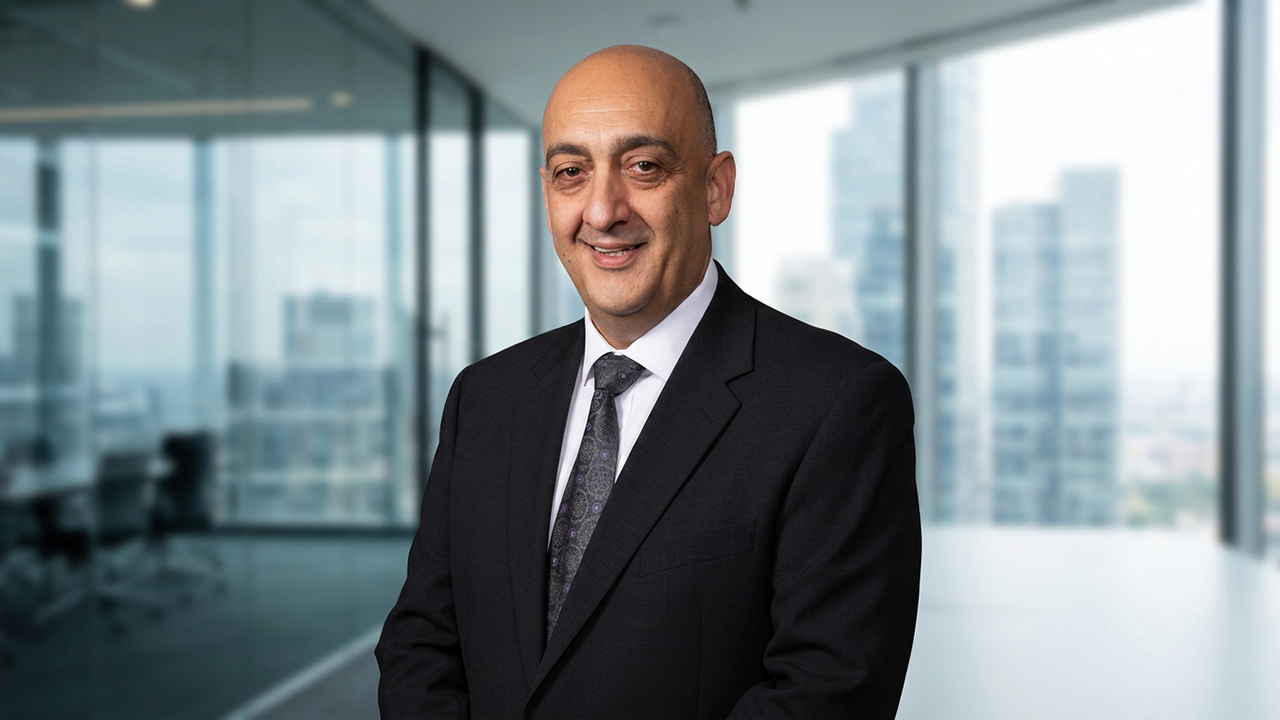
NTU-CEE Distinguished Speaker Series: Professor Abdelmalek BOUAZZA
Learn how PFAS affect engineered liner systems and challenge conventional waste containment and groundwater protection practices from Professor Abdelmalek BOUAZZA.
About the Seminar
Forever Chemicals, Finite Barriers: A Critical Look at PFAS Fate and Transport in Liner Systems at Waste-Containment Facilities
This lecture presents recent advances in understanding how per- and polyfluoroalkyl substances (PFAS) interact with engineered liner systems, and whether current containment practices remain adequate in their presence. Modern liner systems have long underpinned safe waste containment and groundwater protection, but their design and performance frameworks were developed largely from experience with conventional contaminants. PFAS behave differently: many, especially short- and ultrashort-chain compounds, are highly mobile in water, persistent, and poorly attenuated, challenging assumptions about what containment can achieve over a facility's operating and post-closure life
Drawing on experimental evidence and system-scale transport analyses, the lecture traces PFAS migration from contained waste, through composite liner systems, and across the vadose zone to groundwater. Its central argument is not that liners will inevitably fail, but that containment should not be equated with permanent isolation. Under realistic defect and leakage conditions, some PFAS may break through within timescales relevant to design and regulatory decisions. Three propositions frame the discussion. First, advective leakage through defects and preferential pathways can outweigh diffusion through intact barriers, governing early-stage release. Second, mobility and attenuation are strongly species-dependent; shorter-chain PFAS generally migrate faster than longer-chain compounds, though behaviour also depends on functional group, material interfaces, and subsurface conditions. Third, the vadose zone is not a passive buffer but an active transport and attenuation domain shaping the timing, distribution, and magnitude of groundwater impacts.
The lecture concludes by emphasising that modern containment design must move beyond the assumption of permanent isolation to account for PFAS's highly species-dependent subsurface behaviour. Effective PFAS containment requires tailored liner design, rigorous construction quality assurance, and preserved vadose-zone attenuation, paired with targeted monitoring focused on the most mobile compounds. Protecting groundwater from PFAS will require not abandoning engineered barriers, but rather a more realistic understanding of what finite barriers can and cannot be expected to accomplish.
About the Speaker
Professor Abdelmalek BOUAZZA, Professor in Geotechnical & Geoevironmental Engineering; Head of Geomechanics Group, Monash University, Australia
Professor Abdelmalek BOUAZZA is a leading international authority on Geosynthetics and Environmental Geotechnics. He is a Fellow of the Institution of Engineers Australia and a Registered Engineer. His research excellence has earned him numerous accolades, including the International Geosynthetics Society (IGS) Awards and Gold Medals, Telford Premium Prizes from the Institution of Civil Engineers (UK), the R.M. Quigley Awards from the Canadian Geotechnical Society, and the E.H. Davis Memorial Lecture Award. He delivered the 3rd Kerry Rowe ISSMGE Honour Lecture on Environmental Geotechnics.
In 2023, the Australasian Chapter of IGS established the Malek Bouazza Lecture in recognition of his contributions to geosynthetics. Professor Bouazza is past Chair of ISSMGE TC215 on Environmental Geotechnics and a former IGS Council member and ACIGS President.
Beyond academia, he provides specialist industry advice, having peer-reviewed numerous waste containment facility designs worldwide and co-authored Victoria's landfill design standard (EPA Publication 788). He was a key advisor to EPA Victoria, including on its independent landfill expert panel.
Venue
Lecture Theatre 5 (LT 5: NS2-02-07, North Spine, Level 2)