Singapore’s Transboundary Haze Risk: What Determines Where the Smoke Goes?
Prof. Steve Yim shares expert insights with CNA on how fire activity and atmospheric conditions influence haze risk
Prof. Steve Yim, Director of the NTU Centre for Climate Change and Environmental Health (CCEH), shared his expert insights with CNA on Singapore’s current transboundary haze risk as fire hotspots emerge and spread across parts of West Kalimantan and South Sumatra.
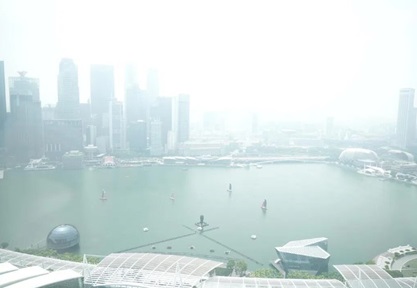
In the CNA Explains feature, Prof. Yim discusses the key factors that determine whether smoke from fires in Indonesia could drift towards Singapore. These include the intensity and location of fire activity, wind patterns, and prevailing atmospheric conditions.
While the presence of fires does not necessarily mean that Singapore will experience haze, changes in wind direction and atmospheric conditions can influence the movement and dispersion of smoke across the region.
As Southeast Asia continues to monitor fire activity, understanding these environmental factors is important for strengthening preparedness, assessing potential air quality impacts, and protecting public health.