
Predicting environmental fate is difficult because chemical space is vast and environmental conditions vary widely, limiting the transferability and mechanistic value of many traditional QSARs. This talk presents an end-to-end workflow that integrates rigorous data curation, physics-guided feature engineering, and interpretable machine learning to build system-aware predictive models. Two applications are highlighted. For small molecule reduction, we harmonized a comprehensive dataset for Fe(II)-associated reductants by unifying free, complexed, sorbed, and structural Fe(II) into one modeling matrix, achieving high accuracy for organics (R² = 0.83) and recovering classic Hammett/LFER trends through model interpretation.
For polymer biodegradation, we addressed sparse, inconsistent macromolecular data by combining literature meta-analysis, targeted experiments, and synthetic “failure-mode” data, yielding R² = 0.66, capturing non-linear behaviors and identifying thermal decomposition temperature as a key proxy for recalcitrance. Model interpretation analysis confirms mechanistic consistency and enables large-scale virtual screening (e.g., ~38% of DSSTox), supporting safe-by-design chemicals and materials with reduced environmental persistence.
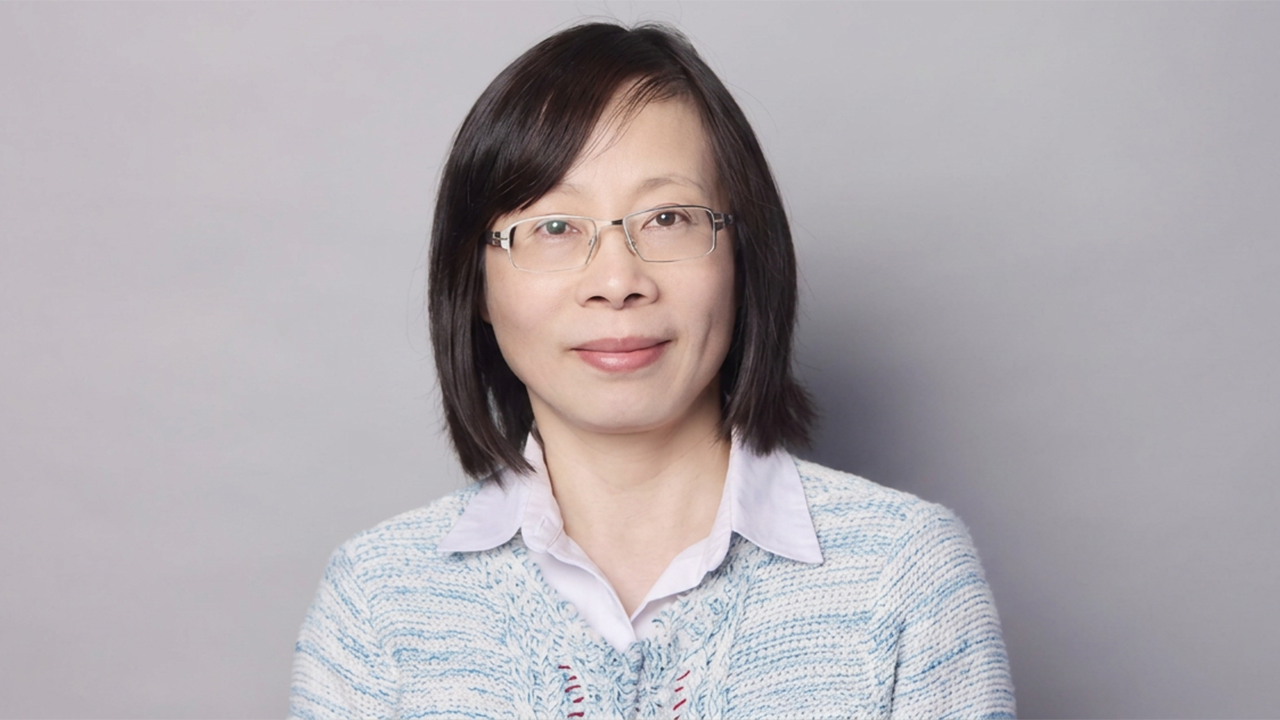
Dr. Huichun (Judy) Zhang is the Frank H. Neff professor in the Department of Civil and Environmental Engineering at Case Western Reserve University. She earned her Ph.D. from Georgia Institute of Technology and her B.S. and M.S. from Nanjing University. Her research focuses on the fate and transformation of environmental contaminants in natural and engineered aquatic environments and the removal of organic contaminants from contaminated water. Her recent research areas also include predictive modeling for contaminant reactivity and sorption using machine learning tools. Dr. Zhang has published in numerous journals, such as Chemical Reviews, Environmental Science and Technology, and Water Research.
She has received seven competitive research grants from the NSF as the PI and directed research projects for many other agencies and industry. She is an Associate Editor for ACS ES&T Water and the Secretary of AEESP Board of Directors. She is a past recipient of Nanova/CAPEES Frontier Research Award, CAPEES Award for Environmental Application of AI/ML, and ES&T Best Paper Award, among others.
CEE Seminar Room A (N1-B1b-06)