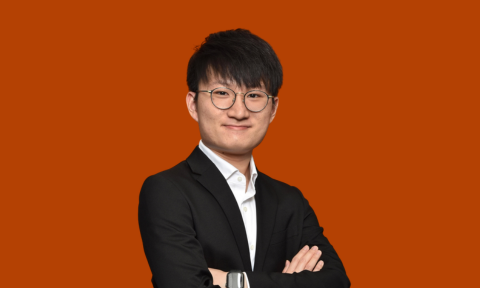

From NTU undergraduate to PhD candidate, Danish Uzair Bin Abdul Hamid Khan Surattee reflects on the journey that sparked his passion for computational catalysis and sustainable energy research.
When I first joined NTU as a Chemical and Biomolecular Engineering undergraduate in the research-intensive honours track known as CN Yang Scholars Programme, I was motivated by curiosity and the desire to contribute meaningfully through research.
My undergraduate years were filled with opportunities to explore that passion, from early research attachments to overseas experiences.
One of my first research exposures came in Professor Tej Choksi’s lab, where I used computational modelling to understand and design catalysts that make chemical reactions more efficient.
I worked on screening nanoparticles for the oxygen reduction reaction using surrogate models. That was my first exposure to how computation could dramatically accelerate materials discovery.
What fascinated me most was the ability to probe atomic-level interactions. Instead of only measuring catalytic performance, we could begin to understand why a catalyst behaves a certain way — by analysing binding energies, scaling relationships, and electronic structure effects. It felt like uncovering the invisible logic governing chemical reactivity.
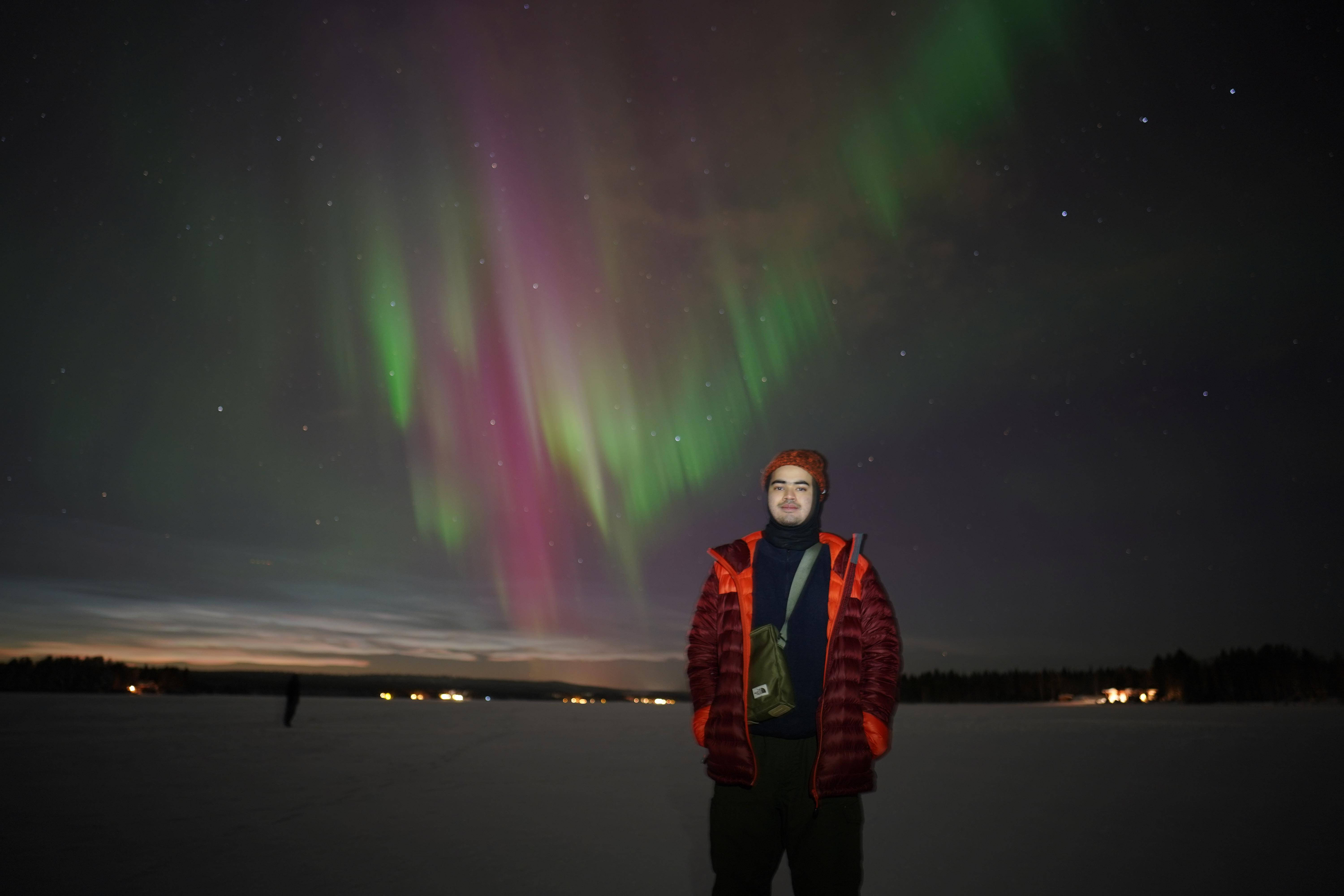 Uzair during his OFYP, viewing the Northern Lights in Finland
Later, during my Overseas Final Year Project (OFYP) at the University of Jyväskylä in Finland with Professor Karoliina Honkala’s group, I deepened this interest by learning advanced computational methods to model electrochemical systems under realistic conditions. I was also blessed with the opportunity to work with Dr Daniel Martin-Yerga to conduct some electrochemical experiments, which was my first time conducting experimental research.
Interacting with internationally renowned scientists further shaped my perspective. I came to appreciate how theoretical insights can explain — and sometimes even predict — experimentally observed phenomena. That interplay between computation and experiment is what continues to motivate me today.
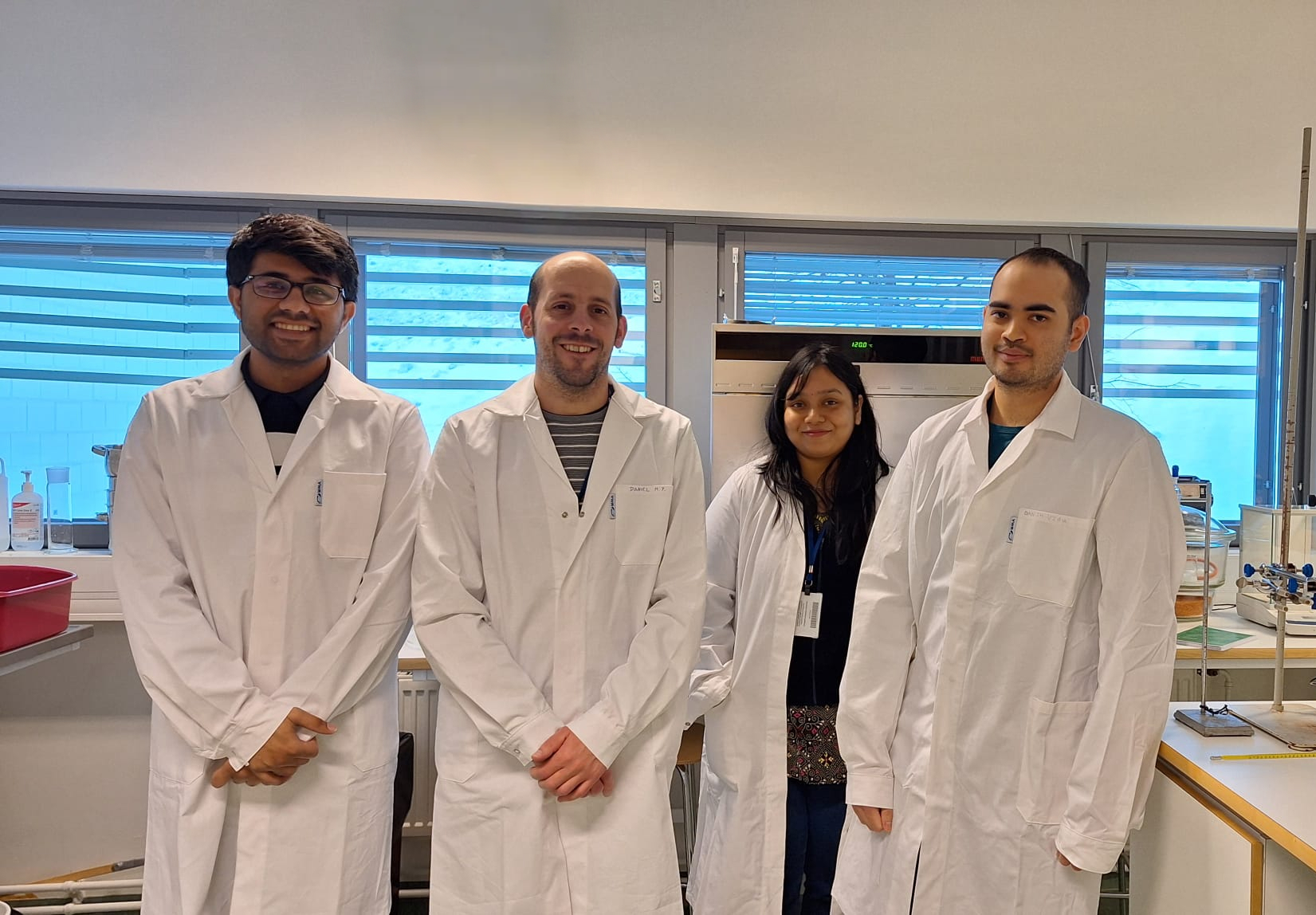 Uzair working alongside fellow researchers in Dr Daniel Martin-Yerga’s lab
The OFYP was the second time I was able to engage in an academic experience in Finland, having already completed an exchange at Aalto University near Helsinki. These exchanges broadened my worldview and gave me the confidence to adapt to new situations, both inside and outside the classroom, while expanding my global network.
Today, I am pursuing a PhD in Chemical and Biomedical Engineering at NTU as a recipient of the Nanyang President’s Graduate Scholarship (NPGS). I am deeply grateful for the scholarship, which allows me to focus fully on my research interests of catalysis and energy-related processes.
More specifically, sustainable catalytic process, such as CO₂ conversion that can reduce the energy footprint of the chemicals industry, working once again within Prof Tej’s lab. What motivates me most is the vision of translating fundamental insights into practical applications. For me, science is not only about advancing knowledge, but also about contributing to solutions that can help society transition toward a sustainable, low-carbon future.
The friendships I’ve built at NTU have been equally meaningful. Across schools, I’ve met peers whose perspectives broadened my thinking, while within the School of Chemistry, Chemical Engineering and Biotechnology (CCEB), my OFYP teammates provided constant support and camaraderie. These connections remind me that growth stems not only from research, but also from the people who share the journey.
This story also appeared in the 2026 NTU Engineering Annual Magazine.