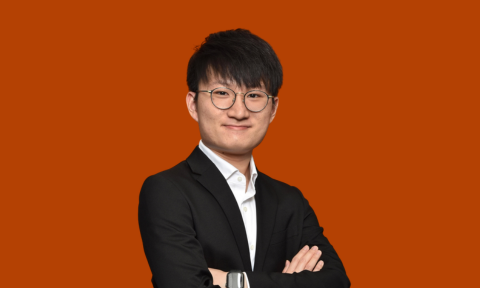
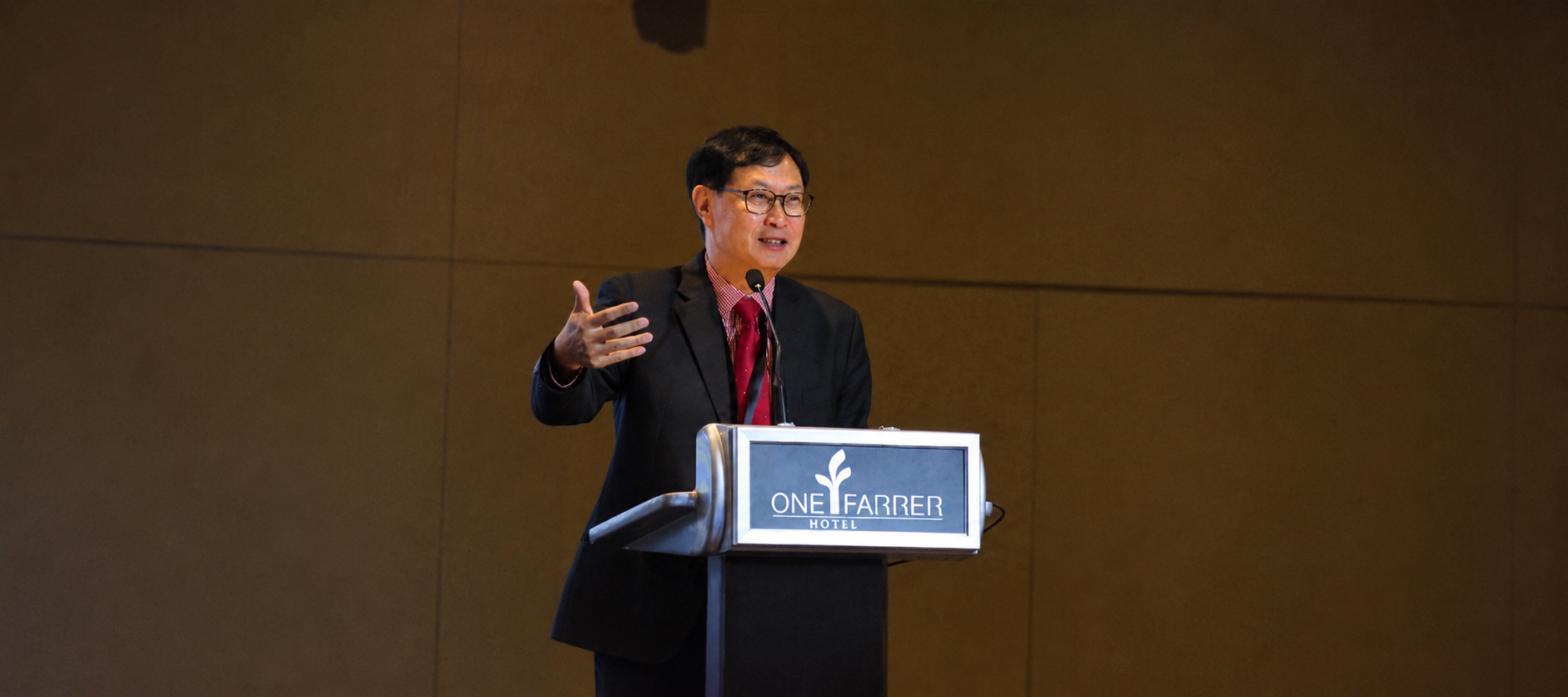
In an interview, Prof Tan discusses his significant contributions to structural fire and blast engineering and his role as an internationally recognised authority in structural engineering. After earning his PhD from the University of Manchester, he joined NTU, where he now directs the Protective Technology Research Centre (PTRC) in the School of Civil and Environmental Engineering.
Prof Tan, it’s rare to meet someone who has been at NTU as long as you - what’s kept you here?
After finishing my PhD, I went to work at Ove Arup & Partners (UK), an international multi-disciplinary engineering firm with very exciting projects. However, after working on a few engineering projects such as shopping centres, industrial buildings and offices, I began to miss the days I spent in research at Manchester University. This is when I transitioned to academia, which I found far more interesting and challenging.
I love research. I transitioned from researching concrete beams to beam-column joints and to fire and blast engineering.
I’ve now studied concrete materials for around 14 years. I focus on the spalling resistance of concrete materials under fire conditions, developing fire-resistant concrete mixes and improving durability, particularly how carbonation and chloride affect the embedded steel bars in reinforced concrete (RC) structures.
Things keep rolling. It’s an exciting world and it is the best job for me in the sense that it expands my horizons and fulfils my desire for applied engineering research.
It helps that I enjoy teaching and interacting with young and enthusiastic people. It’s a great joy to cultivate a sense of passion and love in students for their respective domains. Many have been successful and that gives me a warm feeling about working at NTU, and that I was able to play a role in their budding careers.
What is some of your latest work on improving structural integrity?
One of the areas I've been focused on is improving the structural integrity of reinforced concrete in extreme conditions, like when exposed to fire or blast conditions.
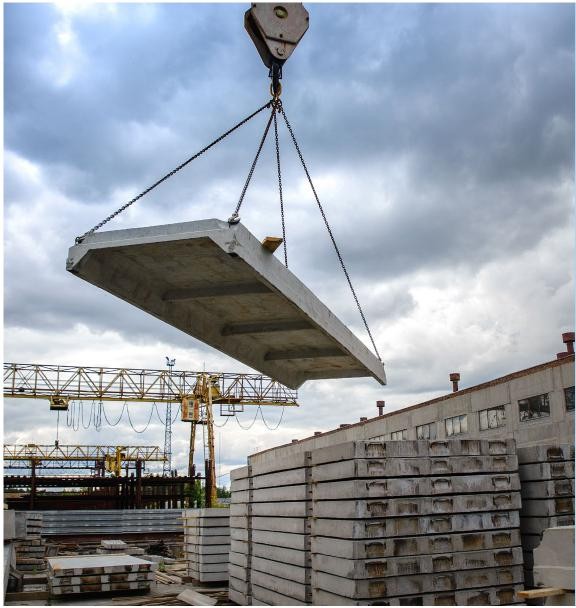 A concrete slab similar to those tested by Prof Tan in his research
The makeup of the concrete can be designed to prevent spalling, or breaking off and fragmenting, when exposed to severe temperature differences. Engineers can also rely on the concept of redistribution. This means that when a specific region of members is exposed to excessive heat and weakens significantly, other cooler parts of the structure could take on the excess load. If the joints are properly designed at the structural level, the forces redistribute, helping the entire structure withstand severe heat.
In contrast, you can think about durability by imagining a concrete slab with multiple layers of reinforcement. If a particular rebar at the outermost layer is exposed to water, localised corrosion would take place, leading to an expansion in concrete volume, and dislodging the concrete cover.
What is interesting here is that surrounding reinforcing bars in the other layers, which are not yet affected by the local corrosion, gather “strength” and attack the particular corroding steel bar. They act together to exacerbate the local corroded steel bar.
Thus, the behaviour of reinforcement in concrete is quite different from that of the RC structures themselves. My work focuses on enhancing the durability of concrete at the materials scale while also exploring alternative ways to enhance structural resistance to progressive collapse when exposed to fire or blast conditions.
And how do you do that?
We’re exploring ways to make concrete more hydrophobic to reduce water ingress. We can also think about mixing in certain sulfate resistant or even chloride resistant chemicals that are inherent in the waste materials into the concrete design.
We are also thinking about ways to use something called a sacrificial anode to protect the surrounding reinforcement that is not yet harmed by the localised corrosion.
Sounds like you are busy. What about when you aren’t working?
I like travelling to different places and seeing the world, especially in Europe where there are many cultures. I also appreciate the libertarian spirit of the US and I enjoyed travelling in China as well.
I’m also a Christian so I spend time at church and reading the Bible. I enjoy reading overall, especially about geopolitics and philosophy.
That’s an interesting fusion between the science and the arts. Do you view them as complementary?
I am inclined towards the René Descartes’ framework of rational science. Descartes viewed cause and effect as a mechanical and deterministic process based on scientific principles. Thus, in research, we should always try to unearth the hidden laws inherent in the system that we study. This could be done by researching the subject matter at a micro- or even nano-scale.
You seem to embrace eastern and western cultures. Does this have any impact on your mentorship?
I try to follow the principle of the Golden Mean, as taught by Aristotle (Greece) and Lao Zi (China). They advocate the practice of moderation, that whatever we do, do not be too absorbed in a particular direction. This is helpful in research as we should always maintain objectivity and sound judgement and not get carried away by empiricism.
I supervise mostly Asian students. Some are from China, Indonesia, and Vietnam, but some are also from Germany and the Czech Republic. They all bring their cultural norms with them to NTU.
The greatest joy is to see they are pursuing a subject they are passionate about and committed to, which will eventually be expressed within different working conditions.
They come to Singapore and are exposed to each other and different ways of thinking and being and when they leave, they’ll take back what they’ve gained and apply it (most likely) in their home country’s environment and framework.
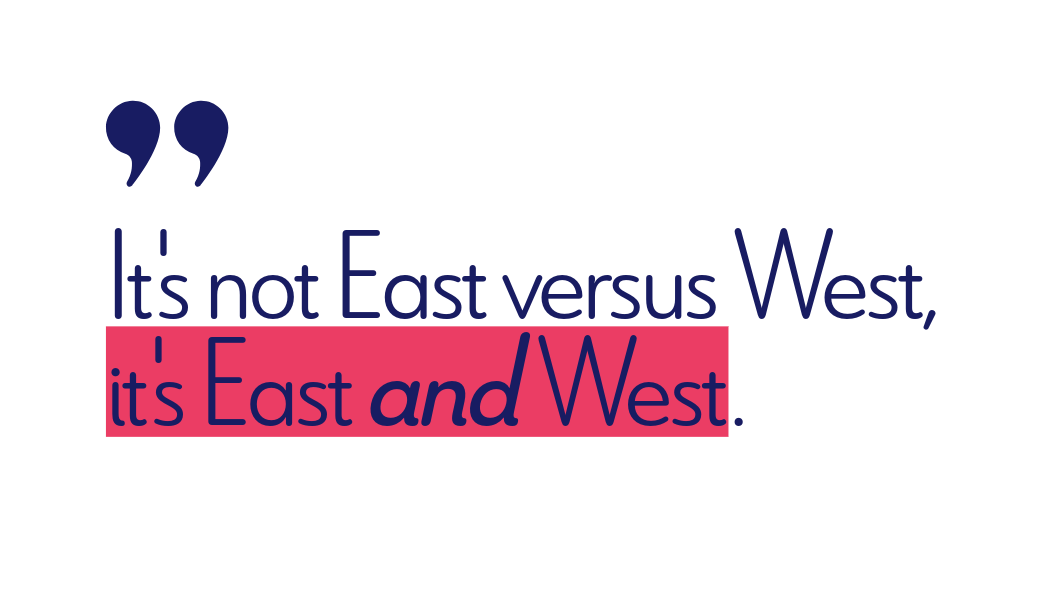
Singapore is a melting pot of Eastern and Western cultures. It's not East versus West, it’s East and West.
Interview by Laura Dobberstein, NTU College of Engineering
This story first appeared in the NTU Engineering Annual Magazine, documenting the year 2024.