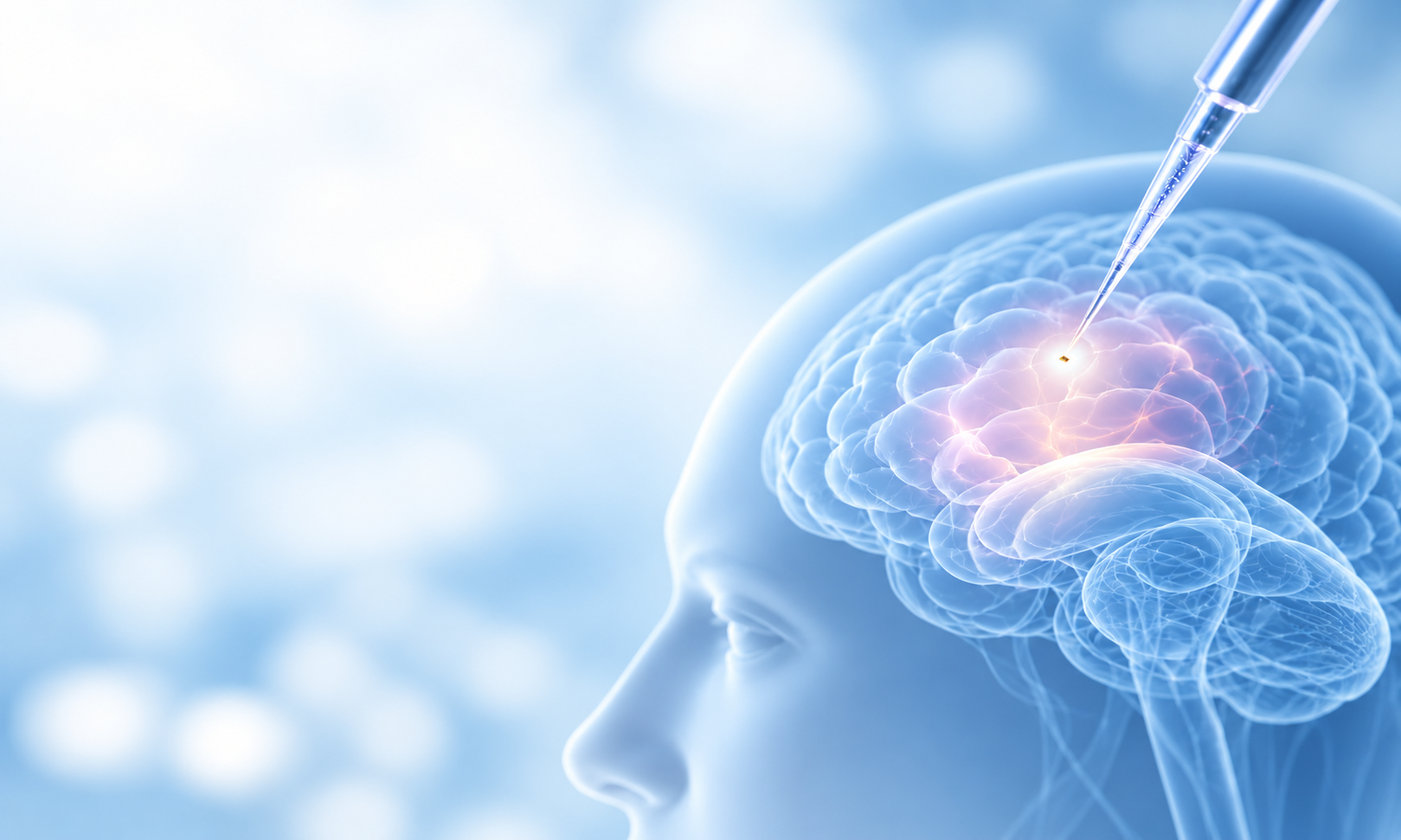
An implant smaller than a grain of salt makes an arresting image. The engineering question behind it is just as compelling: how do you build something small enough for the brain, yet capable of recording and communicating its electrical activity?
Published in November 2025, research involving NTU EEE and Cornell University demonstrated a miniature neural implant called MOTE. It uses light to receive power and transmit recorded signals, removing the need for a physical tether to the device.
The original study demonstrated neural recordings in awake mice over 365 days. That matters because studying the brain over time requires devices that can keep functioning in the demanding environment of living tissue.
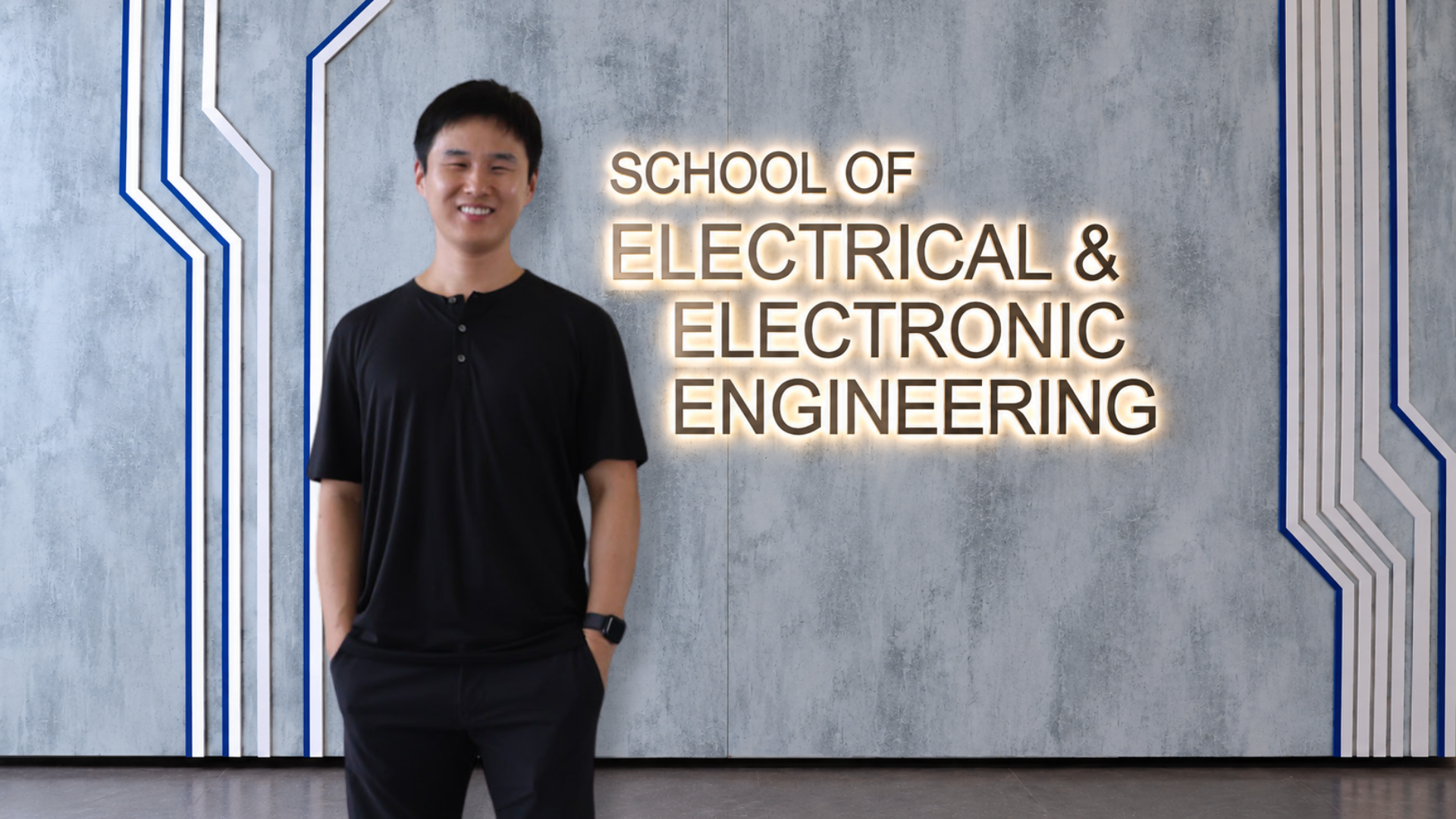
Nearly a year later, EEE is returning to the work through the perspective of its first author, Nanyang Assistant Professor Sunwoo Lee: the difficult decisions behind the device, the lessons of the experiments, and the questions still ahead.
What was the hardest engineering problem, and what finally helped the team solve it?
"Because of the interdisciplinary nature of the research, there were many different problems that had to be resolved before the overall system could work. The hardest part was not necessarily any single circuit design or fabrication step, but making all the different pieces work together reliably as one system. In addressing these challenges, we often had to decide when a solution was good enough rather than continuing to pursue perfection. That can be difficult for engineers, who are naturally inclined to keep improving a design, but it is also true that “perfection is the enemy of good”; otherwise, progress can become extremely slow. It was also important for everyone working on an individual interdisciplinary block to understand how the other blocks functioned and how they were interlinked. For me, carrying out the microfabrication and mouse surgery in addition to the circuit design was particularly valuable, as it gave me a much stronger system-level understanding.
One of the most difficult technical problems, and an important turning point, was finding a way to encapsulate the MOTE so that it could survive inside the body for very long periods. Our body is essentially a warm, salty aqueous environment, which is extremely challenging for exposed electronics. I had been thinking about how best to protect the device without adding so much encapsulation that we lost the size advantage of the MOTE. I then recalled an earlier experience from my graduate studies, when I had used an atomic layer deposition (ALD) film that had, in a sense, encapsulated a device “too well” for what I was trying to achieve at the time. What had seemed like a setback in that earlier project became the clue we needed here. By applying ALD encapsulation to MOTE, we were able to achieve effective protection with a relatively thin coating, enabling device lifetimes of over a year.
Another challenge was developing an applicator capable of injecting these extremely small MOTEs into the brain. Handling an implant at this scale is surprisingly difficult, and it is one of those challenges that may not be obvious until one encounters it first-hand. I developed an injector based on a pulled micropipette (a microscale glass tube), which worked well for the experiments reported in the publication. However, the applicator is still an area that could be further optimized to improve ease of use and increase injection throughput.
The challenge extended beyond shrinking the electronics. The team also had to protect the miniature system against biological conditions while allowing it to detect weak electrical signals and communicate using light."— Sunwoo Lee

What has changed since publication?
"Since publication, one of the most significant changes has been the growing interest from biologists who would like to use MOTEs as a research tool, which has shifted some of our focus from demonstrating the technology to making it accessible and reproducible at a larger scale. We have received inquiries from several researchers around the world. In Singapore, for example, there is interest in using MOTEs to monitor neural activity within brain organoids and study how that activity changes during the progression of neurological disorders, including Alzheimer’s disease.
This interest has made scalability one of our immediate engineering priorities. Previously, we fabricated around 100 MOTEs at a time. Now, we are establishing fabrication and assembly processes aimed at producing batches of approximately 1,000 MOTEs. We have not yet reached industrial-scale manufacturing, and achieving reliable, reproducible production at this scale remains an important challenge to be resolved. Scaling has required more than simply repeating the original process — we have had to modify our design and fabrication workflow, improve process control, and establish a reliable supply chain spanning both academic and industrial partners. Reaching the 1,000-MOTE scale would allow us to distribute a meaningful number of MOTEs to collaborators and evaluate the technology’s broader scientific and commercial potential.
In parallel, we are developing next-generation MOTEs with multiple electrodes and additional sensing capabilities, such as chemical biomarkers. We are also continuing to improve the applicator, particularly as we explore applications beyond the brain. One direction we are interested in is sensing within interstitial fluid, where a wearable device such as a smartwatch could potentially provide optical power to and communicate with a tiny implanted sensor. These developments represent the next stage of the work: moving from a single, highly miniaturized neural-recording device towards a scalable platform that can support different sensing modalities and applications." — Sunwoo Lee
The published findings concern an experimental device tested in mice. They do not establish readiness for human use.
That distinction gives this research its next compelling chapter: understanding what the technology can reliably do, where its limits lie, and which questions it could help scientists answer.
Read the full paper: “A subnanolitre tetherless optoelectronic microsystem for chronic neural recording in awake mice.” https://www.nature.com/articles/s41928-025-01484-1