

NTU Electrical & Electronic Engineering (EEE) graduate Rohit Jha is the CEO and co-founder of Transcelestial, a Singapore deep-tech company building laser communications as wireless fibre optics to deliver fast, reliable connectivity — first across cities, and ultimately via a constellation in low Earth orbit.
Over the past seven years, he has led the company through three fundraising rounds totalling US$34 million and has been recognised with honours including Edge 35 Under 35 and Tatler Asia GenT 2023.
Tell us about your journey
I started my career in banking, working on high-frequency trading and electronic markets. It was intellectually engaging, but over time I felt increasingly removed from creating direct, meaningful impact in the real world.
The turning point was recognising that reliable internet access — something we now treat as essential — remains unreliable or out of reach for billions of people. That realisation led me to leave banking and co-found Transcelestial, with the mission to build a space-based laser communications network that delivers fast, reliable, affordable connectivity. We began with ground-based laser links through our CENTAURI product and are now advancing to space with initiatives like 6G Starlab, using light-speed technology to help close the digital divide.
What drives your work today?
Two key things: the immense scale of the problem, and the elegance of the solution. We’re building infrastructure that has the potential to connect the next billion people to the internet. It’s deeply rewarding to see the technology deployed across very different environments, from dense cities to remote islands, where traditional fibre is impractical or too expensive. The engineering challenge of transmitting high-speed data using lasers through the atmosphere and into space is substantial, yet solving it opens access to knowledge, education, and economic opportunities for many.
-communications-on-our-hashtag-mms2-mission-later-this-year_-(1).png?sfvrsn=d98c0b42_1 "Gilmour Space has partnered with Singapore- and US-based Transcelestial to integrate and test laser (optical) communications on our hashtag#MMS2 mission later this year_ (1)") Transcelestial’s laser communications technology enables high-speed optical data transmission between satellites and ground stations.
Transcelestial’s laser communications technology enables high-speed optical data transmission between satellites and ground stations.
What are key lessons you have learned through the work?
First, deep-tech space-tech challenges are long term endeavours. They demand patience, disciplined use of resources, and an unwavering commitment to physics-based fundamentals.
Second, having a mission-aligned team is essential. When pioneering something new, you need colleagues and partners who are both highly capable and genuinely committed to the ‘why’ behind the work.
Third, timing and product-market fit are vital. We deliberately started with terrestrial solutions to generate revenue, demonstrate reliability, and refine the technology before moving to satellites. It was a deliberate shift from the common ‘space-first’ playbook that proved strategically sound.
What key things has your career taught you about yourself?
I’ve learned that resilience is something you build and strengthen over time. Moving from the structured world of banking to the dynamic environment of a startup showed me that I perform best in high-stakes, complex problem-solving settings. It also clarified what leadership means to me: supporting the team, clearing obstacles for them, articulating a compelling vision, and enabling talented engineers and operators to excel.
Over the years, I’ve grown to trust my judgement when it comes to both people and technical direction, even when either or both go against conventional ways of thinking.
What key challenges have you had to overcome?
A major hurdle was industry scepticism towards laser communications (also known as free-space optics or FSO), largely driven by earlier challenges related to weather-related reliability. We addressed this through rigorous engineering, developing proprietary opto-mechanical systems, electro-optics, and AI-driven tracking, while also going beyond the technology itself to educate partners and customers.
A defining moment was seeing our early commercial deployments succeed in challenging weather conditions, which demonstrated that modern FSO can deliver telecom-grade performance. On the leadership side, navigating the funding challenges of 2024–2025 while securing our Series A3 round was transformative. It compelled us to sharpen our focus on efficiency and unit economics, ultimately building a more resilient organisation.
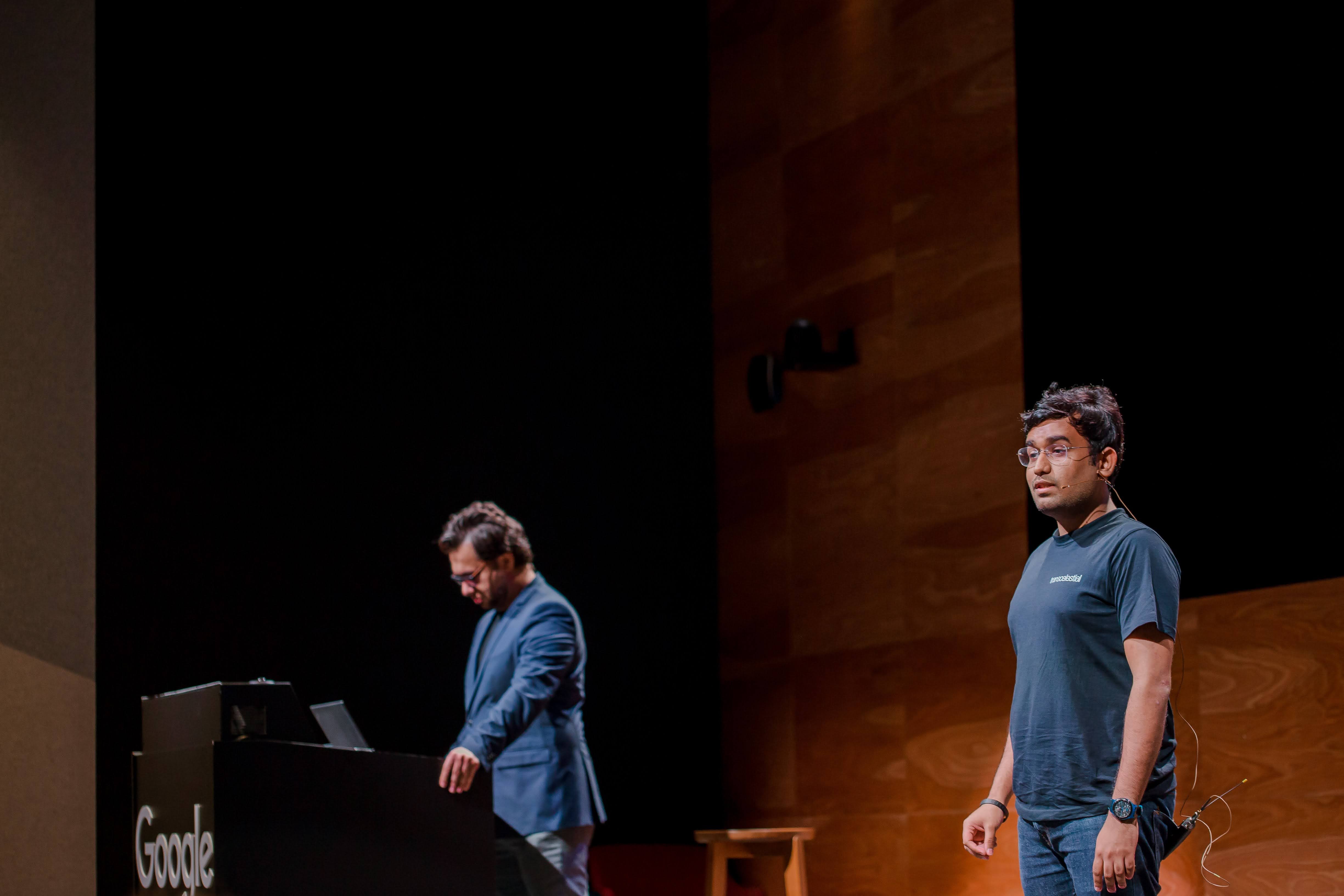 Jha speaking at Google
How does your work create impact for society and industry?
At the societal level, the goal is straightforward: help to bridge the digital divide. By offering a wireless alternative to fibre that can be deployed up to ten times faster and at roughly half the cost, we empower service providers and enterprises to reach underserved communities and locations. For broader industry, we’re helping to establish laser communications as a foundational element for 5G/6G backhaul, as well as next-generation satellite networks — advancing what wireless systems can do in speed, security, and scalability.
How has NTU shaped this work or helped to enable your success?
My time at NTU, studying EEE, helped me to build a strong technical foundation and sparked my passion for cutting-edge projects. Working on initiatives like the Solar Car, healthcare robotics, and advanced human-computer interaction systems taught me interdisciplinary collaboration and necessitated hugely valuable hands-on experience. Representing Singapore in international competitions further built my confidence in tackling complex, real-world problems. The rigorous curriculum and emphasis on first-principles thinking have directly shaped how I approach deep-tech challenges today.
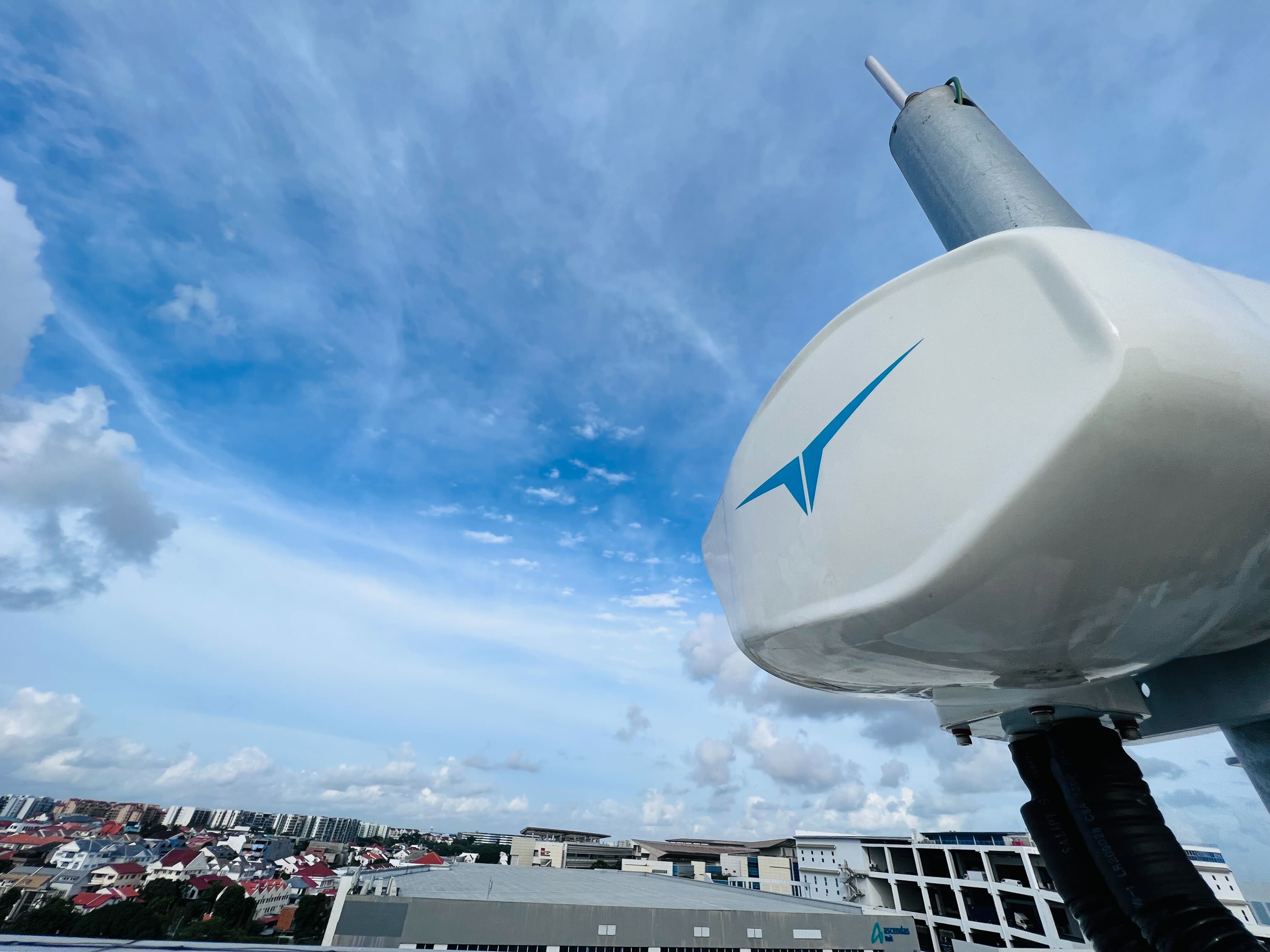 Installation of Transcelestial’s CENTAURI laser communications terminal
What excites you about the future of your field?
I’m excited by the integration of space-based and terrestrial networks. For example, the 6G era will move us beyond merely faster mobile devices and into an era that delivers seamless, high-capacity connectivity everywhere on land, at sea, and in the air enabled by laser-based backbones. The prospect of incorporating quantum-safe encryption over these laser links also holds tremendous promise for enhancing global data security in the years ahead. This development is also essential for the emergence of orbital data centres which may well be a key factor in humanity’s survival.
What advice would you give to your younger self or future graduates?
Focus on learning and meaningful impact rather than playing it safe. The most rewarding problems are often the most difficult. Build a solid grounding in fundamental principles, whether in engineering, physics, or other fields; and keep an open mind when it comes to switching industries if it aligns with your values and sense of purpose. Seek out mentors and teammates who push you to think with more ambition than you thought possible. The journey may be demanding but pursuing work that truly matters is profoundly fulfilling.
This story also appeared in the 2026 NTU Engineering Annual Magazine.


.tmb-listing.jpg?sfvrsn=a1405aee_1)